Vessels refuse to enter Bulgarian ports, putting 5 million tons of wheat at risk
17.10.2026 - 12:36

Some ships have already refused to enter, others are delayed in the southern part of the Black Sea.
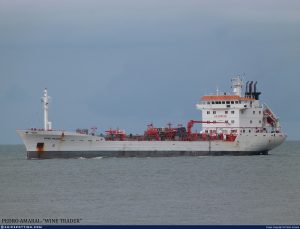
Some ships are already refusing to enter Bulgarian ports due to the worsening security situation in the Black Sea. This was stated by the head of the National Association of Grain Producers of Bulgaria, Ilia Prodanov, on the air of Bulgarian National Television.
According to him, a few days ago there were no problems with the export of Bulgarian grain, but the situation has changed dramatically. Now this creates risks for the export of about 5 million tons of wheat.
“There are already ships that have refused to enter Bulgarian ports. Others are simply delaying their arrival and staying in the southern part of the Black Sea. This is becoming an increasingly serious problem, and the Black Sea is really becoming dangerous for wheat exports,” Prodanov noted.
Thus, according to his estimate, world wheat production is about 800 million tons, but only about 200 million tons enter international trade – and in some years the Black Sea region accounts for almost half of world exports.
Transportation costs have meanwhile increased sharply. Since the start of the full-scale war in Ukraine, the cost of transporting grain by sea from the region has increased five to six times due to the increase in insurance premiums.
Bulgaria has practically no alternative routes. “The only option is rail transport. But our rail connection with Greece is in a deplorable state. Currently, Bulgaria does not have the necessary infrastructure to export such volumes of grain by rail,” Prodanov explained.
The result may be the accumulation of stocks. Bulgaria’s domestic consumption is about 1.2–1.3 million tons per year, so without exports, a significant part of the harvest will remain in the country.
“Bulgaria will meet the new harvest with huge carryovers. This will have a detrimental effect on both prices and storage capacity for wheat. We do not have enough warehouses to accommodate the products of two harvests,” he stressed.
At the same time, export disruptions may reduce domestic prices for wheat in the Black Sea region even if it rises in price on the world market.
The day before, USM reported that the government had approved compensation of up to 80% of war losses for shipowners.