A year in the ports of Great Odesa: what challenges did the industry overcome in 2025
6.01.2026 - 17:30
For the ports of the Odesa region, 2025 was another year of testing. Shelling of infrastructure, changes in tariffs, a partial ban on the import of fertilizers, blackouts and the upcoming concession in the port of Chornomorsk – all this had an impact that shaped the work of the industry throughout the year.
USM begins a series of materials on what 2025 was like for shipping in the world and Ukraine. In the first material, together with market participants, we recall what were the key results of the work of the ports of Great Odesa in 2025, as well as what challenges and problems the industry faced.
Results in numbers
At the end of 2025, the Ministry for Development of Communities and Territories of Ukraine reported that sea exports had equaled the cumulative figure for 2023–2024, including the indicators of the Danube ports.
According to USM, transshipment in the ports of Great Odesa for the calendar year amounted to over 62 million tons (excluding containers), and the leader in cargo turnover was the port of Pivdenny. The ports of Chornomorsk and Odesa shared the second and third places, respectively.
The emphasis continues to be placed on the Ukrainian sea corridor, which became operational after the Russian Federation withdrew from the Black Sea Grain Initiative in July 2023. Since then, more than 160 million tons of cargo have been transported through the corridor on board more than 6 thousand vessels, of which more than 96 million tons are products of Ukrainian farmers.
Last year, in a final interview with USM regarding the first half of the year, the former head of the Ukrainian Sea Ports Authority (USPA), Oleksandr Semyrha, noted that as of August, transshipment volumes were actually 97%.
“In financial indicators, despite a slight drop in volumes, we showed a plus of 7% compared to the planned. At the same time, there are objective factors that influence the decrease in indicators. This is a reduction in sown areas and a decrease in yield, as well as a decrease in metallurgical production volumes,” Semyrha emphasized.
Container transportation
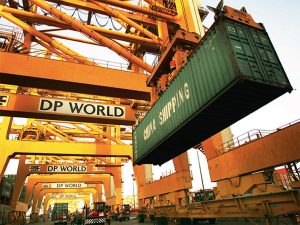
Last year was also fruitful in the field of container transportation. At the beginning of the year (February 2025), the vessel of the container giant CMA CGM made its first voyage to Odesa. At the same time, the Turkish Medkon Lines also resumed regular transportation to the port of Odesa
In the summer, the situation worsened somewhat – some container lines, which began to resume work on our market in 2024, stopped calling at Ukrainian ports due to Russian shelling. At that time, the former head of the USPA Oleksandr Semyrha noted that Ukrainian ports need to focus on restoring transit potential.
Despite this, in October, Ukrainian ports managed to set a new record for container turnover – in 8 months of operation (January-August) of 2025, seaports processed 134,191 TEU. This indicator was already 3.3% higher than the annual indicator in 2024 and became the largest indicator since the beginning of the full-scale war.
In November 2025, it became known that the ZIM shipping company was returning to Ukraine. Today, this is the only direct Ukraine-Israel container service on the market.
Read also: The revival of the container shipping market in Ukraine.
As Viktor Berestenko, President of the Association of International Forwarders of Ukraine (AMEU), told USM, the biggest challenge for the container shipping industry in 2025 remained shelling, destruction of cargo and damage to ships.
“It is the security factor that is the key problem, because when communicating with both market participants and companies engaged in foreign economic activities, this risk is most often called the determining factor for the return of container cargo to the port infrastructure of Great Odesa,” the expert noted.
According to Berestenko, in addition to security, procedural issues remain the second important factor. Businesses and logistics operators cannot accurately predict either the cost or the timing of cargo transportation through Ukrainian infrastructure. This is due to risks during customs clearance – possible delays, the use of additional forms of customs control or even non-clearance of cargo.
“At the same time, there are positive developments: recently the Cabinet of Ministers adopted a resolution that provides for changes to the procedures for cargo clearance at sea checkpoints. There is hope that this will reduce some of the procedural risks,” the expert noted.
The President of AMEU also added that the third significant challenge is insurance, in particular, the risk of losing the ability to insure cargo against military risks.
“Such requests have already been received from the head offices of insurance companies with demands to refuse to cover military risks at sea checkpoints. If this scenario is implemented, the share of cargo passing through Ukrainian ports may decrease even further,” Berestenko summarized.
Tariff wars with Ukraine
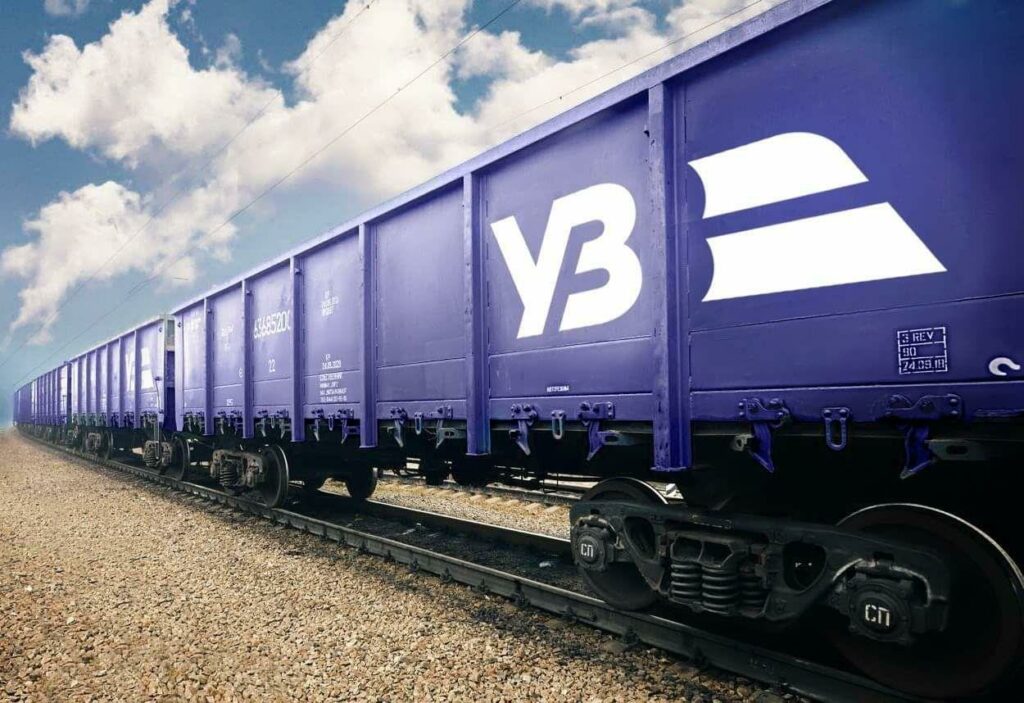
The problem of UZ’s tariff policy has been going on for several years, but in 2025 the situation significantly worsened and looked like a fierce struggle between market participants and a large monopolist.
It is worth recalling that before the start of the full-scale war, trains heading to the ports of Greater Odessa followed the shortest routes. In 2022, the bridge in Voznesensk was damaged as a result of Russian shelling, which forced trains to three ports to be directed along a longer route to bypass the bridge.
Already in January 2025, after the bridge was restored, JSC Ukrzaliznytsia, by a corresponding decision, resumed freight rail traffic along the “pre-war”, that is, the shortest, routes.
However, starting from April 5, according to the new decision of UZ, tariff distances only for the Odesa port were again artificially increased by directing all trains towards the specified port via a longer route.
In parallel, feedback from market participants is starting to appear, spoiler — not at all optimistic. Thus, ArcelorMittal Kryvyi Rih called the change of routes groundless and artificial, and Ukrzaliznytsia itself — a state monopoly.
“The tariff distance for trains with our products was increased by 257 km, accordingly, the cost of production has also increased significantly. This has a negative impact on competitiveness and puts our plan to reach zero losses and effective functioning at risk,” the company emphasized.
In the same month, the European Business Association (EBA) called on UZ to review tariff distances to the ports of Chornomorsk and Odesa, as well as to focus on the shortest routes when pricing rail transportation.
In turn, in May, UZ addressed leading maritime carriers, including Maersk, CMA CGM, MSC, as well as the American Chamber of Commerce in Ukraine (ACC), calling for an end to blocking the company’s request for indexation of freight transportation tariffs.
In June, the Ukrainian Transport Forum 2025 is being held, during which UZ representative Valery Tkachev noted that “mechanisms have been developed to improve competition between ports” and that there are several options for correcting tariffs, including the introduction of different coefficients.
“This is a work in progress. We are waiting for the Ministry of Development and Trade to take some option as a basis and make it public,” Valery Tkachev explained.
There was no objective decision, and already in July the Association opposed the introduction of differentiated coefficients to railway tariffs in the direction of ports.
The situation continues to escalate, already in September 2025, port operators of the Odesa Sea Port collectively appealed to the Office of the President, Prime Minister and Deputy Prime Minister due to the cost of transportation.
In the appeal, the operators emphasized that the decision of the UZ led to an increase in transportation costs by $2.5-3 per ton of cargo, which significantly affects the final cost of export products, in particular agricultural products. In turn, this created additional losses for exporters and negatively affected the trade balance, while the cost of transportation to the Pivdennyi port remained unchanged.
Market participants emphasized that such a situation distorts competition in the port services market and puts the Odesa port in a discriminatory position.
“The conditions created by Ukrzaliznytsia pose a threat to the development and competitiveness of the Odesa port, which is of strategic importance for the country’s economic security. In addition, the activities of terminals operated by subsidiaries of large international holdings from the USA, Germany, France, Austria and Switzerland are at risk,” the collective appeal said.
In October, it became known that JSC Ukrzaliznytsia still plans to index freight railway tariffs – by 27% in 2025 and by another 11% from January 1, 2026. The total increase will be more than 40%. The corresponding decision was agreed upon by the company’s board and supervisory board, and the draft order was planned to be sent to the Ministry of Development of Communities, Territories and Infrastructure of Ukraine.
At the end of the year, namely in December at the conference “Doing Agribusiness in Ukraine”, Deputy Minister of Economy Taras Vysotskyi stated that the indexation of tariffs for railway freight transportation for the agricultural sector is inevitable.
“Against the backdrop of military challenges and a significant burden on transport infrastructure, the indexation of tariffs is a matter of time, but the model for its implementation should be the same and understandable to all market participants,” Vysotskyi noted.
Fertilizer fever
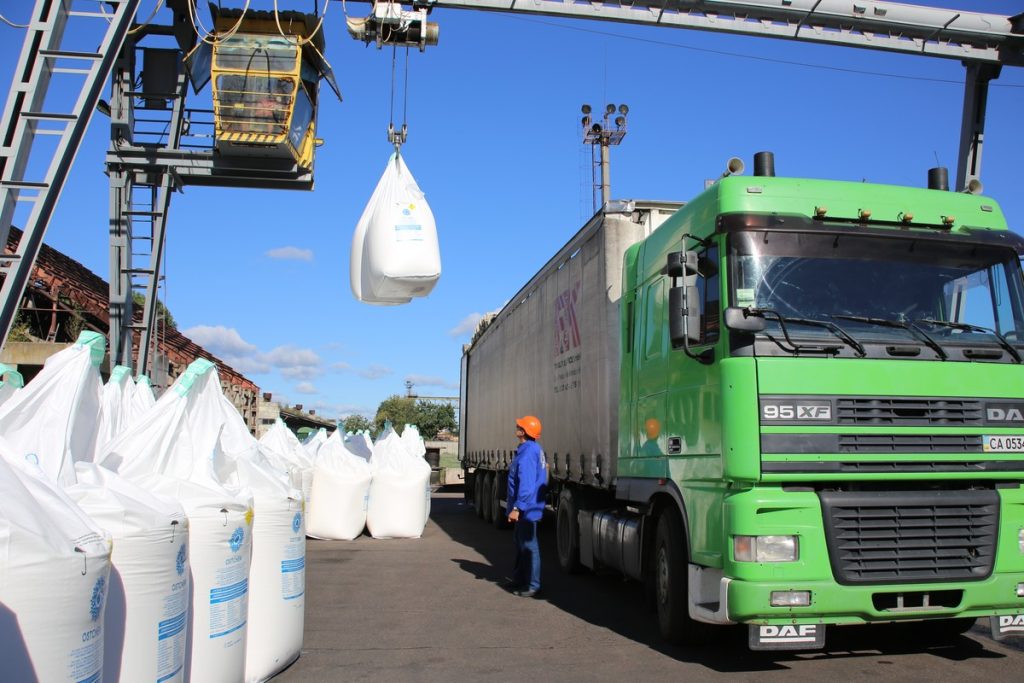
In July, the seaports of Ukraine faced another challenge – a ban on the processing and storage of ammonia-containing cargoes and fertilizers.
We are talking about a joint order of the Naval Forces Command of the Armed Forces of Ukraine and the Odesa Regional Military Administration No. 113/18 dated July 18, 2025. According to the order, the following were prohibited in the region:
• transshipment, storage, transportation and accumulation of explosive cargoes (in particular, technical ammonia, ammonium nitrate, ammonia water and other ammonia-containing substances);
• entry of vessels carrying such cargoes into the internal waters of Ukraine.
It was through the last point that some of the vessels with nitrate and ammonia were redirected to the Moldovan port of Giurgiuleşti and the Romanian port of Galați.
It is worth noting that the need for this ban arose not just like that, but against the background of news about possible attacks by the Russian Federation on saltpeter storage facilities. The threat is serious, especially after the experience of the Beirut disaster, but the reaction of “banning everything at once” caused misunderstanding on the part of market participants.
One of the first to react was the Association of International Freight Forwarders of Ukraine (AMEU), which appealed to the government of the military command with a proposal to review the ban.
“The ban was adopted without taking into account the hazard classes, methods of safe daytime direct unloading onto other transport were not taken into account, fertilizer supply chains were disrupted at the peak of the agricultural season, and no alternative was offered,” the association emphasized.
In turn, freight forwarders claimed that the cost of logistics had increased by $70 per ton — losses amounted to approximately UAH 1 billion. Ports are losing more than $2 million in port fees. At the same time, cargo traffic at the Danube terminals fell 5–6 times.
The market’s reaction to the import halt was also immediate. Already at the end of July, the price of nitrate in Ukrainian ports reached a “ceiling” – for ammonium nitrate, the price increased to 27 thousand UAH/ton versus 21 thousand UAH/ton, while the cost of urea reached 29 thousand UAH per ton versus 27 thousand UAH/ton.
The fact is that imports by sea allowed nitrate to be imported at prices 10−20 euros/ton cheaper than via land corridors.
The All-Ukrainian Agrarian Council also spoke “for” the admission of fertilizers to the ports of the Odesa region. Thus, the deputy chairman of the Ukrainian Agrarian Council, Denys Marchuk, emphasized that imports are vital, and estimated the prospect of crop losses at 30–50%.
In total, the “fertilizer fever” lasted two months – already at the end of August 2025, the Ukrainian Navy Command and the Odesa Naval Base decided to partially unblock the import of fertilizers into Ukrainian ports.
According to the new rules approved, it is allowed to import complex mineral fertilizers to ports that meet the following parameters:
• nitrogen content – no more than 21%;
• phosphorus content (P) – from 5% and above;
• potassium content (K) – from 5% and above;
• availability of an international SDS safety data sheet.
Concession: preparation, launch, criticism
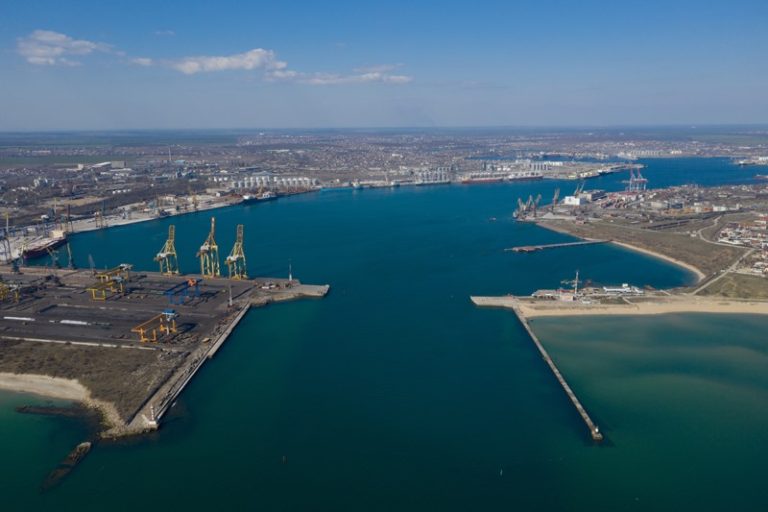
Preparations for the concession at the port of Chornomorsk will begin in early 2025. The state’s plans for this project are ambitious: it is being discussed with the European Bank for Reconstruction and Development (EBRD), the International Finance Corporation (IFC), the feasibility study is being agreed upon and discussed at international forums.
Despite the fact that there were not many details about the project, in May the Ukrainian publication Telegraf published two articles on one day criticizing the terminal concession project at the port of Chornomorsk.
USM analyzed the manipulative takes from both articles: What’s wrong with the criticism of the concession of the port of Chornomorsk. Fakes and manipulations.
In September, the Ministry of Development and Trade makes an official statement about the launch of the first concession project during the full-scale war. In particular, it became known that the concession project included the First and Container Terminals of the Chornomorsk port with six deep-water berths and all infrastructure.
At the same time, the ministry stated that the project provides for:
• hundreds of millions of dollars of investment in the modernization of berths and equipment;
• over 1.1 billion dollars in revenues to the state and local budgets over 40 years;
• more than a thousand jobs with guarantees for people;
• the restoration of container transportation to 250 thousand TEUs annually in just three years, with the prospect of returning to the pre-war level of over half a million.
At the same time, constructive criticism began. Business emphasized that the project lacked transparency.
Viktor Berestenko, President of the Association of International Freight Forwarders of Ukraine (AMEU), noted at the time that the declared figures were impressive, and the project itself looked more like a marketing campaign.
In particular, he drew attention to the fact that in 2024, Ukrainian ports processed only 129 thousand TEU. The throughput capacity is over 3.5 million TEU, and the operational load is less than 4%.
“Where did they get +500 thousand? A container is just a container. Its cost depends not on the amount of metal, but on what is inside. And inside is cargo that is created by the economy, not by PR posts. And how many people are needed for a terminal for 500 thousand TEU? We are told – 1,000 jobs. And how many people work at other terminals? Is this another “beautiful figure” or a real calculation?”, – emphasized the president of AMEU.
He summed up that he wants to see real investments, new jobs created, healthy competition and a reduction in the cost of logistics for the Ukrainian economy, as well as infrastructure development – “not in slides, but in reality”.
The Ministry of Development noted that the public-private partnership project of the port of Chornomorsk has attracted the interest of more than 40 international port operators and investors from four continents. And in December it became known that the terminals in the port of Chornomorsk will be given for concession without using the Prozorro system.
In the comments to USM, other market participants also complained that the promise from the Ministry of Development of “hundreds of millions of dollars of investment in the modernization of berths and equipment” sounds too optimistic.
“I would really like to understand if there is any approximate calculation or project estimate for these hundreds of millions? What do you need to buy there to launch the terminals? Of course, if you want, you can draw a couple of billions. However, the point is not even in millions, but in the fact that anyone who has encountered the lease of state berths in our ports can tell a million stories about bureaucracy. “And whether this will change for the future concessionaire is an open question,” noted one of the market participants.
End of the year: shelling, blackouts, market reaction and legal issues
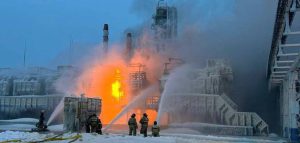
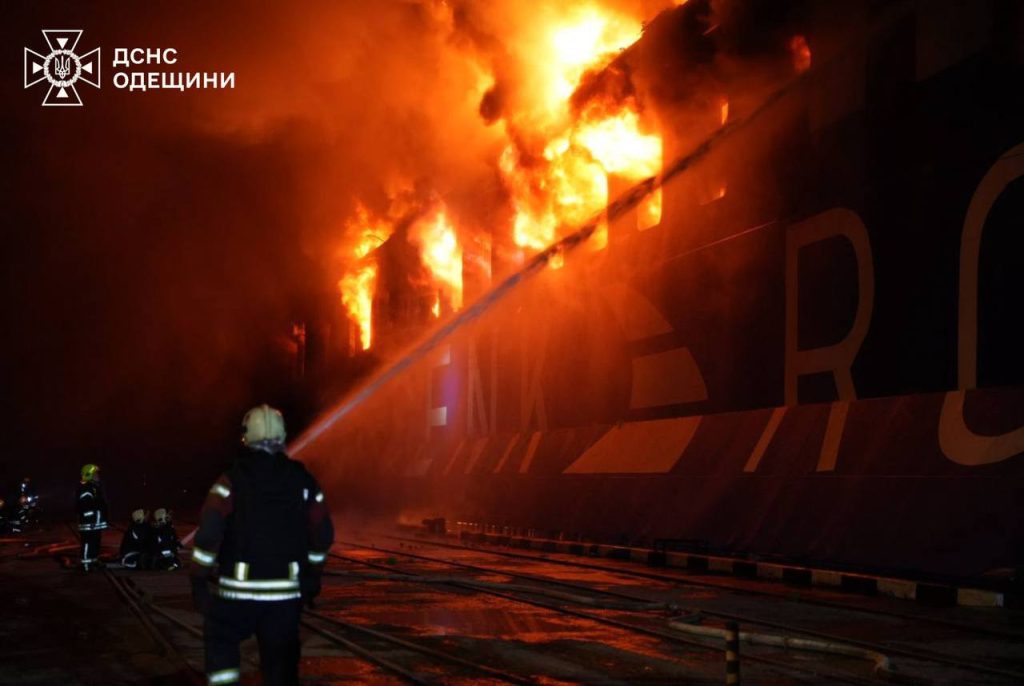
December turned out to be a real test for the ports of Greater Odessa: Russia carried out a number of massive attacks, as a result of which port workers died, civilian vessels were damaged, as well as infrastructure. And if the damage to logistics facilities is the price of the issue, then the cost of human life is not measured in money and it is simply impossible to compensate for it.
Thus, on December 3, Russian President Vladimir Putin said that Russia would intensify attacks on Ukrainian ports and vessels if attacks on tankers associated with the Russian Federation continue in the Black Sea. It is important to note that throughout the year the Russian Federation has carried out many attacks on port infrastructure, so such manipulation by the aggressor country only serves as a cover and is another attempt to “justify” these attacks.
The market, sensitive to this topic, reacted instantly: on the same day, the Russian Federation’s threats raised grain prices on the Chicago Stock Exchange.
Read also: New risks in the Black Sea. How the market reacted to the attack on tankers carrying sanctioned oil.
A few days later, on the night of December 6, Russian troops struck the infrastructure of the port of Pivdenny. And due to the risk of new Russian attacks on Ukrainian export infrastructure, shipowners began to prepare for an increase in insurance costs.
Already on December 13, Russia began long and intensive shelling, after which a blackout began in the ports – part of the port cluster was completely left without electricity, and the other part worked only on limited generator power.
The Russians also attacked the bridge in Zatoka and the bridge in Mayaki with the aim of complicating and disrupting logistics and communications towards Ukrainian ports on the Danube.
As a result, the throughput of the ports of Great Odesa began to fall precisely at the moment when Ukraine exports the maximum amount of grain. In turn, delays in the operation of terminals increased the cost of transshipment and freight and at the same time put pressure on currency prices.
Of course, the shelling led to new challenges for enterprises.
“The shelling, of course, slows down work, reduces loading and unloading rates — not only in the case of direct arrivals, but also simply during alarms. Yes, in one of the ports we divert our ships from the berths under the threat of martyrs if they fly towards the region. But in addition to this, strikes on substations are a big problem, because all the cranes, loaders and pumps are electric and quite energy-consuming. Simple generators cannot save the situation,” one of the market participants shared with USM at the time.
Despite this, at the end of December the situation in the ports looked difficult, but quite controlled.
“There is no panic among exporters at the moment — at least that’s how it looks now. At the same time, every time there are massive and targeted attacks on the ports of Great Odesa, the market reacts with an increase in the number of requests for alternative routes, in particular, transportation from Izmail to Constanta. So far, we are talking about requests, not a massive switch to other directions. However, it can be assumed that large companies that plan their cargo flows two to three months in advance are already focusing on the scenario of reorienting cargo to the ports of the Danube region as a backup option,” one of the industry experts told us.
At the same time, exporters began to seek advice from lawyers more often, in particular, whether attacks on ports can be considered “force majeure” in contracts. As USM commented in Interlegal, the full-scale war has been going on for almost four years, agricultural exports operate in a zone of constant risks, and their potential consequences are well known to all parties.
“The dualism of law creates a unique situation in agricultural exports. A Ukrainian trader simultaneously works in two legal regimes: with non-residents – under English law, with terminals and Ukrainian counterparties – under Ukrainian law. And the same event in the port can have opposite legal consequences depending on which contract is being analyzed. For example, an attack on a port may be force majeure in the relations of a terminal with a Ukrainian client, but not be considered force majeure in a GAFTA contract if the relevant provision does not cover the required type of obstacle or if the party could fulfill its obligations in another way or did not take all reasonable measures to minimize the consequences. As a result, the market has received a paradox: war has become commonplace, but force majeure has not.
Each attack on a port, each blockade of shipping, each shutdown of a terminal requires a separate analysis, taking into account how the contract is constructed and which legal system is applied to it,” Interlegal noted.
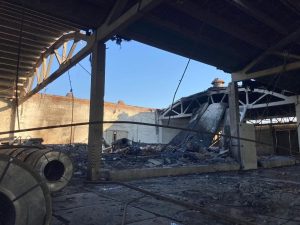
In total, since the beginning of the full-scale aggression, the Russians have damaged or destroyed more than 500 port infrastructure facilities and 116 civilian vessels, 157 civilians have been injured. 161 facilities were damaged in the territory of the Odesa Sea Port. Despite the above-mentioned challenges, the ports of Great Odesa continue to operate, providing jobs and economic stability not only for the region, but also for all of Ukraine. In particular, they are increasing transshipment and optimizing work processes in difficult conditions. They are also strengthening security in the ports and installing additional shelters. The industry demonstrates that although the war slows down rapid development, it does not prevent it from working and adapting to new conditions.