Oil pollution can remain on the bottom of the Black Sea for more than six years, — Greenpeace Ukraine
5.01.2026 - 14:38
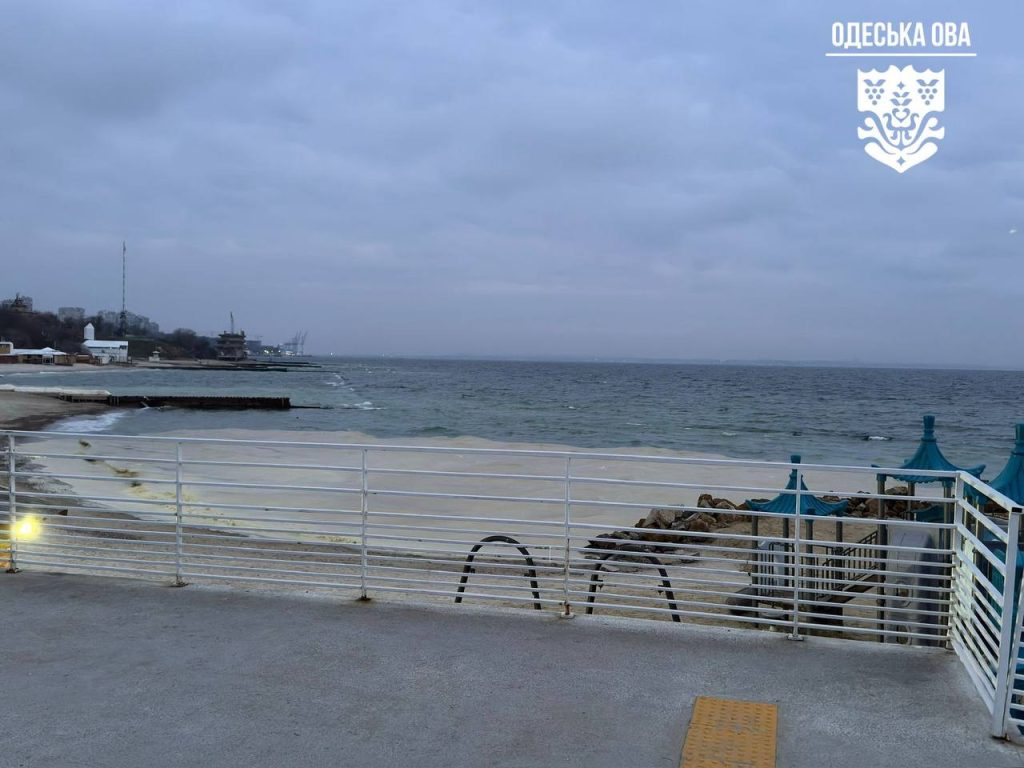
Sunflower oil pollution can remain on the bottom of the Black Sea for more than six years. The oil needs to be removed and the water area restored.
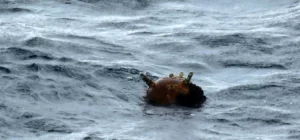
Witnesses reported that after the Russian attacks on the port of Pivdenny, the oil quickly covered the surrounding areas and soon reached the Adzhalitsky estuary, Greenpeace Ukraine reports.
Unfortunately, the spill could not be contained within the estuary in time. By December 24, the oil slicks had reached the coast within Odesa. Waterfowl were affected by the pollution: it was reported that about 300 birds were rescued and transferred to the Odesa Zoo for rehabilitation.
Greenpeace explained that in the initial stages, while the cooking oil is still liquid, the stain remains on the surface of the sea water. Such stains can lead to suffocation of animals and physical contamination – similar to the consequences of oil or petroleum spills (although sunflower oil is less toxic if swallowed). When oiled, animals can die from hypothermia, dehydration, diarrhea, starvation, and suffocation due to blockage of the nostrils, throat, or gills.
The number of birds rescued in such cases is usually only a fraction of the total number of victims.
Vegetable oil generally decomposes more quickly because bacteria and fungi can metabolize it more easily than petroleum and petroleum products. However, the speed of this process depends on temperature: in winter temperatures, sunflower oil can thicken and partially harden, which slows down decomposition and prolongs the physical impact. If it decomposes at sea, this process will consume oxygen from the water, leading to a decrease in the level of oxygen available to fish and other aquatic fauna.
After polymerization, oxidation, or mixing with garbage, vegetable oils become denser than water. They sink to the seabed and form a layer on sediments that deprives benthic species of oxygen for a certain period of time. This process can be accelerated in salt water and by contact with fine particles, as well as through partial decomposition (similar to grease deposits in sewers), since fats and oils solidify at low temperatures.
According to NOAA, a marine sunflower oil spill that sinks to the bottom and forms a crust on the bottom and concrete-like lumps in sandy sediments can persist for more than six years. At the same time, unpolymerized vegetable oils decompose quickly and completely even under anaerobic conditions (which is possible if the accident occurred in the summer). Therefore, to understand what to expect, it is necessary to conduct research and find out whether polymerization has occurred.
Although large cooking oil spills do not have the same toxicity as fossil fuels, they can be very harmful and require the same response as conventional oil spills.
“We cannot assess whether the relevant Ukrainian authorities had the opportunity to respond more effectively and promptly. And, of course, this large-scale accident would not have happened if it were not for the Russian attacks. However, the spread of pollution must be stopped as soon as possible, the oil must be removed as much as possible, and the restoration of the marine and coastal ecosystem must be ensured. Currently, Ukrainian services must prioritize not only the elimination of the consequences of this accident, but also preparation for similar accidents in the future,” the organization emphasized.
It will be recalled that earlier, as a result of massive Russian attacks on the infrastructure of the port of Pivdenny in the Odesa region, a leak of vegetable oil into the water area was recorded.