Railway
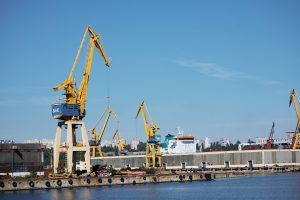
Train transfers to Constanta may be increased from 6 to 10 pairs per day
To increase the volume, the Romanian side will accelerate the repair of port and railway infrastructure.

Danube ports exported 917.7 thousand tons of agricultural products — 22.9% more than in all of August
Instead, only 25.6 thousand tons of grain passed through the terminals of Great Odesa in 22 days of September.

Grain exports by rail across the western border increased by 68% in September
As a result of the Russian Federation’s attacks on port infrastructure, about 83% of grain export shipments by rail fall on western border crossings.
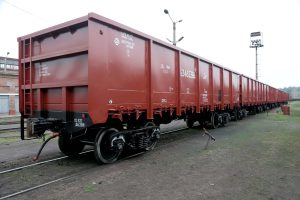
Moldovan Railways announced a tender for the repair of the track to the border with Ukraine
State Enterprise “Moldova Railways” (CFM) has announced a tender for the design of the repair of 183.3 km of railway track towards the Ukrainian border.

Over 80% of rail grain exports go through land crossings, — Spike Brokers
Only 11.2 thousand tons of grain passed through the port terminals of Great Odesa in 15 days of September — 77.6% less than a month earlier.

Latvia is considering increasing the railway tariff for the transit of Russian grain
On September 17, the Latvian Seimas began consideration of a bill that will allow for an accelerated review of the fee for using the railway infrastructure during the transit of grain from Russia by the end of the year.

The railway in Moldova can be extended directly to the port of Giurgiuleşti
“Moldova Railways” is considering the possibility of extending the track directly to the territory of the state port of Giurgiuleşti.
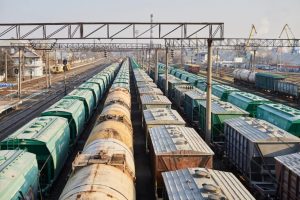
Almost 11.5 million tons of cargo were transported through railway crossings with Poland in eight months
In January-August, 11.47 million tons of cargo were transported through Ukrainian-Polish railway border crossings, which is 4% less than in the same period last year.
Transit of Ukrainian grain via Moldovan railways could reach 4.5 million tons per year, — Ukrzaliznytsia
Ukrzaliznytsia considers it realistic to increase the throughput capacity of the grain corridor through Moldova to 4.5 million tons per year and sees opportunities for further growth.
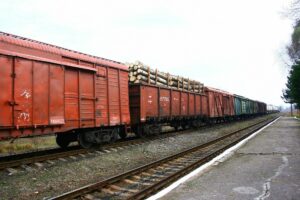
Moldovan Railways does not agree to the transfer of grain through Kuchurhan – UZ changes the route
The State Enterprise “Moldovan Railways” currently does not approve the transfer of grain cargo through this border crossing, so Ukrzaliznytsia is redirecting them to other junctions.