Trump, tankers and geopolitics. What 2025 was like for global shipping
13.01.2026 - 17:30
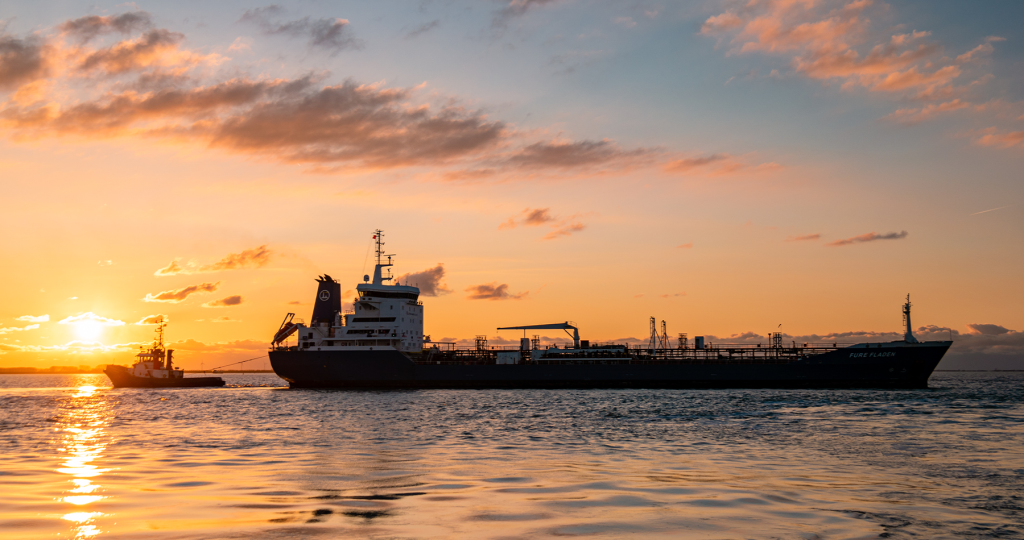
Routes have become longer, insurance has become more expensive, and political decisions have turned compliance into a full-fledged operational function – in 2025, these three factors had the strongest impact on freight rates, schedules, and tonnage availability.
USM continues the series of materials about what 2025 was like for global and Ukrainian shipping. This time, we recall the challenges that global carriers faced and what the shipping world will remember about the past year.
Between Scylla and Charybdis: how the danger in the Red Sea dictated its terms to the market
In 2025, the Suez Canal route remained problematic for a significant portion of the market. As of May, vessel tonnage at Suez was about 70% lower than in 2023. This supported the practice of bypassing the Cape of Good Hope for many liner services and parts of the tanker segment.
The additional miles quickly turned into a capacity shortage. Vessels are occupied longer on the voyage, container turnover is slowing down, and spare tonnage in the system is disappearing without any fleet write-offs. At the same time, ship rerouting has increased demand for tonne-miles.
In early July, the market received a reminder that risk in the Red Sea is not measured in miles alone. The cost of insurance has increased significantly following Houthi attacks on civilian vessels. War risk premiums have increased from about 0.3% to 0.7% of the value of the vessel, and in some quotes have reached 1%. Thus, for a vessel with an estimated value of $100 million, a 0.7% premium means about $700,000 for just one passage, excluding other surcharges.
This state of affairs lasted until October, when Yemeni militants declared a “truce”. However, the first practical signals of a cautious return of shipping to the region appeared only in December. Thus, on December 4, the CEO of Hapag-Lloyd said that the return would be gradual. He estimated the transition period at 60–90 days in order to restructure logistics and not create congestion in ports due to the simultaneous reversal of a large number of services to Suez.
On December 18–19, 2025, the container ship Maersk “Sebarok” passed through the Red Sea and the Bab el-Mandeb Strait. The company called this an initial transit and did not announce a full return to Suez for the East–West network. Another shipping giant, CMA CGM, has announced plans to return to the Suez Canal in January (i.e. this year).
Despite the decline in Houthi activity, another marker of instability in Yemen emerged on December 30. The Saudi coalition struck the port of Mukalla. The Yemeni factor remained unpredictable in late 2025, so the return to the Suez Canal looked manageable and gradual.
USA vs China: when port fees became a tool of pressure
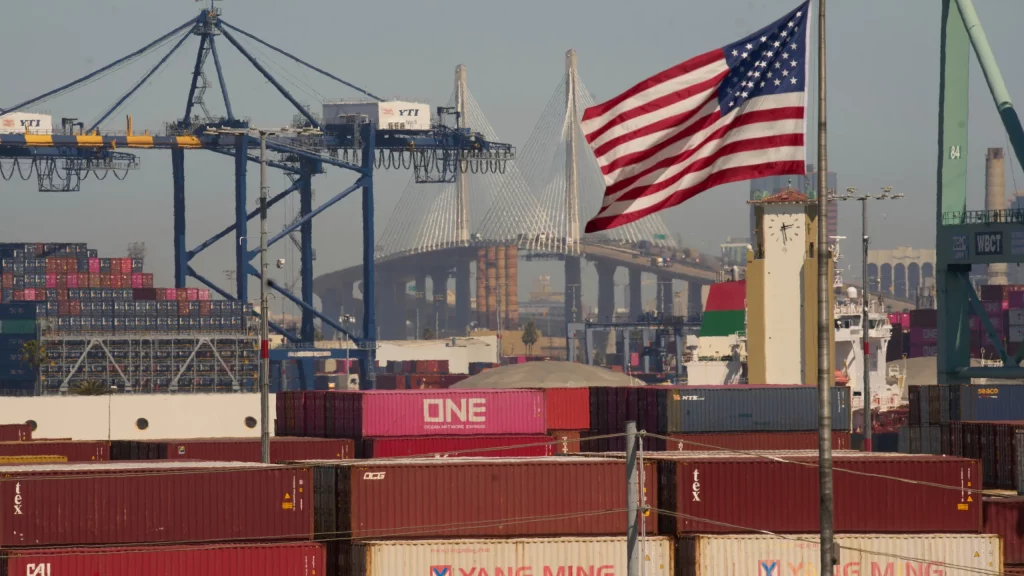
For maritime logistics, 2025 was the year when trade policy began to translate into direct costs for ship calls. For example, on February 24, Reuters reported on the USTR’s proposal to introduce port charges for Chinese-built ships of up to $1.5 million per call at a US port. Other elements were also discussed in the package, including additional payments depending on the share of Chinese-built ships in the operator’s fleet. A USTR public hearing was scheduled for March 24, 2025.
The industry emphasized the scale of the problem at the very beginning of the discussion. The CFO of CMA CGM said at the time that China builds more than half of the world’s container ships, so such rules would affect almost all major carriers, even if they are not Chinese companies.
In October, the story moved from discussion mode to implementation mode. As a result, the potential costs for top container carriers in 2026 were estimated at about $3.2 billion.
Cargo owners and operators sought to minimize exposure to “toxic” (from a regulatory perspective) tonnage on routes to the US, which created additional capacity distortions and rate volatility. Therefore, carriers began to prepare tonnage replacement on routes to the US and review service rotation.
China responded symmetrically. Thus, for vessels with a US connection in Chinese ports, a fee of 400 yuan per net tonnage was introduced from October 14, with an increase to 640 yuan from April 17, 2026, 880 yuan from April 17, 2027 and 1,120 yuan from April 17, 2028.
Finally, after a brief trade war, Trump and Xi agreed on a 12-month pause in port fees on October 30, providing temporary relief. For the market, however, it was a sign that port fees can now be changed by political decision and quickly built into the rate and schedule, especially on the largest trades.
Container alliances: reassembling networks and betting on punctuality
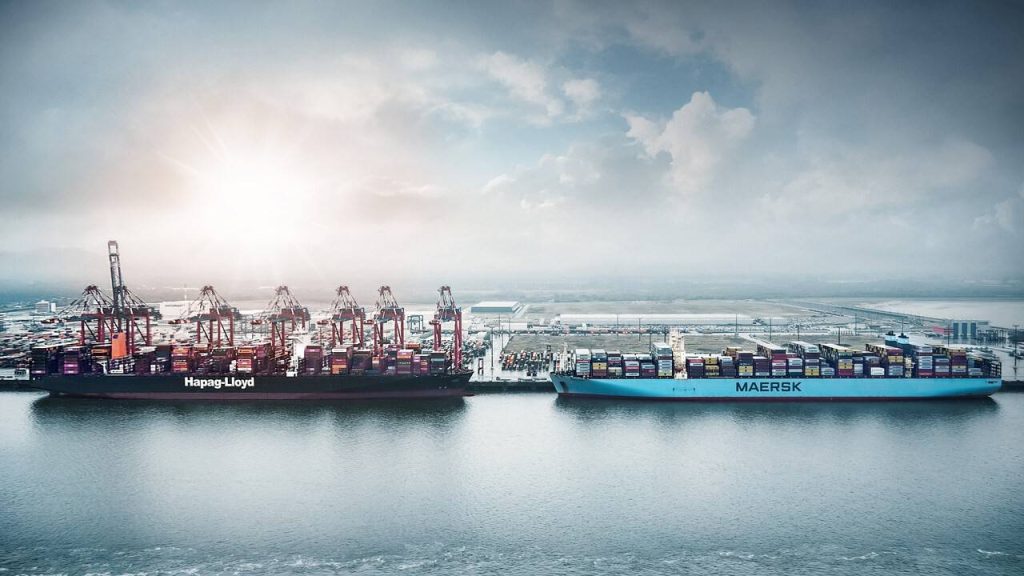
While the world was discussing the Red Sea and Trump’s tariffs, the container market was experiencing another, quieter, but very noticeable change — a reshuffle of networks. For the industry, the year began with a major “divorce” and several new “marriages of convenience.” Formally, 2M — the partnership between Maersk and MSC, which the companies announced in 2023, ended in January 2025. The end of 2M meant that the largest players would no longer share capacity on key East–West trades, which would change service networks, port call schedules, container positioning logic, and the way cargo owners sign long-term contracts. The first major alliance after 2M was the merger of Maersk and Hapag-Lloyd into Gemini Cooperation. Hapag-Lloyd reported that Gemini had demonstrated over 90% reliability of port call schedules in its first months of operation. For cargo owners, this seemed like a practical answer to chronic schedule disruptions, when the Suez Canal bypass increased transit time and increased the cost of planning errors.
MSC went the other way. After the completion of 2M, the company developed its own network on the East–West routes. This meant greater planning autonomy and less dependence on slot coordination with a partner. For the market, the consequence was simple. Other combinations of services and connections appeared on the same trades, and some customers changed their usual chains due to the new port rotation and other transit points.
In parallel, on February 9, the Premier Alliance between HMM, ONE and Yang Ming appeared. Within the framework of the alliance, the companies agreed to share vessels on trades between the USA and Asia, the Middle East and Europe. For operators, this was a way to maintain the frequency and coverage of services at a time when the overall network of container lines was changing almost simultaneously on several routes.
Against the backdrop of these changes, Ocean Alliance, on the contrary, has set a long horizon. In February 2024, CMA CGM, COSCO, Evergreen and OOCL announced the extension of cooperation until 2032. This reduced the risk that the entire alliance structure would “float” at the same time. In 2025, such a longer horizon became a factor of stability on some routes, while other players were engaged in restructuring
Panama Canal: Ports as a Geopolitical Asset
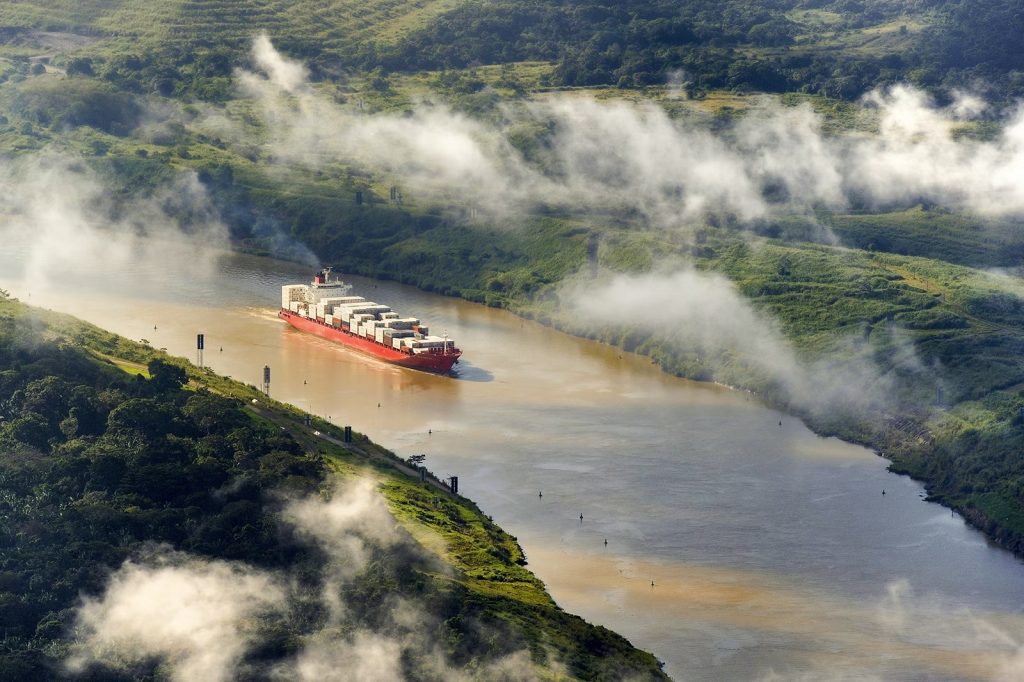
In 2025, the Panama Canal became a touchy subject for shipping for two reasons. The first was political. After his inauguration on January 20, Donald Trump began publicly promoting the idea of returning US control of the canal. In his statements, he also spoke of alleged Chinese management of the canal.
The second reason was purely business, but with political implications. On March 4-5, CK Hutchison announced a $22.8 billion deal to sell its port business to a consortium including BlackRock (through Global Infrastructure Partners) and Terminal Investment Limited, an affiliate of MSC. A key element for Panama was that the consortium would receive 90% of Panama Ports Company, which has operated the Balboa and Cristobal ports at the canal’s entrances for more than two decades.
The deal came on top of Panama’s internal tug-of-war over port ownership rights. The port concession was originally signed in 1997 and extended in 2021 until 2047. In 2025, it became the subject of political and legal attacks. A government audit launched in January 2025 estimated the potential fiscal losses from the possible concession at $1.3 billion due to tax incentives and benefits.
China took advantage of this uncertainty. In July, it became known that China’s COSCO was trying to influence the structure of the deal. And already on December 16, China increased its demands and began to insist that COSCO receive a controlling stake in this transaction. This increased the risk of the deal collapsing or being significantly reformatted.
Forced pressure on Venezuela as a new risk for the oil market
Despite the general habit of Trump’s populist statements about the “return” of the Panama Canal or Greenland, the transition to direct military action against Venezuela at the end of the year turned out to be quite unexpected.
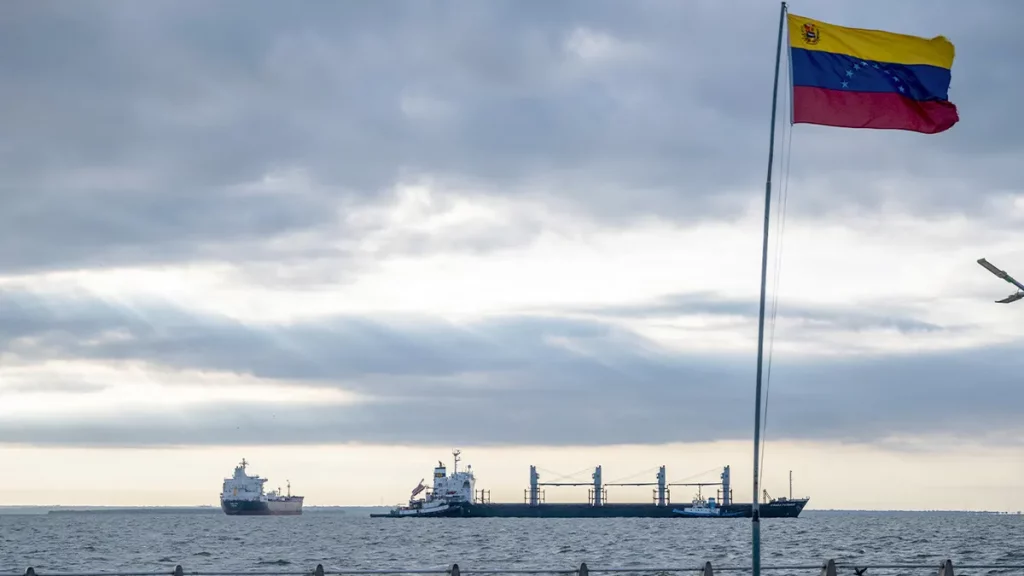
In the fall, the US began an operation allegedly targeting drug-smuggling boats near Venezuela. In parallel, Donald Trump accused Venezuelan leader Nicolas Maduro of involvement in maritime drug trafficking. Already on December 16, 2025, this grew into a “complete and total blockade” of all sanctioned oil tankers entering or leaving Venezuela.
The news immediately hit the market due to expectations of reduced exports. Brent crude rose by about 1.2% to $59.62 per barrel, and WTI by 1.3% to $56.00. Meanwhile, the US intercepted two fully loaded Venezuelan oil tankers in December, and US ships patrolled the Caribbean. The pressure has forced many shipowners to simply change course. All this will lead to a sudden naval operation against Venezuela and will continue with the delays of the “shadow” fleet, but already in 2026.
Have Western sanctions taken effect?
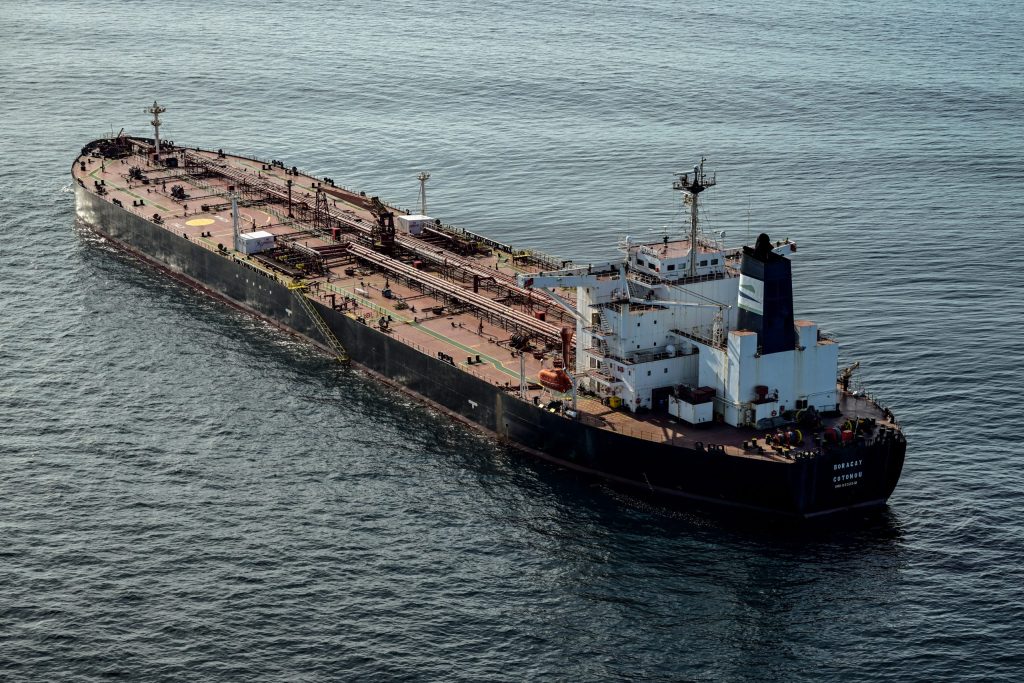
Another of the most important trends of 2025 was that the US introduced one of the toughest sanctions packages against the Russian energy sector ever. In particular, Gazprom and Lukoil, as well as 183 vessels transporting Russian oil, were affected. The package also included oil trading chains and insurance providers, which provided a significant part of the transportation.
The market felt the effect in a few days. As early as January 15, almost 500 thousand tons of Russian oil products were stuck on tankers that were subject to sanctions. Banks, insurers, brokers and terminals are becoming more cautious. And counterparties are reducing their willingness to accept such consignments due to the risk of secondary consequences and reputational losses.
So in 2025, the carrier and charterer no longer had enough basic checks of the cargo and the country of destination. It was necessary to work out the chain at the ship and service level, who was the actual owner and manager; what flag and classification society; what P&I coverage and whether the insurer appeared on the sanctions lists; whether the AIS was turned off; whether the ship was connected to STS transshipment schemes. All this affected the ability to complete the voyage without blocking payments, refusing service or delays in the port.
Russia responded by scaling up parallel logistics. Part of the “shadow fleet” increasingly relied on old tankers with opaque ownership structures, registrations in convenient jurisdictions and a service circuit outside traditional Western insurance and financial practices.
Meanwhile, Europe also began to put pressure on this segment with more applied tools. Thus, on October 19, the EU dared to propose a maritime declaration that would allow member states to conduct inspections of the “shadow fleet” in coordination with flag states. And on December 18, the total number of EU-sanctioned vessels approached 600.
Effective SBU “sanctions” against “shadow” Russian tankers
However, sanctions alone cannot counter the Russian fleet. The end of the year showed that Russia’s “shadow” tanker logistics has become a direct military target.
The first high-profile episode occurred on November 28, 2025. The Turkish authorities reported that two tankers from the Russian sanctions segment had suffered explosions near the Bosphorus Strait in the Black Sea. On the way to Novorossiysk, the Kairos tanker unexpectedly suffered an “external impact,” after which a fire broke out. Soon, the Turkish maritime services also reported damage to the second tanker, the Virat, about 35 nautical miles from the coast. Smoke was detected in its engine room.
On December 2, the picture for the Russians was complicated by another incident. The Russian-flagged Midvolga-2 tanker, loaded with sunflower oil, reported a drone attack about 80 miles from the Turkish coast. Ukraine officially denied involvement, saying it had no reason to attack a vessel on such a route, and suggested that Russia could have staged an attack.
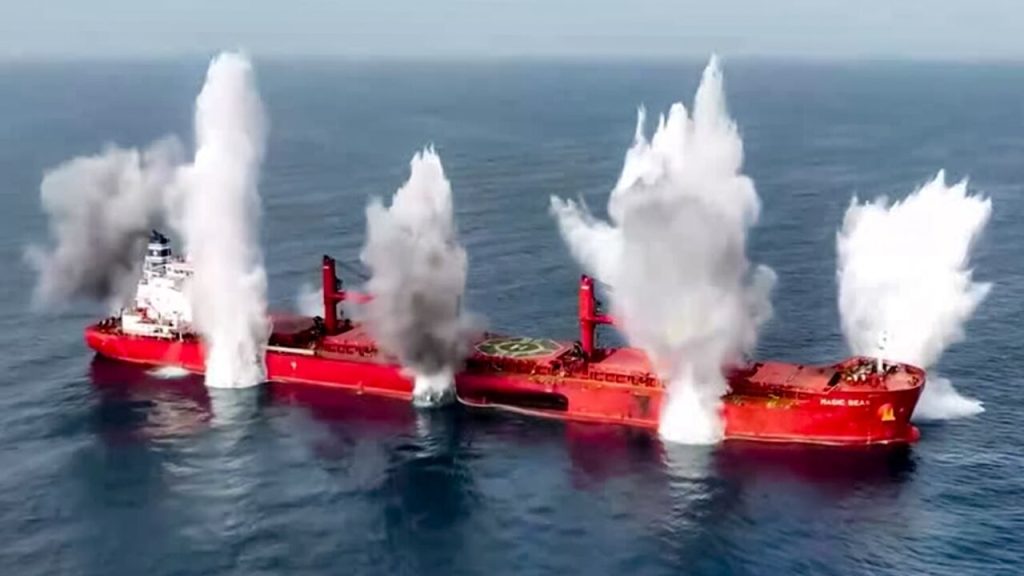
The culmination of the series occurred on December 10, 2025. Then Ukrainian naval drones hit the Dashan tanker in the Ukrainian exclusive economic zone as it headed for Novorossiysk. According to the SBU, the vessel was moving at maximum speed with its transponders turned off, after which powerful explosions damaged the stern and caused critical damage. It should be noted that the Dashan is under EU and UK sanctions and is sailing without a known flag registry.
Military insurance for voyages to the Black Sea has become more expensive against this background, and policies were reviewed virtually every day.
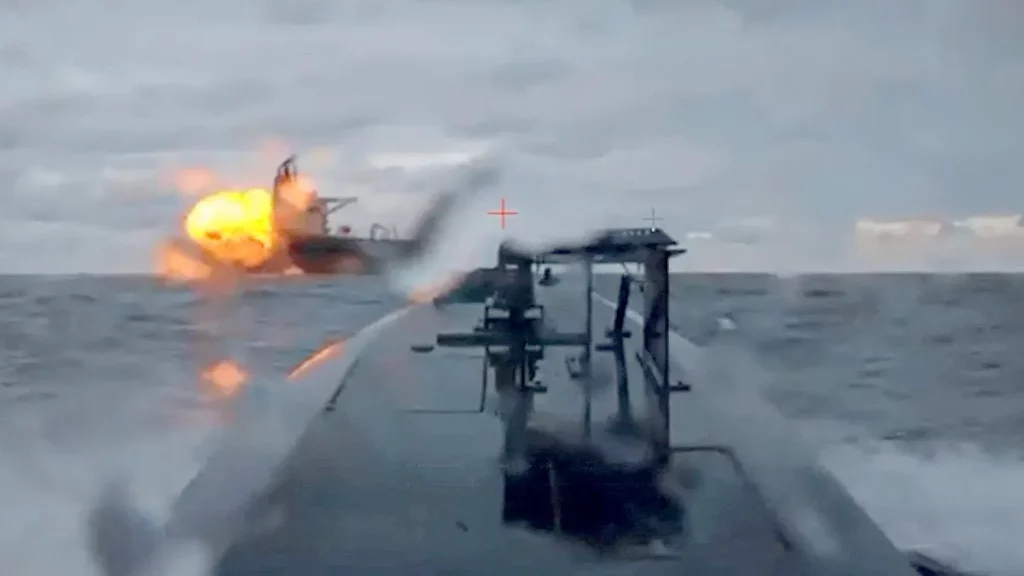
Naval drone attack on the Dashan tanker of the so-called Russian shadow fleet on December 10
Read also: How the market reacted to the attack on tankers carrying sanctioned oil
Instead of conclusions
Last year showed that the global market no longer exists as a single field with universal rules. Routes and networks became dependent on security corridors, political decisions and sanctions lists no less than on the supply and demand of tonnage. Even a short change in risk quickly turned into numbers – whether it was an insurance quote, additional miles, or the cost of a ship call.
It was a year when states began to work more actively with the sea as a tool of pressure. The US and China showed that port dues can become part of a trade war. And the Venezuelan case reminded us that sanctions can turn into a forceful format and affect tanker flows physically, and not just through paper restrictions.
For Ukraine, the 2025 result has a clear practical framework. Russian oil remained one of the main sources of financing the war, and attacks on tanker logistics increased the price of this resource for the aggressor. When “gray” shipping becomes even more dangerous, Russia has to pay more for each ton of export — in money, time, and the risk of losing a means of earning.
Despite the fact that 2026 begins without a guarantee of rapid normalization, there is still room for healthy optimism. The main thing is not to forget the lessons that last year gave us. And in particular, the fact that in the modern world, competitiveness is determined not only by the price of transportation or the speed of cargo delivery, but also by the ability to adapt and manage risks.
Read also: A year in the ports of Great Odesa: what challenges did the industry overcome in 2025.