What is the agricultural sector in southern Ukraine preparing for? What problems do farmers face and why irrigation systems are important
14.11.2025 - 14:00
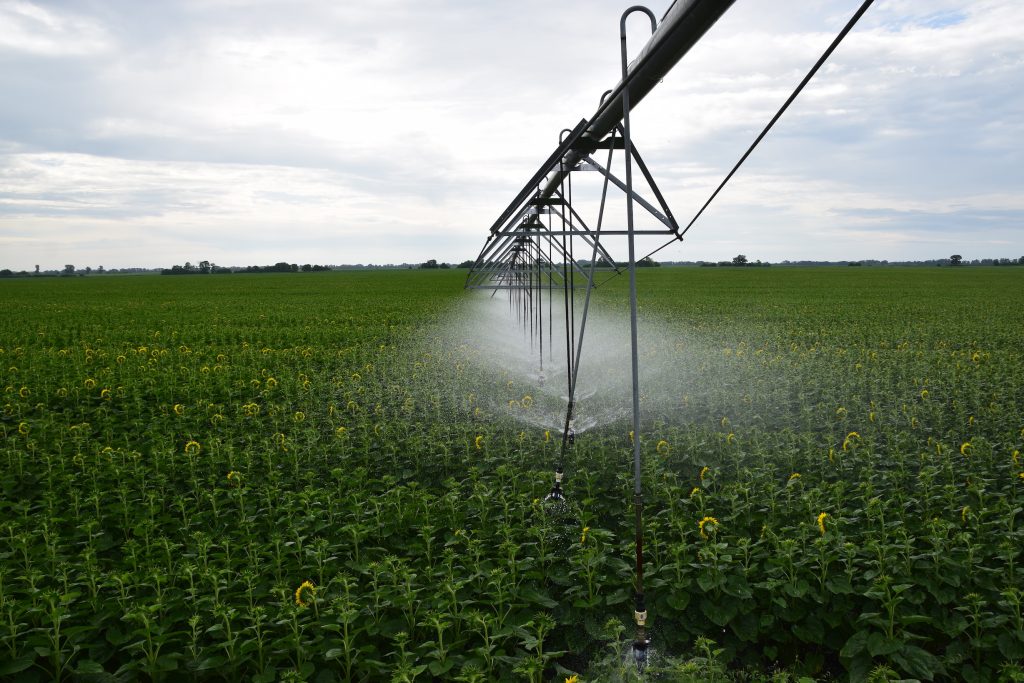
Sea exports in Ukraine are directly related to the agricultural sector, which is increasingly facing numerous challenges every year. War, climate change, logistics problems – all this has an impact on farmers, and subsequently on sea exports and the economy of Ukraine as a whole.
USM has collected all the main challenges that farmers in southern Ukraine face at the beginning of the new season, and also talked to farmers and agricultural specialists about the consequences of the war and the importance of irrigation and land reclamation systems.
The impact of war on the agricultural industry
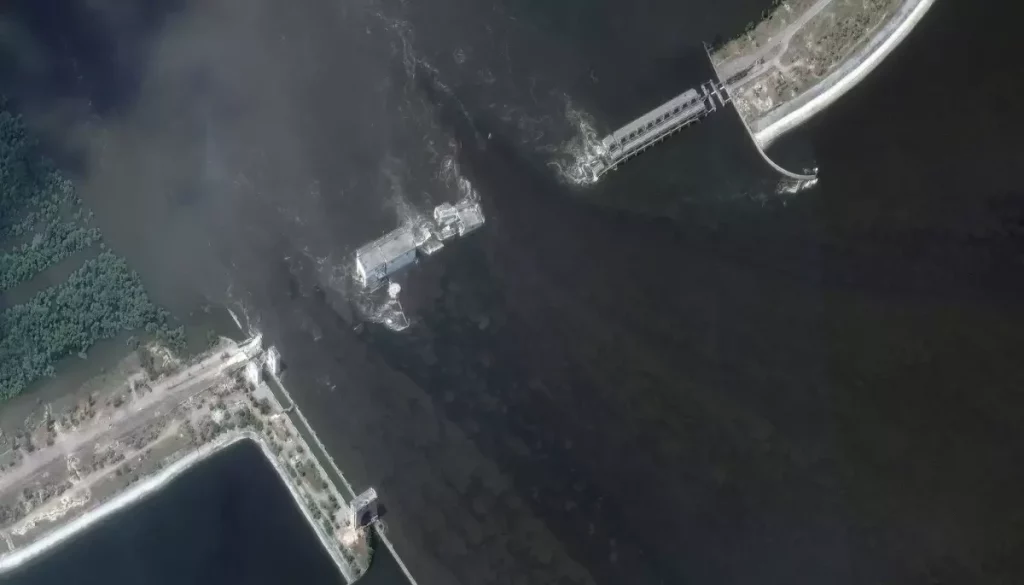
Of course, as in recent years, the biggest challenge for the agricultural sector is the war. The combination of infrastructure destruction, shelling, mining of fields and water shortages in some regions as a result of the Russians blowing up the Kakhovka hydroelectric power station led to significant local crop losses in 2025. As a result of the demolition, the damage to state property of land reclamation systems and canals amounts to 150-160 billion UAH. In general, the Kakhovka reservoir was the source of irrigation for 94% of the systems in Kherson, 74% in Zaporizhia, and 30% in Dnipropetrovsk regions.
In addition, the Kakhovskyi reservoir provided power to 584,000 hectares of land to which water was supplied for irrigation. In drought conditions, such damage from the war is simply catastrophic and leaves entire regions with large losses. In particular, estimates from various sources show that due to the drought and related problems, yields have decreased on significant areas – nationwide, cases of a 30-50% decrease in yields have been recorded for 1.2 million hectares, with the southern regions being among the most vulnerable.
Some farms report complete loss of winter crops and significant crop losses due to fires and droughts, especially in areas where irrigation has become impossible.
In addition to losing access to water, farmers are facing power outages, which affect the operation of pumping stations and irrigation systems. Some farms in the southern regions are idle precisely because they cannot meet energy needs for water supply.
The war has had the greatest impact on farmers working in the southeastern part of Ukraine, in particular the Kherson, Zaporizhia and Donetsk regions. In the south, the key problems are constant shelling, drought and mining. In addition, many people have been displaced from frontline areas as a result of the war, so the availability of labor for agricultural work has also decreased.
In addition to state assistance, it is necessary to find effective solutions. As a result of the occupation of land, Ukraine has lost a significant amount of territory available to farmers, which is why farms are looking for ways to increase the productivity of available land.
Climate change
The survival of the agricultural sector in southern Ukraine is also complicated by climate change, the manifestations of which are exacerbated as a result of the aforementioned draining of the Kakhovka reservoir due to Russian terrorism.
The reservoir was an important water management complex in southern Ukraine, which covered the water deficit for social, economic and environmental needs, and also ensured the bioclimatic stability of the territory of risky agriculture.
According to the Ministry of Agrarian Policy and Food, in 2023–2024, an increase in climate risks was observed in southern Ukraine: spring-summer droughts and a general increase in temperature. Uneven precipitation, alternating with long dry periods, negatively affects the yield of the main crops: wheat, corn and sunflower.
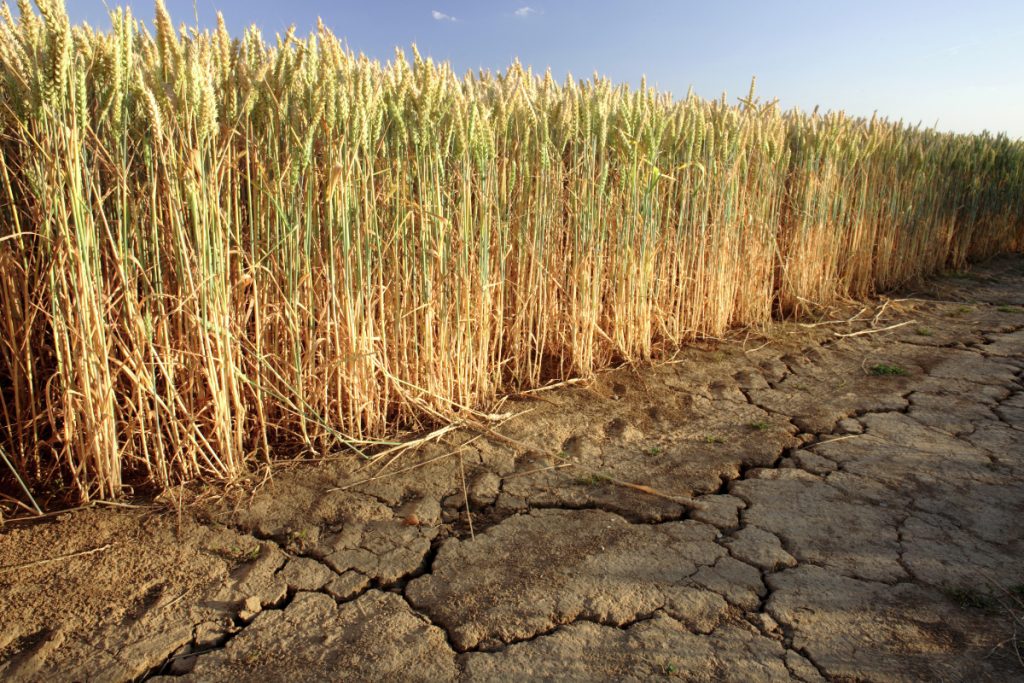
Climate change increases the risk of a decrease in yield in non-irrigated areas. According to scientists, by 2050, up to 80% of arable land in the south may be at risk of insufficient moisture. This directly affects the agricultural economy and export potential.
Climate change is already affecting the Ukrainian agricultural sector, as the last two years have been very dry. Climate change is affecting the southeastern regions the most and affects how much a farmer gets per hectare.
It is also worth noting the difficulties with mineral fertilizers – many people applied significantly less fertilizer to their hectares, which in the future also affected the harvest.
Today, other associations and scientists are also reporting a decrease in yields. Thus, in August, the Ukrainian Agrarian Business Club reported that the average wheat yield in Ukraine in 2025 is currently 37.2 quintals per hectare, which is 19% less than last year and 13% lower than the average for the last five years.
The National Academy of Agrarian Sciences (NAAS) also noted a significant drop in yields. According to estimates, in 2025, winter wheat will be harvested by 7.8% less, and barley by 7.1% less than in 2024.
The average yield of winter wheat fell from 4.3-4.5 tons per hectare in 2024 to 3.1 tons per hectare in 2025, and winter barley from about 4 tons per hectare to 3.3 tons per hectare.
The scientists emphasized that in the main grain regions of the south and east (Kherson, Mykolaiv, Odesa, Dnipropetrovsk, Zaporizhia, Kharkiv), the average yield of winter grain crops is 1.25-2.9 tons per hectare, while in the central and western regions it is 5-6 tons per hectare. Of course, this was influenced by the climate.
The importance of land reclamation and irrigation systems
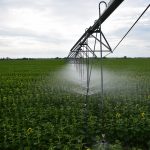
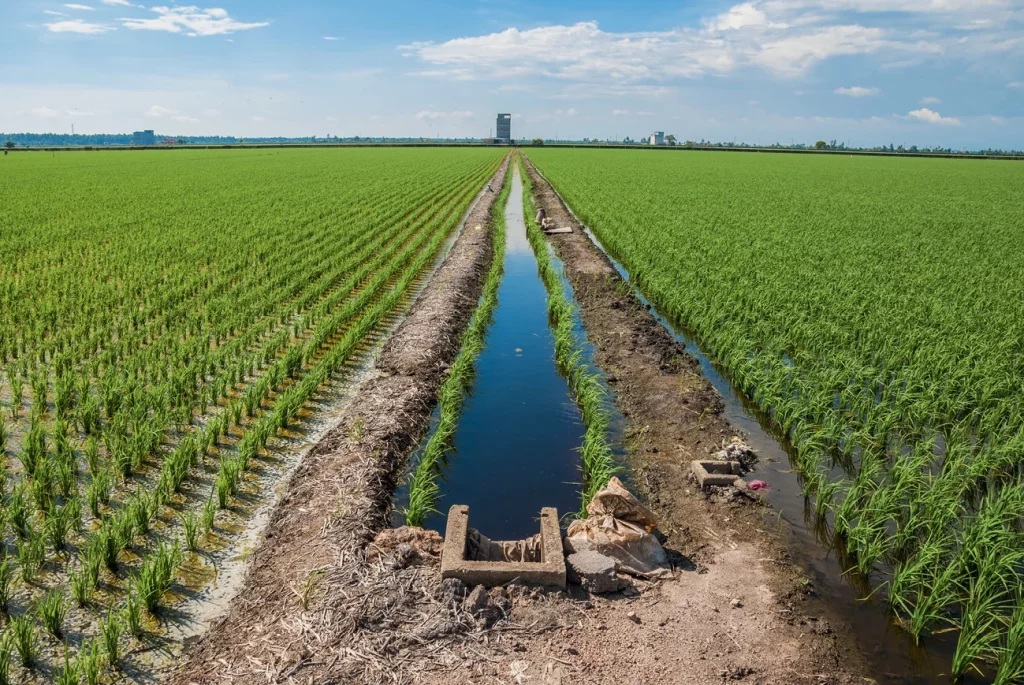
At the same time, many problems of southern farmers could be solved by scaling up irrigation systems. Statistically, in Soviet times, there were 2.3 million hectares of irrigated land in Ukraine. By 2022, only 540 thousand hectares of such land remained, and this year, after the demolition of the Kakhovska hydroelectric power station and the lack of support for such systems, 134 thousand hectares remained. It is worth considering that currently in Ukraine there are 30-34 million hectares of cultivated land – the need for irrigation systems becomes almost obvious.
In addition, according to some climate forecasts, by 2050 it will be impossible to grow agricultural products on approximately 50% of Ukrainian areas, or 14 million hectares.
As the director of the scientific and production association “Pivdendiprovodhosp” Oleksandr Panasyuk told USM, land reclamation and, in particular, irrigation systems are primarily the country’s food security.
“This is directly related to river and sea logistics. The conditional domino effect – irrigation systems have a great impact on yield, and agricultural products are the most important cargo transported by ships,” Oleksandr Panasyuk noted.
According to the expert, Ukraine has almost the best irrigation systems in Europe and in general has many such systems, for example, the Danube-Dniester system (50 thousand hectares) or the Nizhny Dniester system (over 40 thousand hectares), etc.
“These are large infrastructure facilities that combine water intakes, main pumping stations, pumping stations, canals, pipelines, networks of intra-farm systems, etc.,” Oleksandr Panasyuk added.
The expert added that Pivdendiprovodhosp has done a lot of work on auditing existing irrigation systems in Ukraine. Thus, almost all systems are a legacy of the Soviet Union, and the vast majority need to be restored.
“Water sources will also need to be updated. For example, there are lakes that have water mineralization higher than permitted for irrigation. Modernization of irrigation systems is a complex problem that requires a large-scale approach and investments,” notes Oleksandr Panasyuk.
Separately, the expert noted that now the strategy should be to restore and modernize irrigation systems, rather than build new ones, since the first option is much more economical and faster in time.
Deputy Head of the All-Ukrainian Agrarian Council, Denys Marchuk, also emphasized the importance of irrigation, as well as the importance of proper water distribution in his comments to USM.
“Currently, the entire line of irrigation systems needs modernization. We have a little over 134 thousand hectares of land left that we can irrigate. But being able and doing are different things, so the All-Ukrainian Agrarian Council supports the law on water user associations so that people can self-organize, take on management and invest money there,” adds Marchuk.
He also said that the state is currently an ineffective manager in this area, in addition, corruption components remain in the energy sector, in particular, in price formation; water prices are also problematic — they are often too expensive.
“When people themselves launch an effective connection to electricity, build proper and modern irrigation systems, this will make the water supply process cheaper and generally make their business profitable,” summarizes Denys Marchuk.
Farmers in southern Ukraine also emphasize that without irrigation systems today it is “impossible”. As Andriy Chicheta, the owner of the agricultural enterprise from Mykolaiv region “VVI Agro”, noted in a comment to USM, the condition of these systems currently does not meet all the requirements.
“There are practically no irrigation systems now. Over the past 30 years, it seems that no one has needed these irrigation systems,” Andriy Chicheta noted.
The expert added that it is currently difficult to imagine which private enterprise can restore these systems.
“All these systems are large-scale infrastructure. Not only pipes, but also water sources, so restoration requires very large resources and finances. This requires a very large investor and the only question is what can be offered to this investor in return,” Andriy Chicheta added.
The owner of “VVI Agro” also noted that irrigation systems affect the productivity of agricultural crops by several times, but without them, farming in southern Ukraine is under great threat.
“This year, as of August 1, we had 128 mm of precipitation. In August, we were a little lucky, and another 30 mm fell. Thus, we have 150-160 mm of precipitation depending on the field — this is, in fact, a desert. Without irrigation systems, without restoration of reservoirs and afforestation, in 15 years it will simply be impossible to work here,” Andriy Chicheta summarized.
Irrigation systems as a way to increase profits
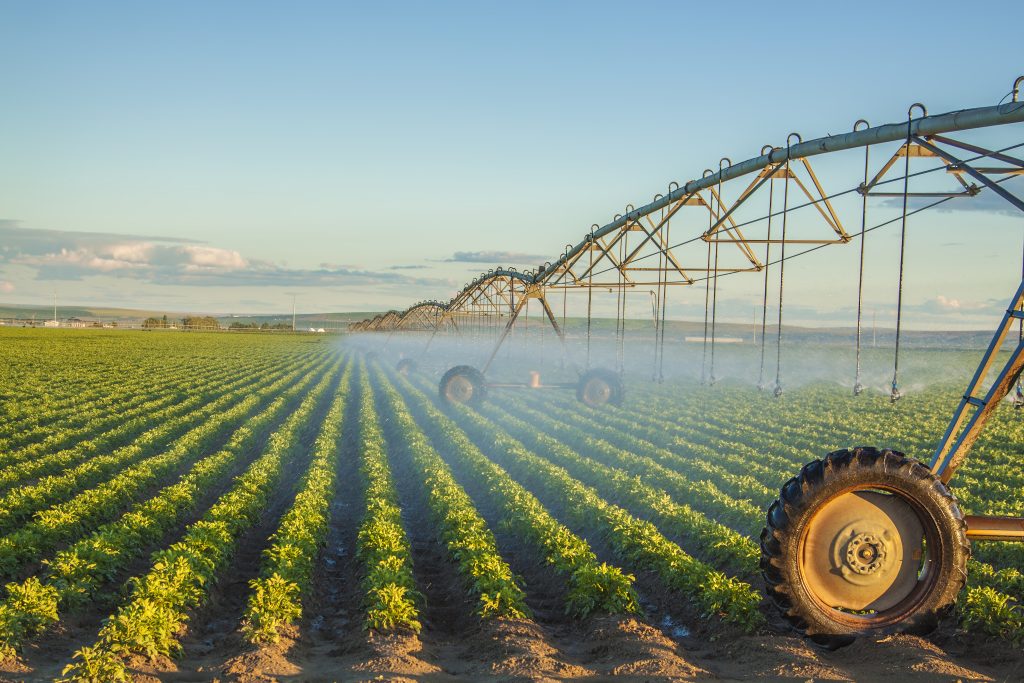
Irrigation systems are needed not only as protection against climate change, but also to increase profitability in general. The loss of fields due to Russian aggression has led to the fact that farmers are looking for ways to increase profitability per hectare. And it is no secret that the presence of an irrigation system can also increase profits.
As reported by the director of the Institute of Water Problems and Land Reclamation of the NAAS, Mykhailo Yatsyuk, depending on the crop, irrigation increased the yield several times.
“Before the war, the net gross profit per hectare in some places reached 30-35 thousand UAH, and it was a fairly profitable business,” the expert noted.
In a comment to USM, the president of the Ukrainian Grain Association, Mykola Gorbachev, also expressed the opinion that intercropping systems can significantly increase yields.
“If we compare non-irrigated and irrigated areas, then even on crops such as corn, we can increase productivity more than twice — for example, 16 tons instead of 7 tons. Thus, we can say that the payback, depending on the investment, will be from two to four years. If we consider land as a resource that brings money, then on irrigated lands you can grow crops that require more attention than corn, for example, vegetables, berries, etc. — which brings much more profit per hectare,” Mykola Gorbachev noted.
The President of the UGA also added that the availability of irrigation systems opens up new opportunities for agricultural producers – of course, depending on the development of their farm and its development strategy.
“I think that irrigation is the future for agricultural producers in Ukraine, but, unfortunately, it requires large investments and few credit programs would allow producers to build these systems,” the expert noted.
Position of the ministries
It should be noted: the importance of the land reclamation reform was also emphasized by the Ministry of Agrarian Policy – in 2023, the ministry noted that 32 water user organizations had already been created, 28 of which were in irrigation systems and four in the drainage zone.
This year, the State Agency for Land Reclamation, Fisheries and Food Programs also noted that the development of the irrigation system is one of the priorities for the State Fisheries Agency.
“We are working on the restoration and reconstruction of land reclamation systems. In particular, with the support of foreign partners, 18 projects are currently being implemented in Ukraine to modernize land reclamation infrastructure, which will allow for the restoration of irrigation on more than 6 thousand hectares,” said Vladyslav Neveselyi, head of the State Fisheries Agency.
The Agency also added that today more than 30.5 thousand hectares of the southern and central regions are already irrigated.
What trend awaits southern farmers in the new season
Currently, the agricultural sector of southern Ukraine operates under multiple risks: climatic, military, logistical.
However, it seems that among all factors, land reclamation is the basic prerequisite for stability. Irrigation significantly increases yields and minimizes the impact of climate fluctuations, but due to war damage and institutional barriers, its potential is only partially realized. And this is exactly what needs to be changed – without the development of irrigation systems and restructuring of the government’s approach to this problem, Ukrainian farmers will get worse every year. Comprehensive development of land reclamation infrastructure, integration of modern technologies, attraction of investments and formation of water user organizations will determine the ability of the southern agricultural sector to maintain comp