Due to the suspension of port operations, the entire market is under great pressure. Interview with Ukrport President Dmytro Barinov
30.07.2026 - 17:35
After the intensification of Russian attacks on civilian vessels and port infrastructure, Ukrainian maritime exports have once again found themselves in a state of uncertainty.
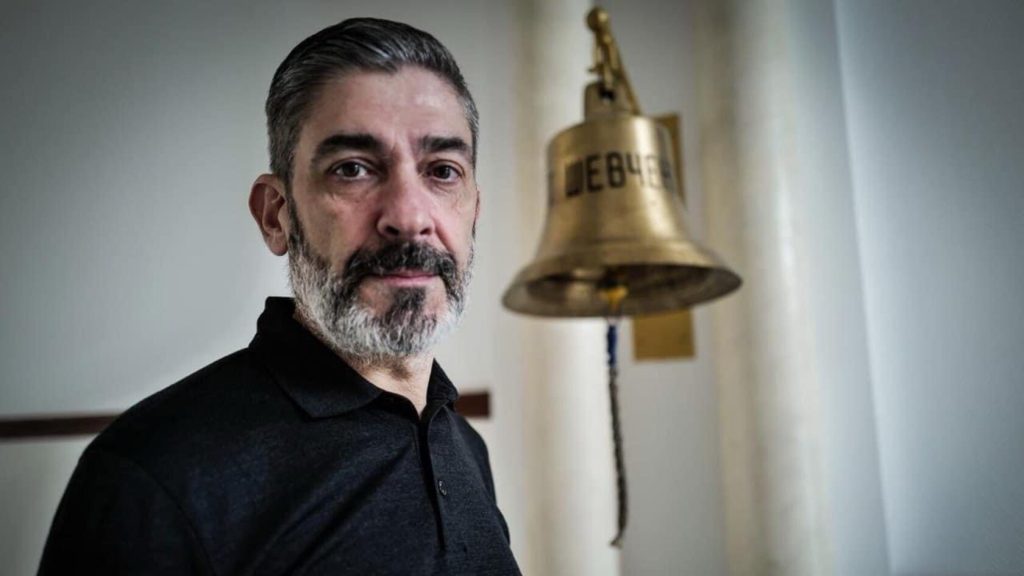
USM spoke with Dmytro Barinov, President of the Association of Ports of Ukraine “Ukrport”, about how this situation affects the port business, traders and farmers, whether the Danube and land routes can replace deep-sea ports, as well as what is needed to return foreign vessels to the Ukrainian direction.
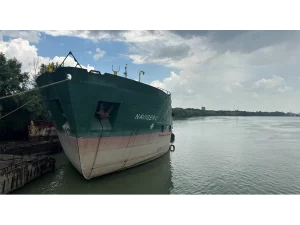
– The other day in Mykolaiv, the Russians fired on civilian vessels that had been blocked in the port for several years. In your opinion, why are blocked vessels that were not going to go to sea suddenly being attacked?
I have no words, but I will try to answer. These vessels have been in Mykolaiv since February 2022, they were blocked and could not leave, since the passage past the Kinburn Spit remains dangerous. The Spit is temporarily occupied by the Russians, and they can actually fire on the vessel directly.
As far as I know, we are talking about Turkish ships. The Turkish side has tried to resolve this issue at the international level several times, but there was no result.
These ships are simply standing. Some of them may have cargo remnants, some may have no cargo. There are no full crews there, but the watches are reduced, because the ship cannot simply be abandoned. It must be controlled in terms of safety, ecology and technical condition.
And it was these ships that the Russians targeted. I do not see any logic in this. This can be compared to a situation where there is already a prisoner of war: he is not moving, he has no weapons, he is waiting for an exchange or some other decision. And suddenly he is simply taken out and shot. Why? For what purpose?
The same here. These are blocked civilian ships that were not going to go to sea and did not pose any threat, there is no rational logic in such an attack.
– How have the recent attacks on the port infrastructure of the Odessa region and disruptions in the sea corridor affected the work of port operators?
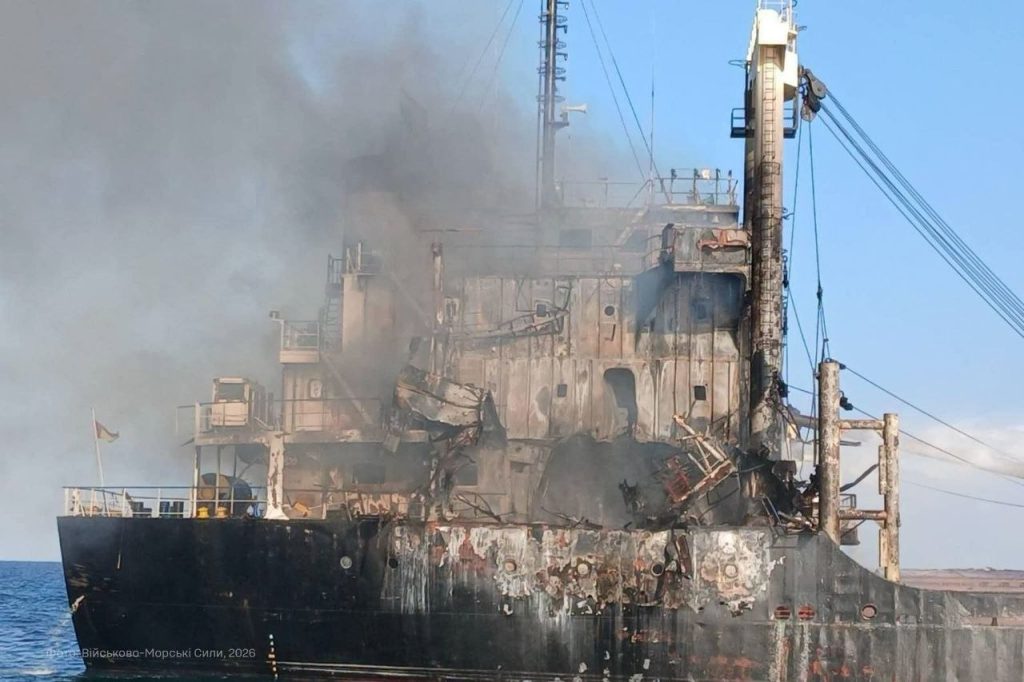
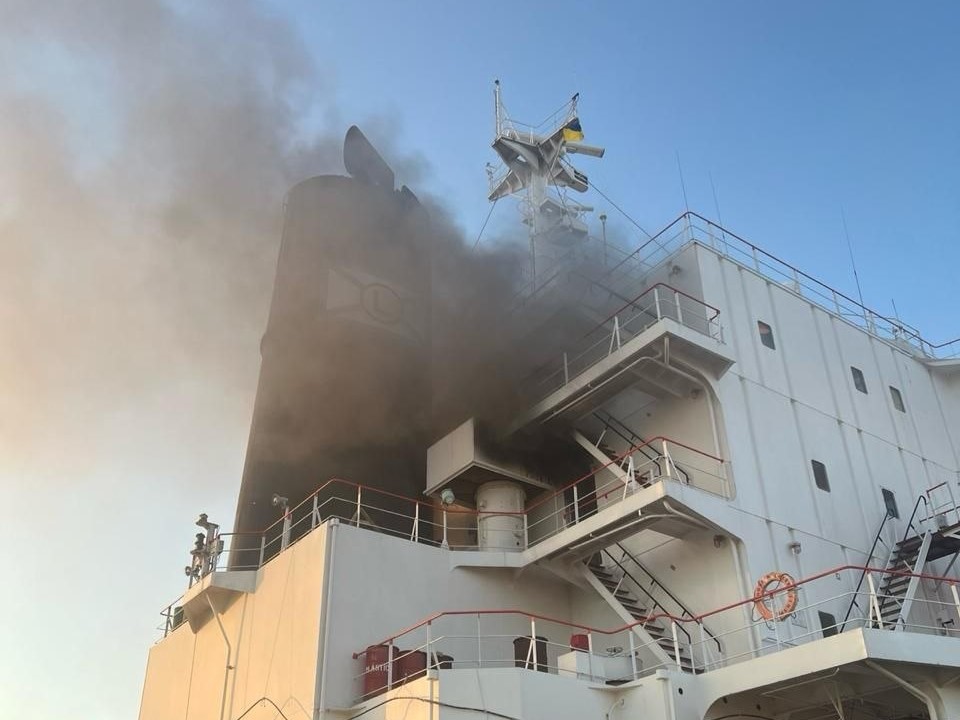
The Russians have changed their approach somewhat. If since 2026 they have indeed increased the number of attacks on port infrastructure compared to 2025, then in July they began to specifically attack ships — not only those in ports, but also those entering or leaving them. And this has become a serious problem.
Shipowners, captains and crews now assess not the level of freight or possible earnings, but first of all the risk to life.
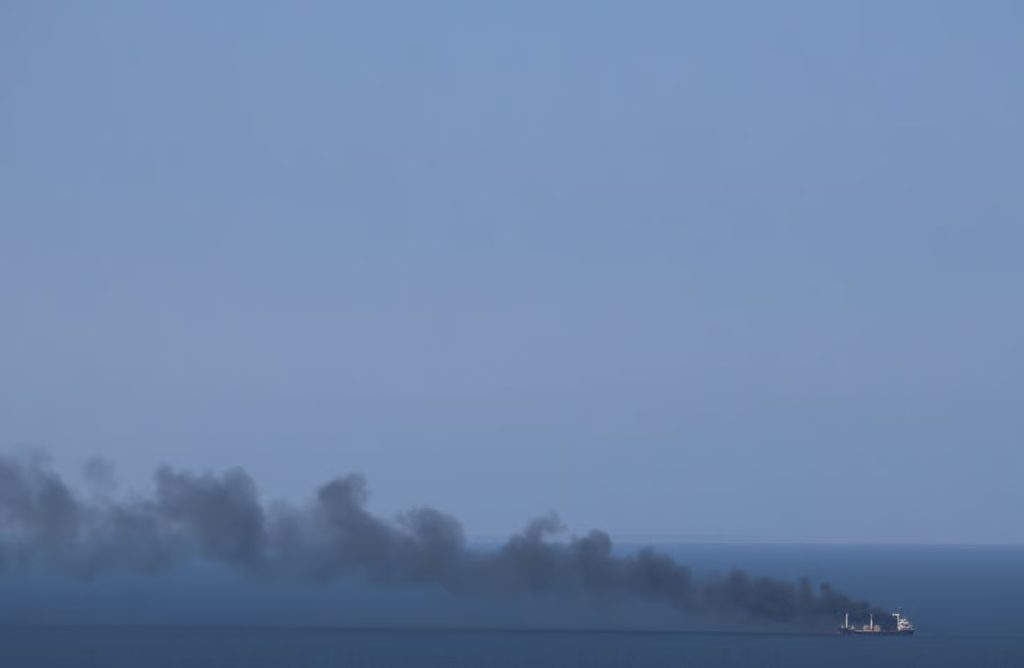
An illustrative example was the attack with three missiles on a ship with corn, which later sank. Then 10 people died. This is a terrible situation, and it certainly affected the market.
When the system worked stably, traders purchased products or sent them to ports, announced a price, for example, for a ton of wheat or barley, and the farmer already decided whether he was satisfied with this price, and after that he transported the grain. Now traders have suspended purchases, because they are not sure what they will be able to do with this cargo. Will it be possible to ship it by sea? Will a “shaheed” or a missile fly through the terminal? Such a risk existed before, but then there was a certain rotation: ships loaded, left, and new cargo arrived in their place.
Now this certainty is gone. And this is the main problem – shipping by sea has actually come under question.
– So, this pause is now observed at all levels of the port business?
Yes, no one knows how the situation will develop further, everyone is waiting. There were statements by the political and military leadership of Ukraine that certain steps are being taken to normalize the situation in the Black Sea. This issue, as far as I have seen, was discussed both at the General Staff and the National Security and Defense Council. It was also raised at the UN level, where the Security Council was convened.
We also raised this issue, and, in my opinion, there should be a global reaction to such actions by Russia. That is why everyone is waiting now, business is waiting, enterprises are waiting – everyone is trying to understand what to do next.
– Do you know of any initial losses from this de facto suspension of work? That is, maybe they are talking about idle ships, or maybe someone is no longer waiting, but is redirecting cargo to other directions?
No, there is no talk of idle ships at the moment, because if a ship does not call, it then looks for another freight and goes in a different direction. The problem will be to return them to these directions, but that will be later. Now we can say that, of course, the terminals that do not reload cargo are losing. The Sea Ports Administration is losing because ships do not call and do not pay port dues. This has a direct impact.
Ukrainian farmers are losing a lot, unfortunately, because the price of products is going down. The reason is the increase in the cost of logistics. Now, as they say, it is a buyer’s market, not a seller’s.
In July-September, farmers usually have significant expenses. During this period, they pay rent for shares, purchase diesel fuel, seeds and fertilizers – both for harvesting the current crop and for preparing for the new sowing campaign. That is, agricultural producers need working capital. Previously, in such a situation, they sold part of the products and thus closed their financial obligations. But now it is more difficult to sell grain, in particular because purchase prices may already be lower than the cost price.
In such a situation, farmers actually have to store grain and wait for better market conditions. But at the same time, they need to pay off their obligations. Therefore, agricultural producers are asking the state to provide preferential loans for this period so that they can fulfill their financial obligations and carry out sowing.
Another factor is added to this: farmers predict a large harvest – more than 80 million tons. In addition, there are still unsold residues from last year on the market. This situation always happens, but now it has been additionally compounded by problems with sea exports.
And if the market is already under pressure now, then with the start of active harvesting of corn and sunflower seeds, the load will become even greater.

– Do you think that the Danube ports and land routes can “provide a shoulder” to sea ports in this case?
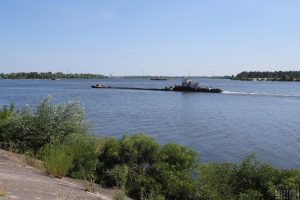
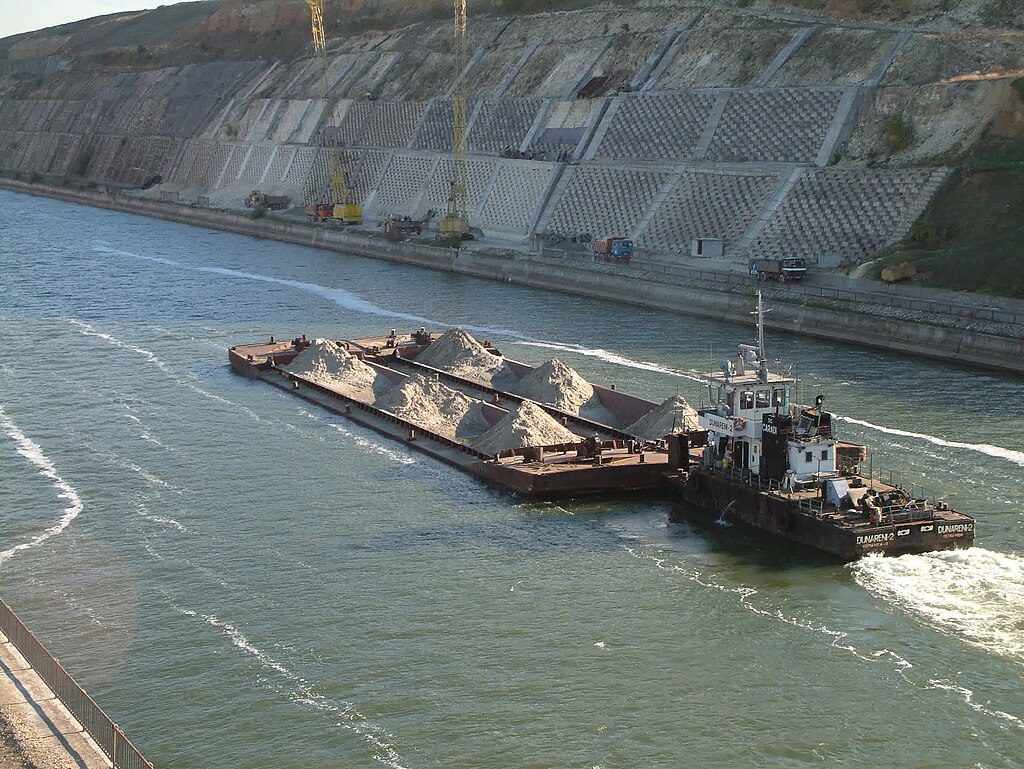
They will provide this “shoulder”. But we must understand that we cannot replace the capabilities of deep-water Black Sea ports with the Danube or land. Over four and a half years, the state and business have significantly developed alternative logistics: a network of border checkpoints, Danube ports, land routes. The Danube in 2023 generally showed record results — even compared to Soviet times. Then 32 million tons of cargo were transported through it, and in May 2023 there was a monthly record — 3.2 million tons.
But this does not mean that the Danube is completely safe or can take on all cargo flows. Russia is also attacking Danube ports – both “shaheeds” and missiles are flying. The fact that Romania is located on the other side of the Danube, unfortunately, does not stop these attacks.
In addition, there are limitations in logistics itself. Sulina, the mouth of the Bystre are routes for relatively small vessels. If one “capsize” of 200 thousand tons can be loaded in the port of Pivdennyi in five or six days, then on the Danube for the same volume you need to load 20-30 smaller vessels.
Therefore, the Danube and land routes can work as a backup option, as a kind of “bypass”, some of the cargo will indeed go through these routes. But for this it is necessary to return to the practices that allowed alternative logistics to work quickly: to minimize unnecessary checks and controls, to ensure transit without delays, so that the cargo does not “get stuck” at individual stages and the entire chain works as a single mechanism.
– What do you think, and how to return foreign ships with foreign crews to us later, after the situation stabilizes?
I will give an example. In 2022, there was a six-month blockade of ports. After the signing of the Istanbul Agreements on July 20, the first ship left on August 1. Then the situation gradually normalized.
Then, when Russia began to block and slow down the work of this mechanism, and later withdrew from the Istanbul Agreements altogether, the Ukrainian military announced the operation of the Ukrainian corridor. The first ship, I even remember the name, Resilience Africa, left Chornomorsk. At first, everyone watched to see if it was safe or not, but then, day by day, shipping began to resume.
This is business. And it seems to me that business will very quickly find a way to return ships, normalize freight, insurance, and prices for agricultural products. If the market feels that it has become safer and calmer, the ships will return.
I don’t think that this requires any extraordinary efforts. At the same time, there is a difference between the types of transportation. For example, container services require a very clear schedule: when the ship entered, when it left, when the container arrived and when it left. That is why Maersk stated that it cannot yet provide such stability and is suspending work.
And for a bulk carrier, which takes 30 days from one port to another, the difference between 30 and 35 days is not so critical. Ukrainian exports are primarily agricultural products and ore, that is, cargo that is largely transported by bulk carriers. Therefore, I think that these vessels and these cargo flows can recover quite quickly if the situation becomes calmer and safer.
– What, in your opinion, can the state do now to help the port business?
First of all, we have always emphasized protection. In order for the port business to operate more or less stably, it needs to be protected. This includes, in particular, air defense systems that could cover our airspace. If there is protection, the ports will be able to operate.
Even constant air alerts are already significantly affecting work. We calculated that in 2025, the alerts lasted about 900 hours — that’s more than a month of continuous alert. That’s why we have previously asked to strengthen the protection of port infrastructure, and this issue remains just as relevant now.
The second important direction is informing the international community. We are now doing what we have to do: explaining what is happening. I give five, six, seven interviews a day to the world media, because people abroad don’t always understand what exactly is happening in the Black Sea and why it is important.
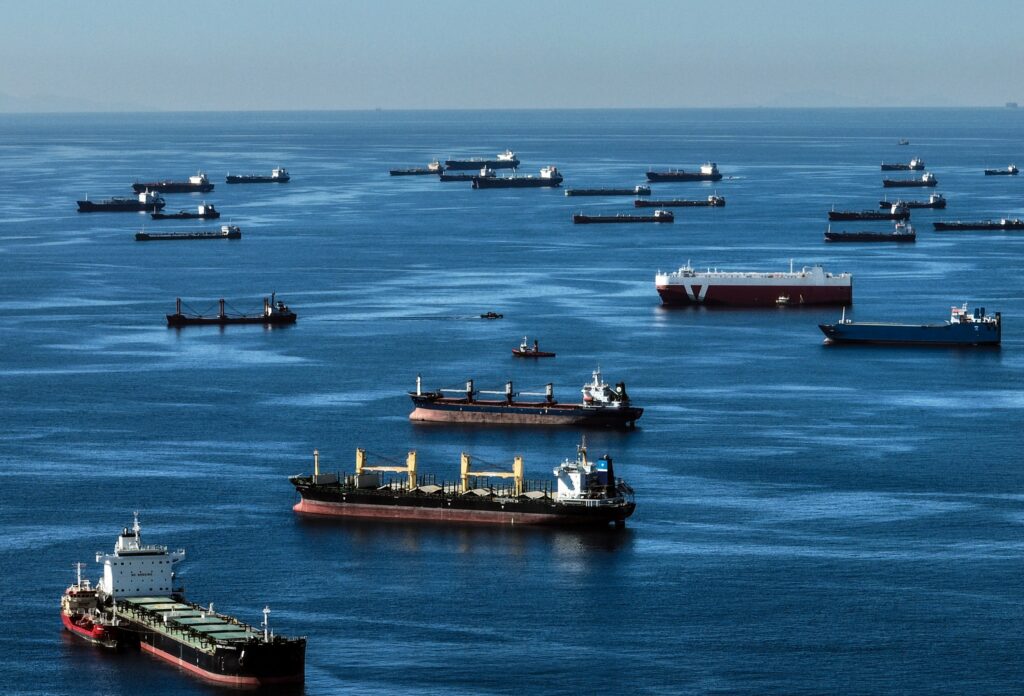
We need to convey this in clear language: almost everything that people use in the world is delivered by sea. Maritime trade is the basis of the global economy. For Ukraine, the sea is like a door to an apartment: if you close it, you can try to get out through the balcony or through a neighbor, but this is difficult, risky and cannot be a normal business model.
Ukraine has an export-oriented economy, and we need these “doors” to sell our products abroad. Therefore, they must be safe. Our partners, neighbors, NATO or other international formats can help resolve this issue. Perhaps it is about escorting ships by the Turkish or Romanian fleet, perhaps about other military mechanisms that would make it impossible for Russian aircraft and missiles to attack civilian shipping.
Ukraine raises these issues at various levels, and, I hope, there will be an international reaction.
As for internal solutions, the state could help business through tax mechanisms. If enterprises currently have no revenues, we can consider deferring tax payments. Preferential lending for this period is also needed.
I believe that Ukraine is a capable large maritime power, and we will find all the necessary solutions. Of course, we will cope.