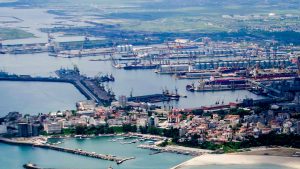
Russia exports grain through 15 ports instead of 38 due to drone strikes
28.10.2026 - 13:57
Shipments through Novorossiysk in October amounted to only 59.6 thousand tons compared to 1.7 million last year.
From October 1 to 20, Russia exported 1.135 million tons of grain through seaports compared to 4.515 million tons last year. Transshipment was carried out through 15 ports instead of 38, writes Elevatorist with reference to Russian media.
Wheat exports fell fourfold – to 1 million tons compared to 4 million last year, barley – 5.7 times, to 61 thousand tons, corn – 2.2 times, to 51 thousand tons.
Novorossiysk resumed shipments, but the volumes are meager. So, 59.6 thousand tons in the first 20 days of the month compared to 1.7 million tons last year. That is, the drop reaches almost 97%. For comparison, last year, over the same two decades, 3.2 million tons of grain were shipped through the ports of the Black Sea region, and the raid transshipment through Novorossiysk alone exceeded 1 million tons.
The main load shifted to the Baltic, where shipments increased 11 times, to 875 thousand tons. 308 thousand tons were exported through St. Petersburg, 294 thousand tons through Ust-Luga, and 273 thousand tons through Vysotsk.
In total, more than 100 ships were damaged as a result of Ukrainian strikes, and grain terminals in Azov and Novorossiysk were destroyed. Russian companies are re-equipping fertilizer and coal terminals in the Baltic and the Arctic for grain, and Russian Railways has given priority to transportation in these directions. In October, the Murmansk port was to receive a batch of 40 thousand tons for the first time.
The geography of supplies has also narrowed. In the first 20 days of October, Russia shipped wheat to 15 countries, compared to 29 last year. Egypt remained the largest buyer — 326.7 thousand tons, three times less than a year earlier. Deliveries to Turkey amounted to 43.1 thousand tons, 6.9 times less, which Tyurina attributes to logistics problems in the Black Sea. Exports to Iran decreased by 3.6 times, to 73 thousand tons. Barley and corn were shipped only to Iran.
The number of Russian wheat exporting companies decreased from 46 in the previous season to 25.
The growth of Baltic shipments also affected world prices. In the second decade of October, European wheat fell by $1 per ton, American wheat by $5. The price of Russian wheat FOB Novorossiysk remained at $210 per ton, in Vysotsk — $270.
According to the assessment of the Foreign Intelligence Service of Ukraine, the capabilities of the Baltic and Murmansk routes are not enough to replace the southern ports, and the Chinese route has significant limitations. The Russians themselves admit that the volumes of transshipment through the Baltic are significantly smaller than those previously provided by the Black Sea ports.
Earlier, USM reported that Russian vessels turn off AIS immediately after passing the Bosphorus.