Storms are still raising oil from the bottom that settled after the Chornomorsk strike
6.11.2026 - 11:21
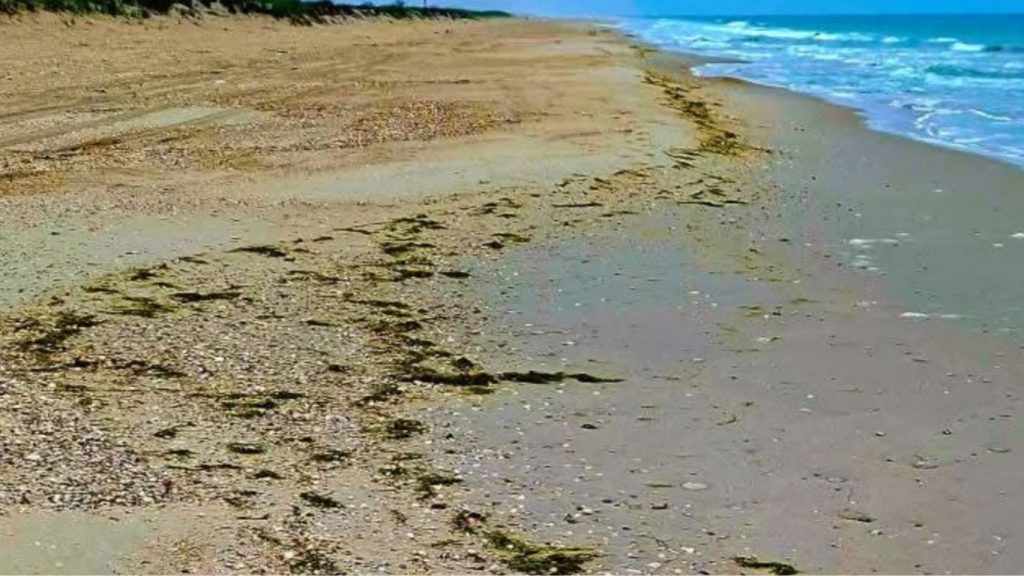
The substance polymerized on the bottom, and each storm carries it back to the sand.
Employees of the Tuzlivski Limany National Nature Park have discovered new areas of the coast and shallow water contaminated with vegetable oil. This was reported by the head of the park’s research department, Ivan Rusev.
“On November 3 and 4, 2026, employees of the national park discovered several more oil-contaminated areas of the coast and shallow water zones of the sea. Such pollution leads to a negative impact on the vulnerable microbiocenoses of the sandbank,” the ecologist wrote.
The reason for the return of the pollution lies in the physics of the process. Part of the oil settled on the seabed and polymerized, and storms lift it back up.
“Powerful waves and bottom currents during a storm act as a mechanical mixer. They shake this layer, lift the sand along with particles or lumps of fat into the water column and carry them ashore. A stable emulsion is formed in the water, and characteristic oily pollution settles on the sand of the beaches,” Rusev explained.
The previous pollution was recorded on October 26 after a strong easterly wind and storm. Then the area of the sandbank affected was about 10 thousand sq. m, but by the evening of the same day it had increased to about 100 thousand sq. m.
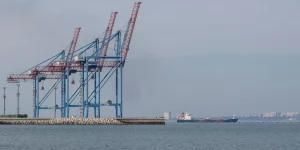
The oil entered the Black Sea waters within the national park after Russian strikes on the port of Chornomorsk on April 26, 2026 and near the Adzhalyk estuary. During the shelling, a tank with 6 thousand tons of oil was destroyed, and despite measures to contain the spread, the substance entered the port waters. Satellite monitoring confirmed that the spill had reached the protected area.
The consequences for the ecosystem have been recorded since spring. In May, a mass death of jellyfish was recorded in the park. 56 dead dolphins were also found on the coast. The national park called this number unprecedented.
As USM wrote, last month the Government updated the rules for protecting the water area from pollution.