
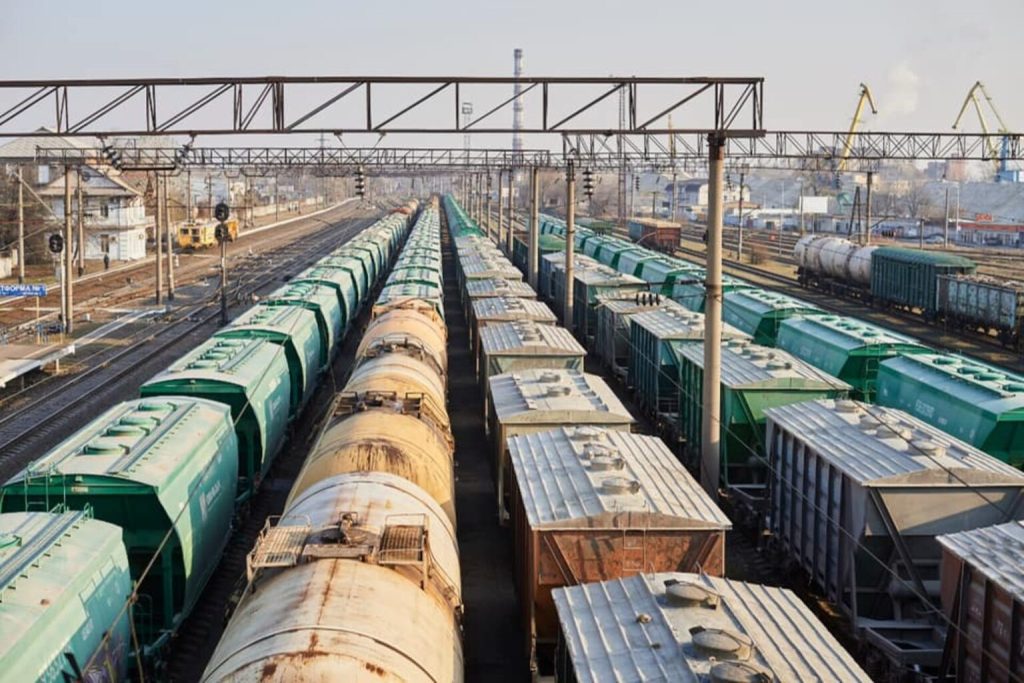
Grain transportation by rail to the ports of Great Odesa decreased by 90%
16.11.2026 - 12:21
On the Danube route, Izmail almost doubled, while Reni increased grain acceptance by 2.7 times.
The railway transport of grain for export to the ports of Odesa for November 1–10 amounted to 0.42 thousand tons compared to 4.38 thousand for the corresponding period in October. This is evidenced by the data of the weekly review of Spike Brokers.
The Danube ports showed mixed dynamics. 18.1 thousand tons of grain for export were sent to Izmail by rail – 45.7% less than for the corresponding decade of October, and another 17.6 thousand tons in domestic traffic. 18.3 thousand tons passed through Reni-Port, 2.7 times more than for the comparable period.
The traffic flow to the Danube ports for November 1–12 amounted to 439.5 thousand tons compared to 491 thousand for the same dates in October. Izmail received 230.2 thousand tons, Reni — 157.5 thousand, Orlovka — 33.9 thousand, Ust-Dunaysk — 17.9 thousand. The two largest ports together accounted for 88.2% of the flow.
In total, 1.292 million tons were processed for $685.3 million for November 1–12 — 20.2% more than the same period in October, the pace accelerated to 110.7 thousand tons per day in the last week.
The structure of shipments shifted towards oilseeds. Sunflower oil was exported in the amount of 178.1 thousand tons, which is 146.3% higher than the October figure, sunflower seeds – 33.9 thousand tons, 4.8 times more. Corn was exported in the amount of 209.3 thousand tons, compared to 87.9 thousand in October, wheat – 337 thousand tons, 13.9% less.
Rapeseed shows the opposite trend. Thus, seed exports amounted to 97.9 thousand tons compared to 135.4 thousand in October, and rapeseed oil – 14.8 thousand compared to 40.5 thousand. Oil shipments are decreasing faster than raw materials.
Recall that last week, due to the security situation and emergency shutdowns, several oil extraction plants stopped: on November 11, the Nizhynskyi Fat Factory after a drone attack, on November 12 — all Kernel and Delta Wilmar Ukraine plants with facilities in the Odesa region.
According to Spike Brokers, long downtimes can shift exports in favor of grains and seeds. Competition will be fierce for common sections of routes, border crossings and dry cargo capacities, since the bulk infrastructure of oils is not a direct substitute. For Ukraine, this is a risk of losing added value even while maintaining the total tonnage.
Rail transportation of grains for export for November 1–10 amounted to 288.9 thousand tons — 6.9% less than in October, and 63.9% less than last year’s level. 249 thousand tons were sent through western land crossings.
Grain wagon transfers to four EU countries increased to 374.4 per day, compared to 345.3 in October. Slovakia increased its acceptance by 36.4%, Romania reduced it by 21.1%. The accumulation of wagons at the approaches to the crossings as of November 11 increased to 4,392 units.
The day before, Russia attacked agrologistics enterprises in the Odesa region. According to preliminary data, two people were injured as a result of Russian strikes.