Russia imported almost a million tons of fuel by sea in three months — Defense Intelligence
18.11.2026 - 16:41
From July 18 to October 22, 2026, Russia imported about 989 thousand tons of fuel and high-octane additives by sea.
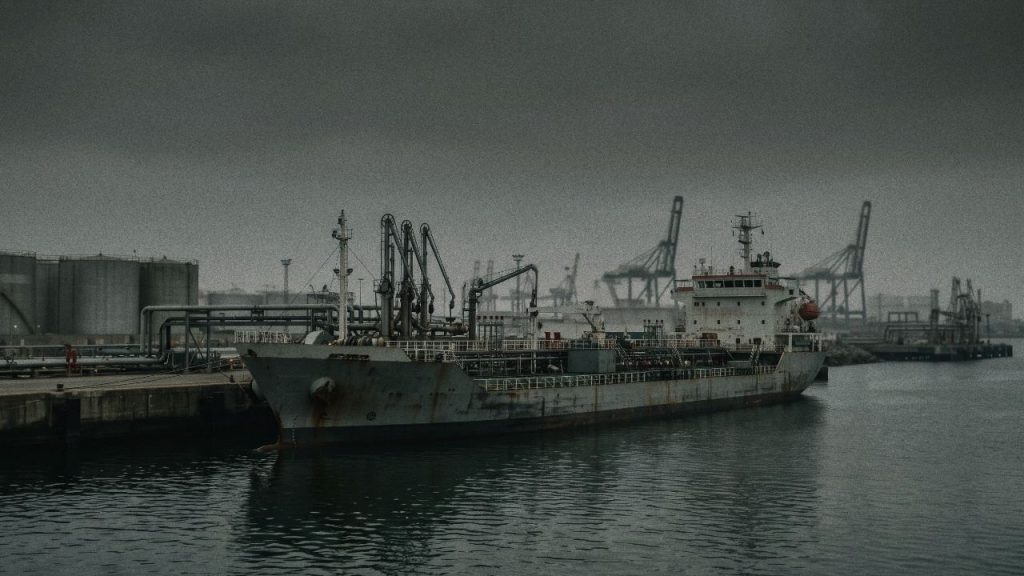
30 tankers were involved for transportation, which delivered 39 batches of petroleum products to Russian ports. This was reported by the Defense Intelligence of the Ministry of Defense of Ukraine.
According to intelligence, due to Ukrainian long-range strikes, Russia faced a fuel shortage on the domestic market and was forced to increase purchases of petroleum products abroad.
The largest share of sea imports was gasoline — 724.2 thousand tons (73.2%). Also, 128.1 thousand tons of diesel fuel, 106.7 thousand tons of Jet A-1 aviation fuel and 30 thousand tons of high-octane additives were delivered to the Russian Federation.
The main points of reception were the ports of Vitino and Vysotsk, where 15 consignments with a total volume of 573 thousand tons were received. These two ports accounted for 58% of all sea imports and 79% of gasoline supplies.
Of the 30 tankers involved in the transportation, 13 are under sanctions of the EU, the UK, the US or other partner states. Two more vessels — HANNA (IMO 9397456) and CAPIBARA (IMO 9267027) — are only under Ukrainian sanctions. The remaining 15 tankers are not included in the sanctions lists.
Russia received part of the fuel through ship-to-ship transfer (STS) in the open sea. According to the GUR, at least 216 thousand tons of oil products, or 22% of the total volume, were delivered to Russian ports in this way.
In particular, such operations were carried out near the Egyptian ports of Damietta and Port Said, as well as near the Spanish Ceuta.
One example is the transportation of gasoline from the Indian Vadinar refinery. At the end of July, the cargo was transferred from the tanker PHOTON to the TALISMAN near Damietta. On August 21, the TALISMAN arrived at the Russian port of Vitino. Both vessels belong to the sanctioned Russian company Sovcomflot.
By loading location, the largest volumes of fuel fell on Egypt – 364.7 thousand tons, Morocco – 219.1 thousand tons and South Korea – 191.1 thousand tons. At the same time, the Defense Intelligence emphasized that the place of loading does not necessarily indicate the country of origin of the fuel, since some ports were used for transshipment.
The intelligence established the exact origin of only about 264 thousand tons of imported petroleum products. In particular, 189 thousand tons of gasoline came from the Indian refinery Nayara Energy, 49.13% of whose shares are controlled by the sanctioned Russian company Rosneft.
The Defense Intelligence noted that Russia uses STS transshipment, disabling the Automatic Identification System (AIS) and changing the declared routes to circumvent sanctions restrictions.
Earlier, USM reported that the Defense Intelligence identified another 38 vessels that Russia uses to circumvent international sanctions. In particular, 10 non-sanctioned oil tankers are involved in both the export of Russian oil and the import of gasoline and diesel fuel to the Russian Federation.