COP31 adopted a statement on cooperation in the Danube-Black Sea-Mediterranean region
18.11.2026 - 15:59

The document identifies three priorities that provide for joint monitoring of pollution.
This was reported by the press service of the Ministry of Economy of Ukraine.
Participants of the international side event in the Ukrainian pavilion at COP31 in Antalya adopted a Joint Statement on Strengthening Cooperation in the Danube-Black Sea-Mediterranean Region.
The document is based on the “source-to-sea” principle and the Istanbul Roadmap 2023. This approach involves integrated management of aquatic ecosystems from river sources to coastal areas and seas, since pollution that enters the river far from the coast ultimately affects the marine environment.
The statement identifies three priorities: coordination of environmental monitoring and data exchange, preparation of an interregional project to increase the climate resilience of ecosystems, and strengthening institutional cooperation to overcome the consequences of climate change and Russian aggression.
Among the topics of discussion were the impact of Russian aggression on the ecological and climate security of the Black Sea region, joint monitoring of plastic and microplastic pollution, adaptation of water management and marine ecosystems to climate change.
The President of the International Commission for the Protection of the Danube River, Maria Shpanchyk, presented Ukrainian priorities for water diplomacy during Ukraine’s chairmanship of the ICPDR. She emphasized the need for early preparation of countries for droughts and floods, exchange of hydrological data, and coordination of actions.
Separately, the consequences of Russian aggression for the ecosystems of the Danube basin and the creation of a relevant working group at the initiative of Ukraine were discussed.
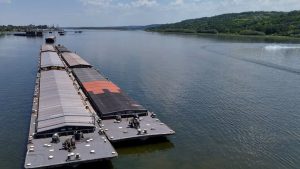
Earlier, the Danube Commission reported that the low water level on the Danube limits the draft of vessels and reduces the efficiency of grain logistics. This hinders the use of the river as an alternative route for agricultural exports.