Logistics and risk as a daily constant: summary of Freight Forwarders Updates 2026
30.03.2026 - 17:36
The Ukrainian logistics business enters 2026 with new rules of the game — from stricter customs regulations to security risks that have already become part of the operational reality. These challenges and practical approaches to solving them were discussed by the participants of Freight Forwarders Updates 2026 in Odesa.
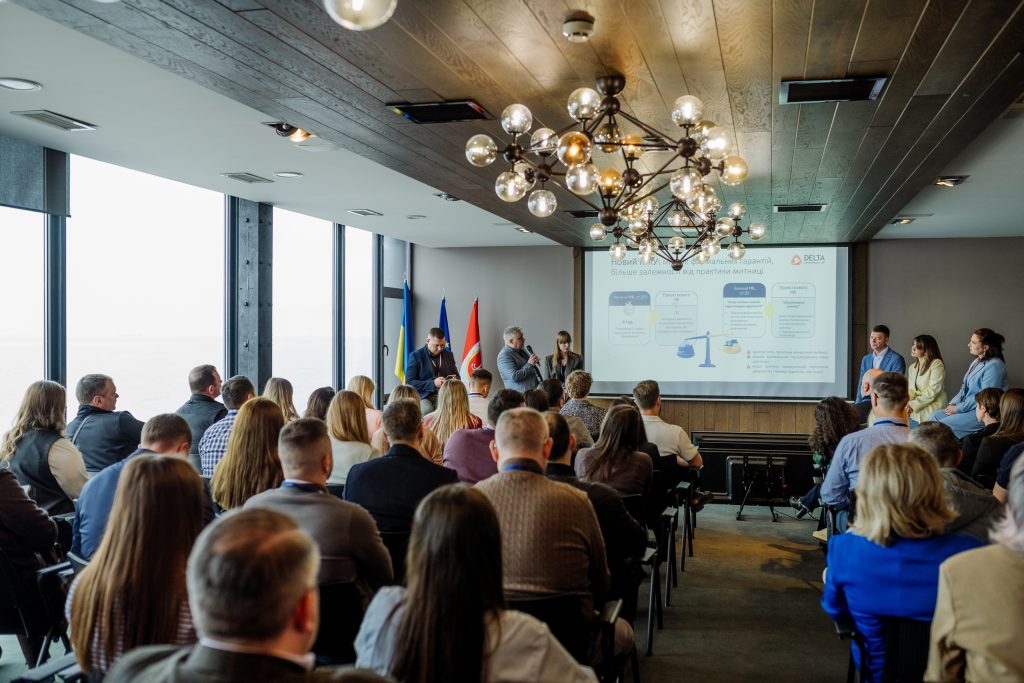
On March 18, the Freight Forwarders Updates 2026 industry event was held in Odesa, organized by the Association of International Freight Forwarders of Ukraine in partnership with the South Ukrainian office of the European Business Association and Interlegal.
More than 80 representatives of logistics companies, port operators, customs brokers and carriers met within the framework of this platform to discuss practical issues that businesses work with every day.
For Interlegal, supporting such events is a natural part of working with the market — as an opportunity to remain in constant dialogue with businesses, better understand their requests and form our own proposals to solve them. Based on the results of such discussions, we can clearly see what challenges our clients will face in the near future and suggest preventive actions before risks transform into real problems.
From the very beginning, the event set the tone for an open conversation about the market – without formalities and unnecessary theorizing. The organizers clearly outlined their expectations: to gather strong practitioners on one stage who will not just outline the problems, but will share solutions and insights on how Ukrainian business should act in the current conditions.
Viktor Berestenko took on the moderation, who managed to maintain the pace of the conversation and the balance between different points of view. Thanks to him, the dialogue remained as lively and practical as possible for all participants.
The format was also deliberately made more dynamic – the participants worked within a single panel with a lively discussion and questions after each speech. This approach allowed us to immediately test the theses in practice through the experience of other market participants.
It was in this context – as a conversation of a professional community that faces risks every day and jointly seeks solutions – that the further discussion unfolded.
The panel was started by Robert Zeldy, Managing Partner of Delta International Law, a customs expert, who focused on the upcoming reforms in customs regulation and their real consequences for business. And the key message of his speech was that there is no time left for business to adapt to the changes, the implementation of new rules begins literally here and now.
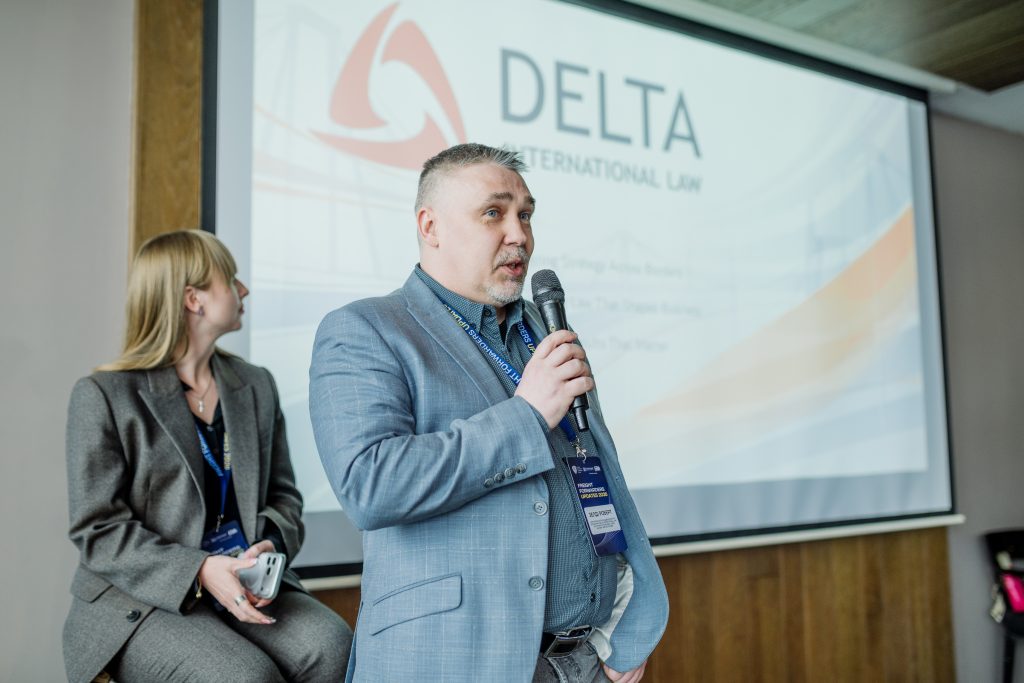
From April 19, 2026, the European authorization system will begin to operate in Ukraine, and from that moment on, companies that have not received authorization under the new rules will actually lose the opportunity to carry out relevant activities. Many players may simply not have time to go through this procedure. For example, according to the speaker, up to 40% of customs brokers may find themselves outside the market in the near future.
Robert Zeldy paid special attention to the practice of obtaining authorizations. As the expert noted, despite the formality of the procedure, more than 50% of applications are rejected at the preliminary assessment stage, in particular, due to such insignificant reasons as technical errors when filling out the questionnaire. Even those companies that submitted documents on time are not immune from delays.
At the same time, the current changes are just the beginning. Business is moving to a new model of customs regulation, close to the European one, and this transition, according to Robert Zeldy, may become more difficult than expected.
Among the most controversial novelties of the future customs code is the lack of clear deadlines for customs clearance. The wording “clearance is completed after verification of information” actually leaves room for arbitrary interpretation. For business, this means increased uncertainty and risks of delays.
An additional risk factor will be a change in approaches to customs value control. The abolition of current mechanisms and the lack of clear procedural deadlines may lead to delays in procedures and an increase in the number of disputes.
Against this background, according to the speaker, the demand for warehousing services will grow as a necessary tool for business in conditions of uncertainty with clearance deadlines. In conclusion, Robert Zeldy noted that strategically, business should prepare for even deeper transformations: the implementation of European approaches to customs control, digitalization of processes and increased transparency – up to the potential access of customs authorities to internal systems of companies in the future.
Valeriy Shnurenko, Head of Corporate Security at Risoil Group of Companies, Chairman of the EBA Corporate Security Working Group, spoke about security as a survival factor – not metaphorically, but literally. After all, in the situation in which the Ukrainian logistics market operates today, security has become part of the operating model, which is responsible for the very existence of the business.
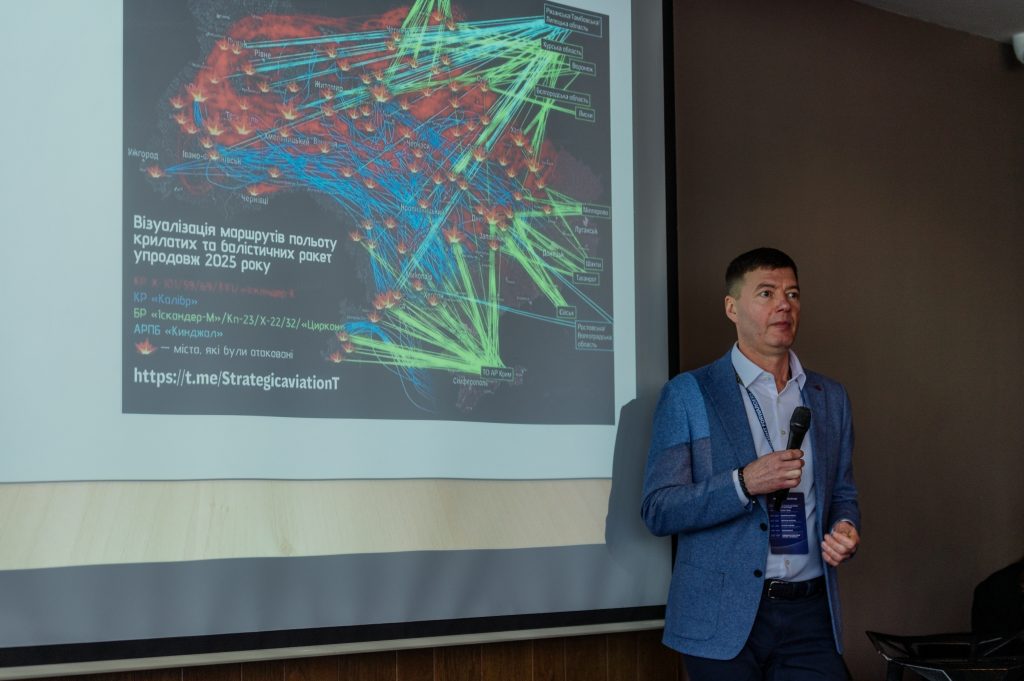
The expert shared his practical experience of working in conditions of full-scale war – constant air raids, strikes on infrastructure, blackouts, staff shortages, physical and psychological exhaustion of teams.
According to the data he provided, in 2025 alone, more than 850 air raids were heard in Ukraine – and each of them means the cessation of business processes.
In such conditions, as Viktor Shnurenko noted, it is not the largest that survive, but those who are ready for emergencies, have an action plan and the ability to adapt quickly.
In particular, the so-called “first 72 hours” plan turned out to be critical for companies. It is he who allows a business not to lose control in a moment of crisis – from understanding where key employees are, to maintaining access to company management. If you do not have such a plan, it needs to be developed immediately, the expert advises.
Among the specific tools that have proven their effectiveness since the beginning of the war:
• decentralization of management and distribution of critical functions among several people;
• the “three-hand” rule for access to passwords and key documents;
• transition to cloud solutions and backup power supply systems;
• scenario planning instead of the classic annual budget;
• changing approaches to infrastructure: instead of large and complex facilities – small, modular or mobile solutions that can be quickly restored or moved.
The topic of interaction with government agencies and the military was raised separately. Regular communication and access to information allow a business not only to respond to risks, but also to partially predict them.
In the context of this issue, the speaker drew the community’s attention to the threats to the sea corridor – the enemy’s intention to use surface drones to attack civilian vessels, the tactic of dropping mines into the water area from the air. The fight against these risks and the support of the sea corridor depend solely on the Armed Forces of Ukraine, but business, in turn, is taking all possible security measures from its side of responsibility. Companies are creating their own fire departments capable of operating during air alarms, investing in alternative security systems, reviewing logistics chains and diversifying routes. Joint efforts allow us to maintain the viability of the Ukrainian logistics system even in the fifth year of the war.
Separately, the expert emphasized that the main value of any company is and always will be the people who work in it. That is why investments in personnel training, in particular in first aid and emergency response, are now becoming part of the business strategy, and not an additional option.
A practical continuation of the topic of business interaction with institutions was provided by representatives of the Odesa Regional Chamber of Commerce and Industry – Head of the Department of Foreign Economic Relations and Export Support Anna Khokholkova and Legal Advisor Natalia Yaremenko, authorized to certify force majeure circumstances.
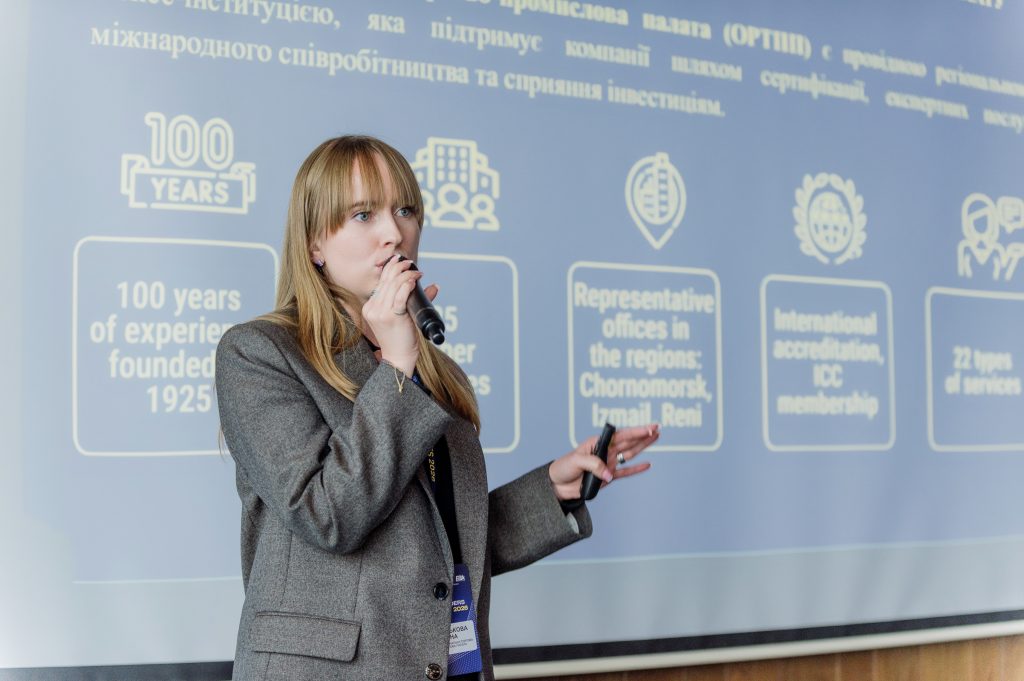
Їхній спільний меседж: навіть в умовах високої невизначеності бізнес має інструменти для роботи, захисту і розвитку.
Anna Khokholkova focused on the practical opportunities that the Odesa Regional Chamber of Commerce and Industry provides to Ukrainian business – in particular, on international markets. According to the expert, the interest in Ukrainian business from foreign partners is not decreasing today, but even growing. International companies are actively looking for partners in Ukraine – and often directly, without the mediation of the state.
As Anna Khokholkova emphasized, the Chamber of Commerce and Industry can actually become an entry point for companies that want to enter foreign markets, but have neither business connections nor a clear strategy for this.
This is quite practical assistance. For example, if a company is looking for partners abroad, the Chamber of Commerce and Industry can not just “advise the direction”, but actually connect with potential counterparties through its network of contacts in dozens of countries. This allows businesses to quickly check demand and start negotiations without a long and expensive stage of independent search.
The same logic works with B2B contacts: instead of cold calls, companies get the opportunity to immediately get into the relevant environment – to meetings or targeted events where potential partners are already present.
A separate direction is support for entering new markets. This is not about in-depth consulting, but about practical “navigation”: who to work with, what requirements exist for products, how to prepare the first documents and not give up at the start.
The Chamber of Commerce and Industry actively works with international delegations that come to Ukraine. In the last year alone, the Chamber has held more than 50 meetings with international businesses. For local players, this creates an additional opportunity to get into the field of view of investors and potential partners without wasting resources on independent search.
In addition to establishing contacts, a significant part of the Chamber’s work is documentary support. In particular, issuing certificates of origin of goods, which are a basic requirement for foreign economic operations, various kinds of expert opinions and certificates.
The speaker reminded about such an interesting tool as price certificates. In conditions of constant changes in the cost of resources, they allow businesses to officially justify price revisions in contracts or tenders.
Natalia Yaremenko devoted her part of the joint speech to a topic that almost every business faces today – force majeure.
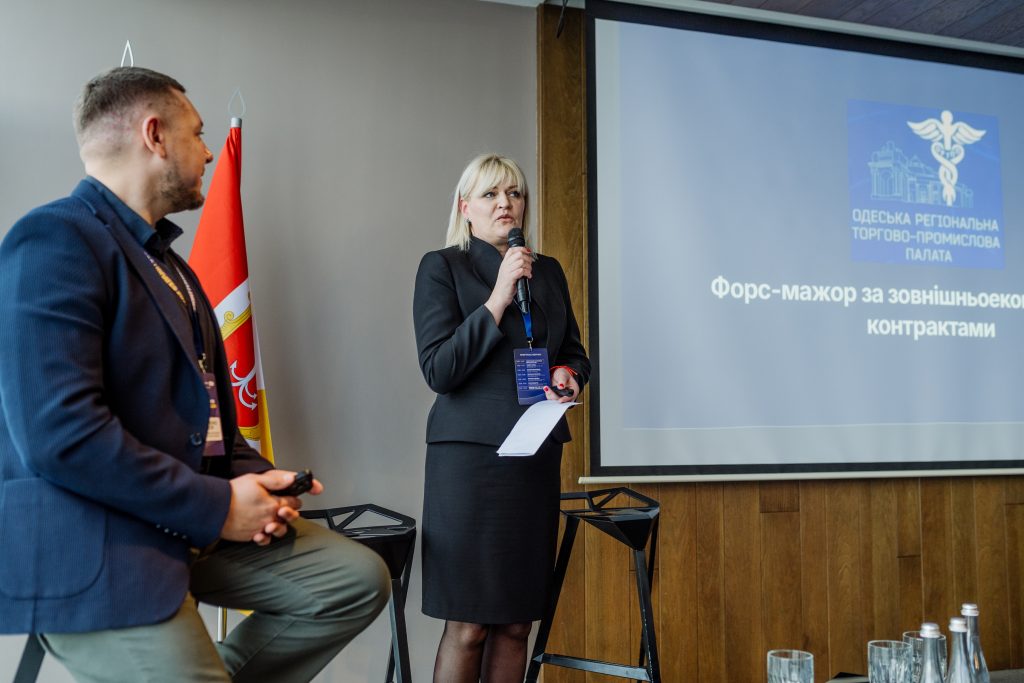
Her main thesis was simple: force majeure is not a catastrophe, but a legal mechanism that must be used correctly.
The key problem that companies face is not the absence of force majeure as such, but improper preparation for it at the stage of concluding a contract: the absence of a clear list of force majeure circumstances in the contract, a vaguely prescribed procedure for notifying the counterparty, ignoring the deadlines for such notification, incorrect definition of the body that confirms force majeure, etc.
Clarity of wording, as noted by Natalia Yaremenko, is one of the most important aspects of the force majeure mechanism. Typical general phrases about “force majeure circumstances” in a contract do not work in reality as business expects. Formally obvious things are not always automatically recognized as force majeure in judicial practice.
Therefore, contracts need to specify as much as possible which events are considered force majeure. Taking into account Ukrainian realities, this means that even work stoppages due to air raids or shelling should be directly stipulated in the contract.
No less critical is the issue of communication with the counterparty. According to the speaker, a significant part of disputes is lost due to a violation of the force majeure notification procedure. Natalia Yaremenko advised to include realistic deadlines for notification in contracts – at least 10 days, given that in crisis conditions, an operational response is often physically impossible.
The speaker drew special attention to formalities that are often ignored, but are of critical importance in court. This concerns the method of communication: if the contract specifies a specific email address or communication channel, the notification must be sent there.
Another important nuance is the correct definition of the body that certifies force majeure. If the contract only specifies the Chamber of Commerce and Industry of Ukraine, an appeal to the regional chamber may not have legal effect.
At the same time, Natalia Yaremenko emphasized that the CCI certificate is not an indulgence. It exempts from fines and penalties, but not from the obligation itself. In the end, Ms. Natalia advised to stop perceiving force majeure as something “one-time” and start incorporating it into your contractual and operational logic, since in the conditions of the Ukrainian market it is not an exception to the rules, but already part of the rules.
The founder of ADVISERS Arbitration & Business Consulting, Natalia Gudkova, dedicated her speech to the skill of negotiations – a tool no less important for business operations than legal support or judicial protection.

For business, negotiations are primarily about economics: they allow you to save time and money, avoid public conflicts and, no less importantly, not destroy relations with the counterparty. “When a dispute is resolved in negotiations, only two parties know about it. When in court, everyone knows about it,” – this is actually how one of the key messages of the speech can be formulated.
Natalia Gudkova immediately set the tone with a simple but indicative thesis: sometimes, to resolve a conflict, it is not enough to have arguments, but to pay attention to the other party. In one of the cases shared by the speaker, the debtor, after a 40-minute conversation, agreed to pay the debt himself – only because he was “listened to properly” for the first time. This example illustrated that negotiations are primarily about working with people, not defending a formal position.
At the same time, the speaker emphasized that without understanding the circumstances of the dispute, the opponent’s position, and one’s own strategy, negotiations can be very costly for a business. One of the typical mistakes is to enter into negotiations without a clear analysis of the contract or without understanding who exactly represents the other party. Another is to take a principled position “to the victorious end,” without assessing the real chances of success and possible losses.
She supported this thesis with a case in which the company refused to negotiate and insisted on a trial, because it was convinced that it was right. As a result, it lost in three instances, lost a client, and additional costs. The question is not whether to go all the way. The question is what exactly to go with and what you are willing to lose for it, the expert emphasized.
At the same time, she also showed the flip side – when properly structured negotiations allow achieving results even in complex and conflict situations. For example, in a case involving cargo blocking due to disputed charges, the parties were able to agree on partial payment, fix the debt and avoid court, while maintaining control over the situation.
A special emphasis was placed on working with the “stronger party” – large clients or international counterparties who dictate their terms. In such cases, according to the speaker, negotiations should be based not on emotions, but on facts, documents and a clearly constructed position. This is what allows you to level the balance and counteract pressure.
An illustrative case was the case after the start of a full-scale war, when due to shelling of infrastructure it was physically impossible to return the containers, but the counterparty still charged fines and blocked the cargo. Thanks to a competent negotiation and legal strategy, it was possible to change the approach: fix the status, remove unlawful demands and unblock the cargo. Although the relationship between the parties was ultimately destroyed, the business avoided much greater losses and protected its interests. In conclusion, Natalia Gudkova emphasized that negotiations are not about “friendship” or compromise at any cost. It is a tool that works only with preparation, understanding of the facts, and the ability to ask the right questions. And these skills are no less critical for business than legal expertise.
The final chord of the event was the speech of Yulia Bezdola, a judge of the Odesa Regional Commercial Court, who offered a view of the issues considered in the discussion from the court’s perspective.
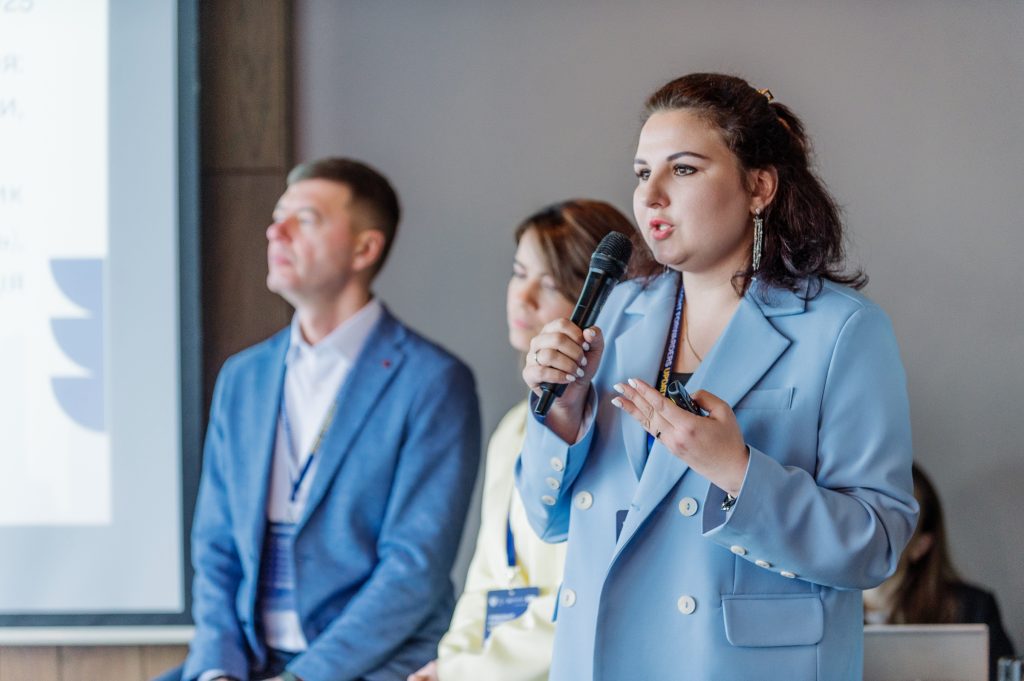
Her theses supported the position voiced by other speakers: most disputes in the field of logistics are won or lost at the stage of concluding a contract, and not in court. It is the terms of the contract, and not the general norms of the law, that ultimately determine the court’s decision. “The court does not look at how the parties “agreed in the process”, but at what they actually wrote,” – this approach actually ran a red line through the entire speech.
The judge drew attention to a typical business problem: real operational activities often live by one set of rules, and the contract – by another. Communication is carried out in messengers, while the contract provides only for official correspondence; payment terms are tied to documents that are not actually used; key risks are not prescribed at all. As a result, it is much more difficult for the parties to prove their position in court.
Separately, the speaker mentioned transport forwarding contracts, where the forwarder’s liability is much broader than it seems to the business. According to her, it is in this category of cases that conflicts most often arise related to the loss, damage or non-conformity of the cargo, as well as additional costs that the parties simply “forgot” to regulate in the contract.
Yulia Bezdolya also explained in detail that in wartime conditions, standard formulations about force majeure no longer work automatically. If the contract is concluded after 2022, the court assumes that the parties were aware of all the risks – shelling, blocking of infrastructure, change of routes – and should have foreseen them in the contract. Accordingly, it is the business that must establish mechanisms for compensating for additional costs, changes in routes or downtime, otherwise it will bear these risks itself.
The speech was full of specific examples from judicial practice, which well illustrate the approach to resolving cases. In one case, the Supreme Court supported the position of the freight forwarder, recognizing that he had done everything necessary, and the responsibility for damage to the cargo lies with the carrier – in particular, in the case of rail transportation, where special regulations apply. In another case, the court, on the contrary, placed responsibility on the freight forwarder, who could not prove that he had properly controlled the transportation, even despite the absence of a direct obligation.
An illustrative case was the loss of a significant part of the cargo, where the court simultaneously satisfied both the claims for compensation for damages and the freight forwarder’s claims for payment for services. This approach once again confirms: if the parties did not detail the mechanics of calculations and risks in the contract, the court is forced to proceed from the actual fulfillment of obligations and proven circumstances, which may lead to unexpected results for the business.
The judge paid special attention to the issue of evidence and the behavior of the parties. In commercial disputes, not only the text of the contract is evaluated, but also all communication and actions of the parties during the execution process. That is why any deviations – route changes, problems with cargo, additional costs – should be immediately recorded and reported to the counterparty. This can be decisive in court.
Finally, Yulia Bezdolya formulated, in essence, a practical guideline for business: a strong position in court begins with a correctly written contract and consistent behavior during its execution. And also – with a correctly chosen legal partner. It is precisely trust in a lawyer and his involvement at the early stages, according to her, that often becomes the factor that allows you to either avoid a dispute altogether, or win it with minimal losses.
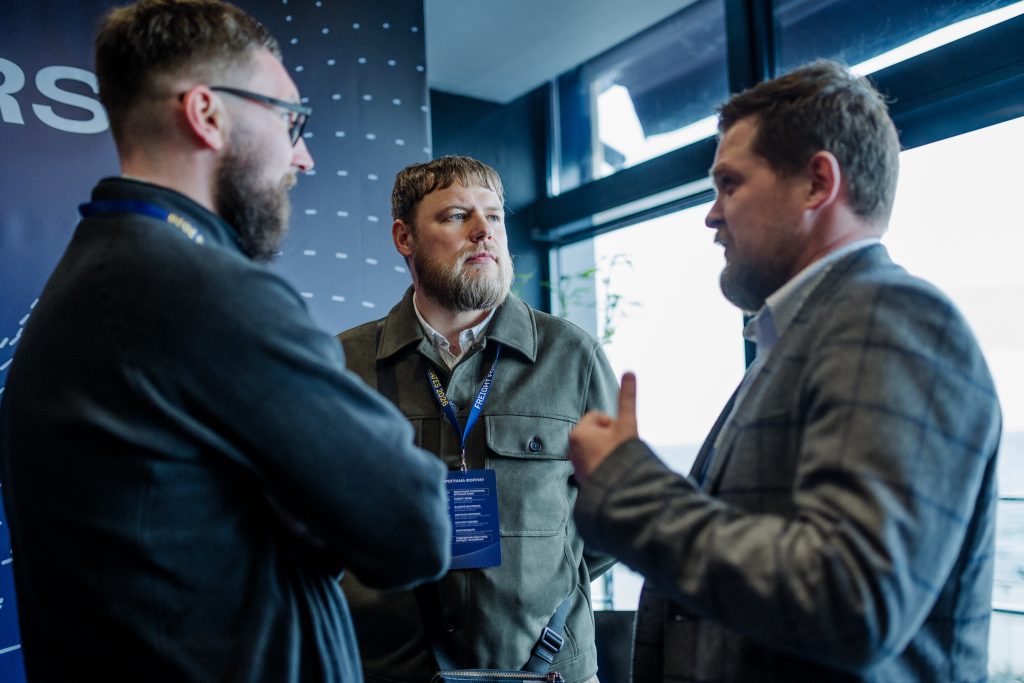
Ukrainian logistics in 2026 is not about stable processes, but about working with risk as a daily constant. The Freight Forwarders Updates 2026 discussion proved that those who know how to not avoid risks, but correctly react to them, distribute and control them will win in this field.
In live communication, the participants did not just compare approaches and share practices, but actually formed a common understanding of how to act in any development of events. And it is precisely the rules of the game that are formed in such a professional dialogue that are gradually becoming new standards of work in logistics.
Text provided by Interlegal.