Metinvest speaks about the risk of new shutdowns of enterprises due to UZ tariffs
17.12.2025 - 16:33
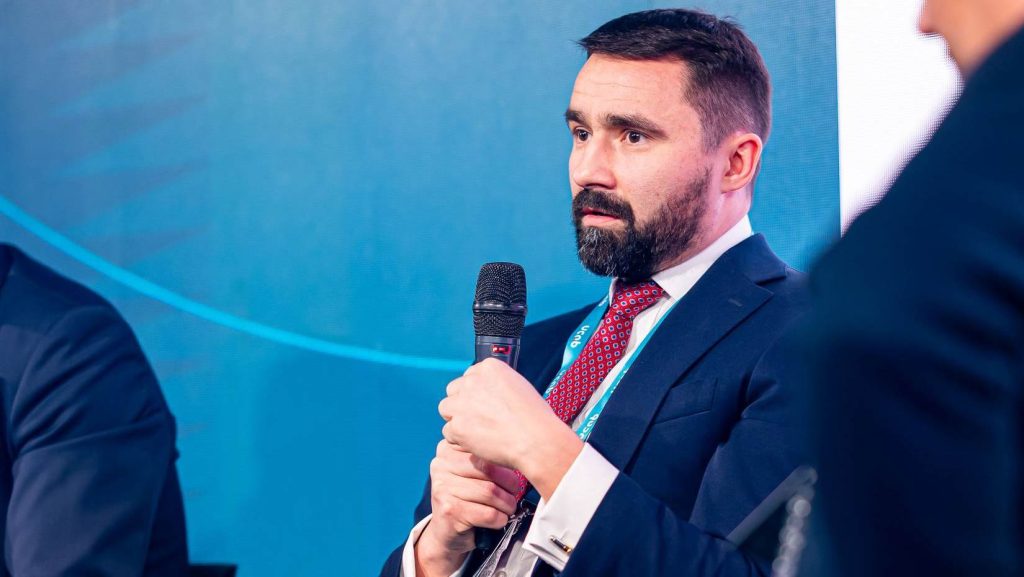
Metinvest spoke about the main problems of freight carriers, ways to solve them, and the
role of the state in this process.
Oleksandr Vodoviz, Head of Metinvest CEO Office, said that the company is currently working for survival, not development.
For two years, Metinvest has been making losses and has also suspended the work of the Ingulets Mining and Processing Plant (GPC) with seven thousand employees.
In such conditions, an increase in freight transportation tariffs could lead to the suspension of the work of even more enterprises, the company noted.
“For example, we can compete in certain markets in Egypt: we deliver our products there, get a margin of 5-7 dollars and maintain our presence. But the increase in tariffs makes deliveries impossible, and this forces us to stop the blast furnace. The furnace stops – another GPC stops,” Vodoviz explained.
He believes that the state should act as an arbitrator between Ukrzaliznytsia and business – farmers and metallurgists: “The state should say: it is more profitable not to raise tariffs, but to subsidize Ukrzaliznytsia, because this will bring more taxes and export revenue and the country as a whole will win. But there is no such arbitrator now: the state is taking the side of Ukrzaliznytsia.” At the same time, Vodoviz noted the state monopolist’s greatest openness and readiness for dialogue with business in the last 10 years.
“All freight transportation is profitable. The problem is that there is a huge pressure from passenger transportation on the freight tariff. Last year, it was minus UAH 24 billion,” he added.
In the European Union countries, such a problem is solved by financing national logistics operators from the budget.
“We also wanted Ukrzaliznytsia to receive budget support and reduce the pressure on the tariff, but the parliament did not provide for this in the law. UAH 16 billion has been included in some resolutions. If the funding does not arrive, the railway risks stopping — and without it we will not be able to deliver cargo, because it is, in fact, the blood of our organism. That is why the state should take a balanced position, where everyone — both business and UZ — will be a little dissatisfied, but the country will win,” the company believes.
Another problem of the state operator is the presence of about 525 inactive cargo stations that serve one car per week. Metinvest noted that they are asking Ukrzaliznytsia to close unprofitable stations, because business actually keeps them due to the tariff. When transportation volumes fell from 320 to 160 million tons, business is forced to lay off people and close enterprises. Business perceives the tariff as a tax that hits costs, so the state must intervene.
The head of Metinvest’s CEO office also said that the difference in tariffs for different categories of cargo is due to the unequal load on the infrastructure: the more stations and smaller shipments, the more expensive the transportation should be.
For example, ore, coal and other large industrial cargoes travel in route shipments (about 100 cars) and pass only 1-2 stations. While grain and other agricultural cargoes usually travel in small batches (8-10 cars) and pass about 15 stations, that is, they create much more costs – for station personnel, electricity, infrastructure, repairs, etc.
“On average, ten small agricultural shipments contain the same volume as one route train of ore, which is why the tariff is different,” he added.
According to Oleksandr Vodoviz, the new tariff formation model of Ukrzaliznytsia should be based on the principle of fairness: if the cargo passes through many stations, requires additional shunting operations or is transported in small batches, then such a route should cost more – regardless of whether it is ore, coal or grain.
The head of the Metinvest CEO office emphasized that fair tariffs can only be achieved through reforming the national carrier: “Ukrzaliznytsia needs a reform that provides for a transparent tariff formation mechanism that would reflect real transportation costs.”
Earlier, USM reported that farmers are calling on the government to stop raising Ukrzaliznytsia’s tariffs.