Russia is staging attacks on tankers to stop Kazakh oil exports to the EU, — Klymenko
21.07.2026 - 11:16
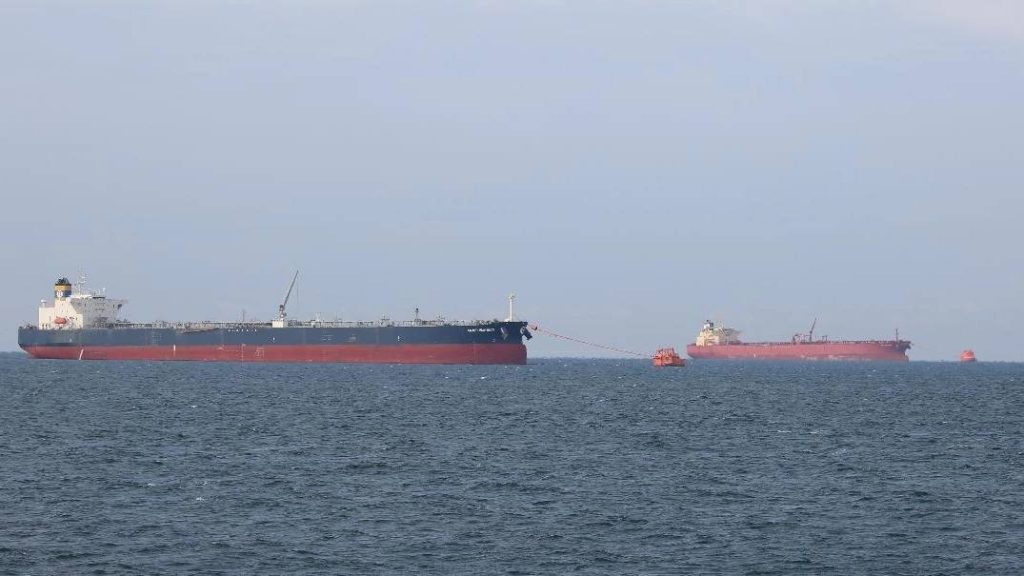
The analyst refuted the version of “terrorist attacks” near Novorossiysk – the evidence was the attacked tanker itself.
Drone attacks on tankers near the CPC Marine Terminal near Novorossiysk may be a staging, staged by Russia itself. This is what the director of the Institute for Black Sea Strategic Studies, Andriy Klymenko, writes.
The main argument is the very vessel that was allegedly attacked on July 20. The Nelsa tanker is under sanctions by the EU, Great Britain, Canada and Ukraine. According to the institute’s monitoring data, the sanctioned vessels have never transported CPC oil – during the entire period of observation. The reason is simple: 80-90% of Kazakh oil from the Black Sea goes to EU countries, which have replaced Russian oil with it. European buyers do not work with vessels under sanctions.
In addition, Nelsa behaved atypically. The ship entered the Black Sea on July 17 and turned off its AIS transmitter — while tankers going for CPC oil never do this, because they are interested in transparency. It indicated “BLAK SEA FOR ORDERS” as the port of destination, with a spelling error, instead of the mandatory “terminal CPC” for such voyages.
The motive, according to the analyst, is purely political. Russia seeks to stop the export of Kazakh oil from the terminal near Novorossiysk to the EU. The calculation is that the recipient countries — Italy, France, Spain, the Netherlands, Belgium and Romania — will begin to put pressure on Ukraine. The CPC statement about the incident already contains the phrase “aggressor country”, although it does not name a specific state.
The ownership structure of the consortium is also indicative. The controlling stake in CPC — more than 40% — belongs to Russia. The management company, on whose behalf the statements about the “terrorist attacks” are made, is actually a structure of “Transneft” with a Moscow address.
What exactly happened near the terminal is impossible to verify, Klymenko emphasizes. It is not even clear whether there was an attack at all and who the drones belonged to, if they really were. The work of Russian electronic warfare means creates such spoofing that it is impossible to determine the exact location of the vessel even with the AIS turned on.
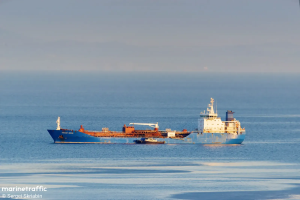
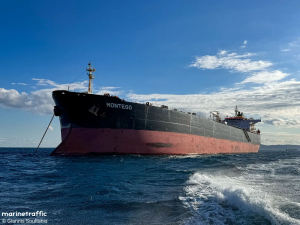
According to the CPC, on July 19, drones attacked the Greek tankers Asia and Nissos Ios without significant consequences, and on July 20, the tanker Nelsa during loading. A fire allegedly broke out in the stern, the crew of 22 people was evacuated, and the vessel retained its buoyancy.
The institute predicted a similar scenario back in January 2025. At the time, analysts warned that the EU’s dependence on Kazakh oil passing through the Russian port gave Moscow the opportunity to block this flow at any convenient moment under artificial pretext.
USM also previously reported that Kazakhstan was building its own terminal in a port near the Strait of Hormuz.