The Suez Canal after the crisis: what carriers are preparing for in 2026
26.01.2026 - 14:00
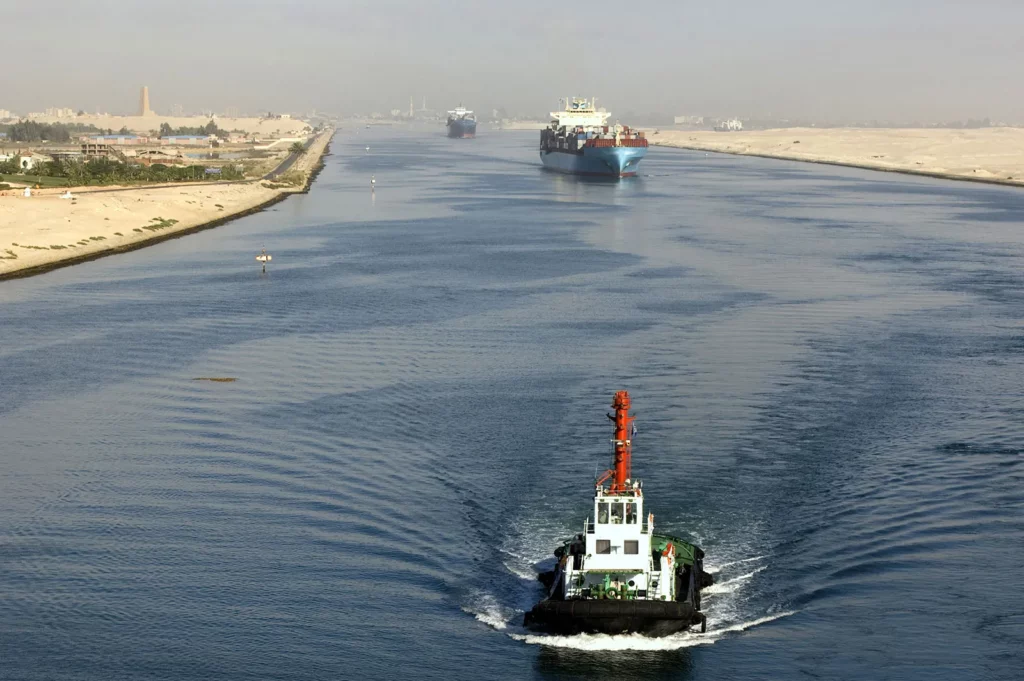
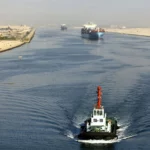
The Suez Canal, which for decades was an important part of the trade route between Asia and Europe, is no longer a sustainable solution. Despite the formal decrease in military activity in the Red Sea, the shipping market has not returned to its pre-crisis logic.
In turn, the market is now experiencing planning uncertainty, with which carriers enter 2026. USM tells what challenges await the industry in 2026 and what Ukrainian logisticians advise to do.
What challenges did carriers face last year?
Last year, the Suez Canal route remained problematic for a significant part of the market. As of May, ship tonnage at Suez was about 70% lower than in 2023. This supported the practice of bypassing the Cape of Good Hope for many liner services and parts of the tanker segment.
The additional miles quickly turned into a capacity deficit. Ships are occupied longer on the voyage, container turnover is slowing down, and spare tonnage in the system is disappearing without any fleet write-offs. In early July, the market received a reminder that risk in the Red Sea is not measured only in miles, and the cost of insurance has also increased. War risk premiums have increased from about 0.3% to 0.7% of the value of the vessel, and in some quotes they have reached 1%. Thus, for a vessel with an estimated value of $100 million, a 0.7% premium means about $700,000 for just one passage, excluding other surcharges.
This state of affairs lasted until October, when Yemeni militants declared a “truce”. However, the first practical signals of a cautious return of shipping to the region appeared only in December. Thus, on December 4, the CEO of Hapag-Lloyd said that the return would be gradual. He estimated the transition period at 60–90 days in order to restructure logistics and not create congestion in ports due to the simultaneous reversal of a large number of services to Suez.
On December 18–19, 2025, the container ship Maersk Sebarok passed through the Red Sea and the Bab el-Mandeb Strait. The company called this an initial transit and did not announce a full return to Suez for the East–West network. Another shipping giant, CMA CGM, has announced plans to return to the Suez Canal in January (i.e. this year).
Despite the decline in Houthi activity, another marker of instability in Yemen appeared on December 30. The Saudi coalition struck the port of Mukalla. The Yemeni factor remained unpredictable in late 2025, so the return to Suez looked manageable and gradual.
Read also: Trump, tankers and geopolitics. What was 2025 for global shipping
Carrier sentiment in 2026
Global carriers entered the new year with the same risks and challenges. Yes, the Red Sea route has not been attacked since September 29, but the Suez Canal remained 60% underloaded even after 100 days without attacks.
Thus, BIMCO reported that in the first week of 2026, passages were approximately 60% lower than in the same week in 2023. Since January 2024, when detours around the Cape of Good Hope began en masse, quarterly transit volumes through the canal have remained 51–64% below 2023 levels. Throughout 2025, passages were 57–64% lower than pre-crisis levels, with the largest drop in the container segment (–86% in Q4 compared to 2023). For other segments, in Q4. In 2025, the data are as follows: bulk carriers –55%, crude oil tankers –32%.
The exception is product tankers. Increased freight premiums accelerated their return, so in Q4 2025 their transit was only 19% lower than in 2023 (versus –45% in 2024).
Global carriers also did not show an unambiguous reaction. Thus, Maersk announced the resumption of one of its services through the Suez Canal in January. In particular, a weekly route connecting the Middle East and India with the US East Coast, known as MECL, will start today. It will be the first in the company’s phased return to the Suez route.
Maersk also said one of its ships had tested the route as the Gaza ceasefire gave hope of normal shipping, and one ship also sailed through the Suez Canal in December.
Instead, CMA CGM is once again cutting back on Suez Canal services, temporarily withdrawing the FAL 1, FAL 3 and MEX services from the Suez Canal route and rerouting them around the Cape of Good Hope. CMA CGM explained the decision by citing the “complex and uncertain international context” but did not provide further details.
Thus, despite what market analysts had expected, the “truce” announced by the Houthis in the fall did not automatically return the market to its pre-war state. It seems that the route problem will remain in the industry for at least this year, and a full recovery may take several years – returning services to Suez means synchronizing the fleet, crews, port windows and land logistics, which will take a lot of time even in conditions where there are no unpredictable political factors.
This explains why at the end of the year the market saw multidirectional line solutions. For some companies, returning to Suez was an opportunity to quickly remove vessels from long voyages and increase turnover, while for others it was too high a risk against the backdrop of the still unstable security situation. As a result, instead of a single scenario, a system was formed where different services operate according to different logics even within the same direction.
In such conditions, the main challenge shifted from choosing the “right” route to managing uncertainty. The entire logistics chain began flexible planning, where there is a window for quick reaction, so it is here that the issues of diversification, choice of hubs and readiness to quickly switch between scenarios come to the fore.
How can Ukrainian carriers take these problems into account?
Ukrainian logisticians are, of course, also monitoring the situation. In particular, as Volodymyr Guz, Commercial Director of Global Ocean Link, told USM, the key focus is currently on flexibility and rapid planning.
“We now live in a reality where the same route can change in terms of conditions and terms literally in a week. Therefore, the key for customers is not to guess who is right from the lines, but to build a chain so that it can withstand market reversals,” notes Volodymyr Guz.
In the near future, GOL management sees that the market will continue to react by reducing rates on the Far East – Europe route. According to the expert, this is about volatility: schedules and conditions will be reviewed not once a season, but constantly. In a short window, the one who is the first to establish a stable service through Suez will win – before the market reflects further tariff reductions.
GOL also believes that Ukrainian companies need to diversify their delivery routes.
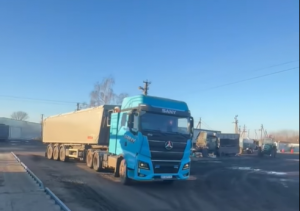
“For example, if we talk about sea freight and further delivery to Ukraine, imports through Poland look noticeably stable and predictable. The Polish hub provides more options in terms of lines, infrastructure and land delivery – this is critical when the sea part of the route is “floating”, — notes Volodymyr Guz.
At the same time, the commercial director of GOL believes that there are several steps that cargo owners need to take into account in 2026.
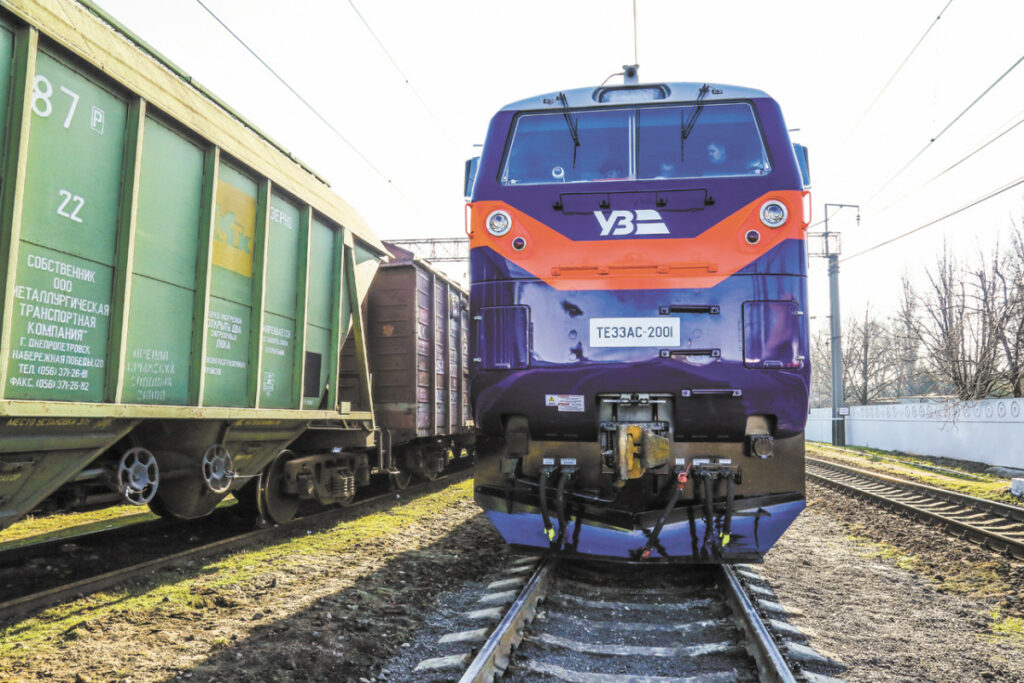
“The first is to diversify flows: distribute volumes between the top 3 lines so as not to depend on one carrier or one service. The second is to place maximum emphasis on the Polish hub as a basic entry/exit point, where it is easier to switch between options and maintain control of the chain. The third is to provide a sufficient pool of land carriers from Poland in advance and reserve capacity for peak periods”, — noted Volodymyr Guz.
According to him, significant congestion is currently expected at the junction of the 1st and 2nd quarter, and it is the presence of a confirmed land resource that will be the key to meeting the deadlines.
“The earlier cargo owners include this in their planning, the fewer surprises there will be regarding the deadlines and the higher the chance of fixing favorable conditions before the next round of market fluctuations,” the expert summarizes.
Events around the Suez Canal in recent years demonstrate that global maritime logistics has entered a phase where planning is being challenged. Even with a formal decrease in military activity in the Red Sea, the market is not automatically returning to its usual models. Line solutions remain fragmented, and the safety factor is variable, which continues to translate into volatility in rates, schedules and routes.
Against the backdrop of the “floating” security of the Red Sea, logistics increasingly operate as a non-fixed route, so it is the ability to quickly transition between these scenarios that will determine who will be able to maintain deadlines, control costs, and compete in 2026.