How the Russian Federation is forming a fleet to export Ukrainian grain. Interview with journalist Kateryna Yaresko of the SeaKrime project
3.09.2026 - 17:49
During the years of occupation, Russia has formed a stable system for exporting stolen Ukrainian grain: the same ships that regularly enter closed ports, shell companies, fake documents about the origin of the cargo, as well as buyers willing to work with “toxic” grain.
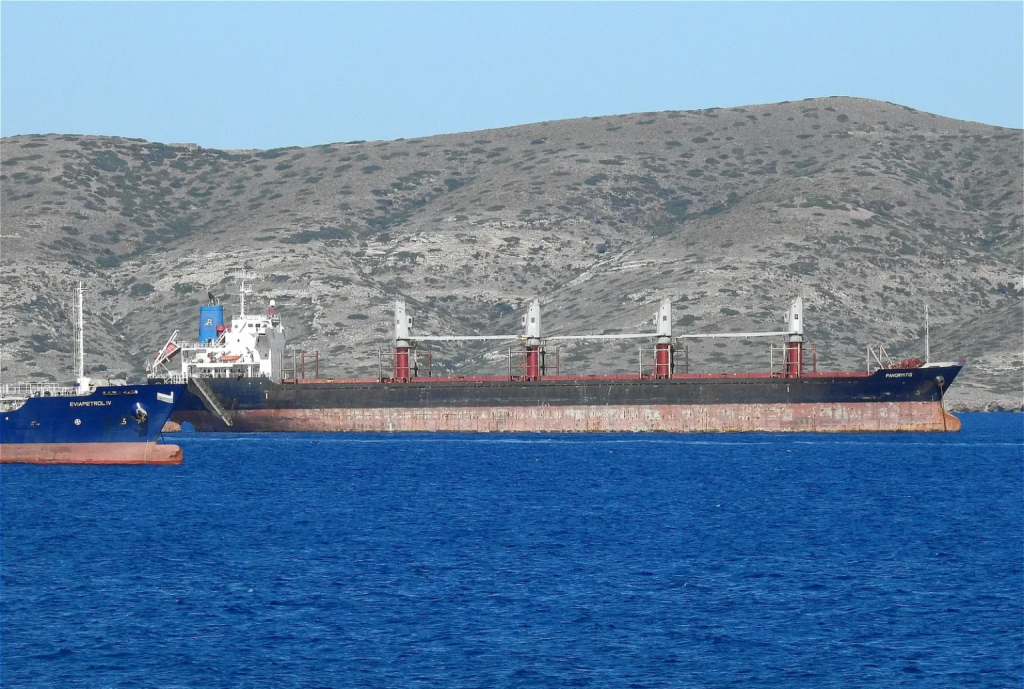
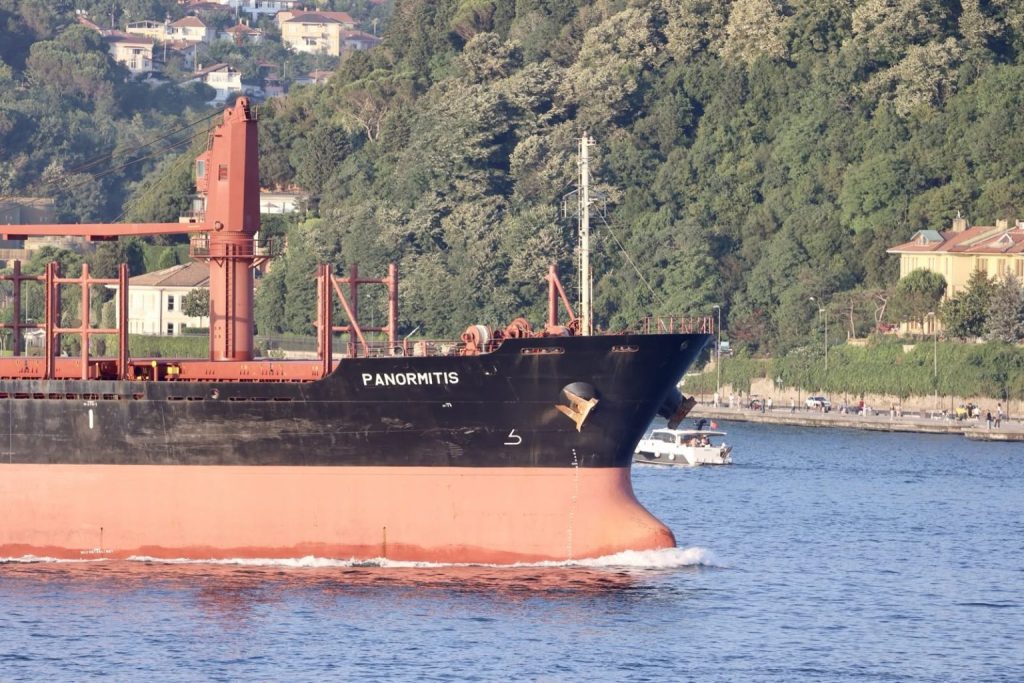
USM spoke with Kateryna Yaresko, a journalist for the SeaKrime project of the Myrotvorets Center, about how such flights are tracked, why ships with stolen grain continue to find ports for unloading, how the publicity surrounding the Panormitis vessel in Israel worked, and what prevents Ukraine from bringing these cases to the level of international courts.
— Speaking of “shadow” grain transportation, has it already become a systemic business for the Russian Federation, or does it still remain a relatively chaotic system? Has a circle of “permanent players” formed during the years of Russian occupation — shipowners, charterers, traders who regularly work with grain from the occupied territories?
— Yes, absolutely. Of course, some changes are taking place, but in general it has become a group of both ships and companies. Companies can turn into each other, but the same people are behind them.
As for the ships, the reason is this: if a ship has entered an occupied port, it is already a violator under Ukrainian law. Such ships are subject to the procedure of arrest in absentia and are detained if possible. Therefore, most shipowners, even Russian ones, do not want to get involved in this and avoid entering closed ports.
And those who do do this do it on a permanent basis. The ships that we observe practically do not go anywhere anymore and do not make legal voyages. They are constantly engaged in the export of grain and sometimes deliver some goods to the occupied Crimea.
We can give an example of the “Northern Sea Shipping Company”, which the US has imposed sanctions on. After that, a group of ships from the north moved to the Black Sea and began to make voyages from Crimea. That is, those who have nothing to lose, since they are under sanctions, have expanded their activities.
— How much has the geography of stolen grain shipments changed since the annexation of Crimea by Russia?
— Some changes are taking place, but it must be said that geographically and logistically this is a small group of countries.
When we started working on this topic in 2016, we were struck by the flow that went to Turkey. Turkey is nearby: a ship could make a trip to the country’s Black Sea ports in a week or ten days along the Crimea-Eregli-Crimea route. This happened on a regular basis.
Then certain measures were taken, including diplomatic ones, regarding Turkey. The then Ukrainian Ambassador to Turkey Andriy Sybiga, the Prosecutor’s Office of the ARC, worked on this topic. The situation has changed — not radically, but such cases have become fewer.
Syria has always been there, except for a few months when the government changed there and there were no supplies. Now everything has resumed.
We recently calculated that eleven ships with stolen grain arrived in Turkey in May. Approximately such volumes.
Egypt has also always been there — in one form or another. Thanks to the actions of diplomats and certain measures, supplies sometimes become less, then they appear again.
Lebanon is interesting in that, as far as I remember, until 2022 it occasionally accepted such grain. In 2022, the embassy worked on this topic very well, and the work continues. The ambassador has already changed, but the issue remains under control. Now there are no such supplies in Lebanon.
Another feature of Lebanon is the interest in this topic from the media. In Egypt or Turkey, they don’t write about it. If there, communication is mainly with the authorities, then in Lebanon, the press writes about it, and this also helps to influence the situation.
We also recorded Iran – already after 2022. Then there was Yemen, namely the port controlled by the Yemeni Houthis. There was Jordan several times, also Libya. Until 2022, there was Greece: it accepted scrap metal or transshipment was carried out through it. There was Albania, now you hardly hear about it, Northern Cyprus. Israel is a separate story.
– Why do you think these countries agree to buy grain from the occupied territories? We read in your materials that the documents for this grain can often be inaccurate: the port of shipment or the origin of the grain may be incorrectly indicated. Why do buyers agree anyway? Maybe Russia sells it cheaper?
— As for “cheaper,” I can give the example of Syria. It bought grain for $375 per ton, while the market price was $225-250. This was during Assad’s time.
We understand that this grain is an element of a certain corruption system, or a system of geopolitical influence. This is only one of the elements that we can see, but we do not see the whole system. Therefore, I think that additional mechanisms of influence are also used. In addition to purely economic benefits or the price of grain, there are many other factors. For example, we note that some Turkish companies that buy this grain have either founders from Russia or employees from Russia. That is, this is not quite Turkey anymore.
— And if we talk not about sellers, but about buyers — in particular, companies, traders — why do they agree to buy such grain, in addition to the reasons that you have already mentioned? After all, by agreeing to accept this grain, they also agree to the risks: that this case may be promoted by the media or diplomatic missions, that it may threaten demurrage, etc. I’m not even talking about moral guidelines, but about specific financial losses.
— There are such examples, but there are not so many of them. Honestly, the most high-profile case was with Israel. I hope it will affect not only Israeli grain traders, but also others.
When this case occurred, we tried to convey the idea that criminal proceedings are ongoing in Ukraine. This is a war crime. The proceedings cannot stop, they will continue.
Grain operations are registered with a large number of documents, registers, etc. All this will be known. We cannot see everything now, but later something will appear, and questions will arise in the future. Therefore, you should not take such risks.
For example, companies in Israel, which are now involved in this story, claimed that the documents say the grain comes from Siberia, even though it doesn’t. We know that in Russia you can get any kind of document.
We have an illustrative case: one large European company, which has been operating in the market for many years and values its reputation, wanted to buy a certain batch of agricultural products in Russia and insisted that it not be from the occupied territories. They were issued a corresponding certificate, and then this cargo was taken out of Crimea. Later, this information became public, the media wrote about it. This resulted in serious reputational losses for the company.
There are such examples. Why are they not reacting to them as actively as we would like? First, there are not many such cases yet. There need to be more of them – then everyone will understand that this is serious. Secondly, the buyers can be specially created companies. In fact, these are intermediaries who then pass the grain on. They do not risk anything, because they have no reputation.
— You just mentioned the case with the bulk carrier Panormitis in relation to Israel. This case has noticeably gone beyond the maritime community: it was covered by both specialized and non-specialized Ukrainian media, as well as foreign media. We have seen the reaction of Ukrainian politicians and diplomats. What do you think, why did this particular case attract so much attention compared to the previous ones?
— There are many factors here. In particular, we should not forget that there were two ships. First there was the Abinsk, and then the Panormitis. Regarding the Abinsk, the state prepared all the documents in a timely manner: there was a court ruling, there was a request for international legal assistance to Israel. But Israel ignored all of this in the case of the first ship. This also influenced the fact that there was more attention to the second ship.
Secondly, it is a completely different country compared to those that usually buy such grain. There is a very active civil society there, many people support Ukraine. There is also media there and a truly competitive media market. Publications compete with each other and try to actively cover such stories. This was a key factor. The case received wide publicity, and it became known.
We wrote about it in the same way as we did about other cases: we presented information in the same style. Therefore, the matter is not with us, but with the internal peculiarities of the country.
In addition, we understand that a lot of attention is currently focused on Israel. There is criticism of the actions of the Israeli government – this also probably became an additional factor due to which foreign media paid attention to this story. I think this was the main reason.
— When we talk about stolen grain in 2026, are we still talking about stocks created by Ukrainian farmers before February 24, 2022, or about new grain that continues to be grown in the occupied territories?
— Of course, this is already new grain. Everything that was grown earlier, including the stocks of our agricultural companies in the territories occupied in February 2022, the occupiers began to export immediately.
We recorded an increase in the volume of grain exported from the occupied Crimea even before 2022. At the end of 2021, large bulk carriers arrived there that had not previously visited Crimea: “Matros Pozynych”, “Matros Koshka” and others.
They began to export large volumes. Usually, bulk carriers went there with a maximum of 10 thousand tons, and here – with 27 thousand. They began to export grain en masse, and we were already surprised at what was happening. Later it turned out that they were freeing up space. And then they began to export grain from the occupied Kherson region, Zaporizhzhia region, etc. This was their policy, a purposeful action.
What happened next? There are complex processes there: some farmers left for territories controlled by Ukraine, and their means of production, land, etc. remained there. Someone stayed and continues to work. When we explain why grain is stolen, we refer to the fact that this is a war crime. This is the export of resources from the occupied territory. Grain is a resource; It is the occupiers who are taking it out of the occupied territory, they are organizing it all. And this certainly falls under this definition.
Second: grain is exported in violation of the state border of Ukraine. No matter how it is exported – through the occupied ports of Crimea or the Sea of Azov, by land with further loading elsewhere, by rail and loading somewhere in the Baltic (there are such cases). But the moment the grain crosses the state border of Ukraine, it becomes smuggling. That is, it is a criminal offense – violation of the state border of Ukraine, and the cargo acquires the status of smuggling.
— What are the most typical ways to whitewash the origin of grain do you see now? And do you see such attempts at all? Or, if Russia already has established buyers, are they not so concerned about forging documents, etc.?
— Here we need to talk about methods, and we see them. They export grain and indicate the origin – Russia. They manipulate the fact that the port of loading in the documents – in the phytosanitary certificate or declaration – can be indicated as any Russian Black Sea port. It is not specified which one. If it is a phytosanitary certificate, it should clearly indicate the place where it was issued. But it only says “RF” — and that’s it. This simply cannot be.
Therefore, those who accept this grain agree to impossible wording. They know perfectly well what they are being given.
What else do they do? They can issue several packages of documents, this has also been recorded.
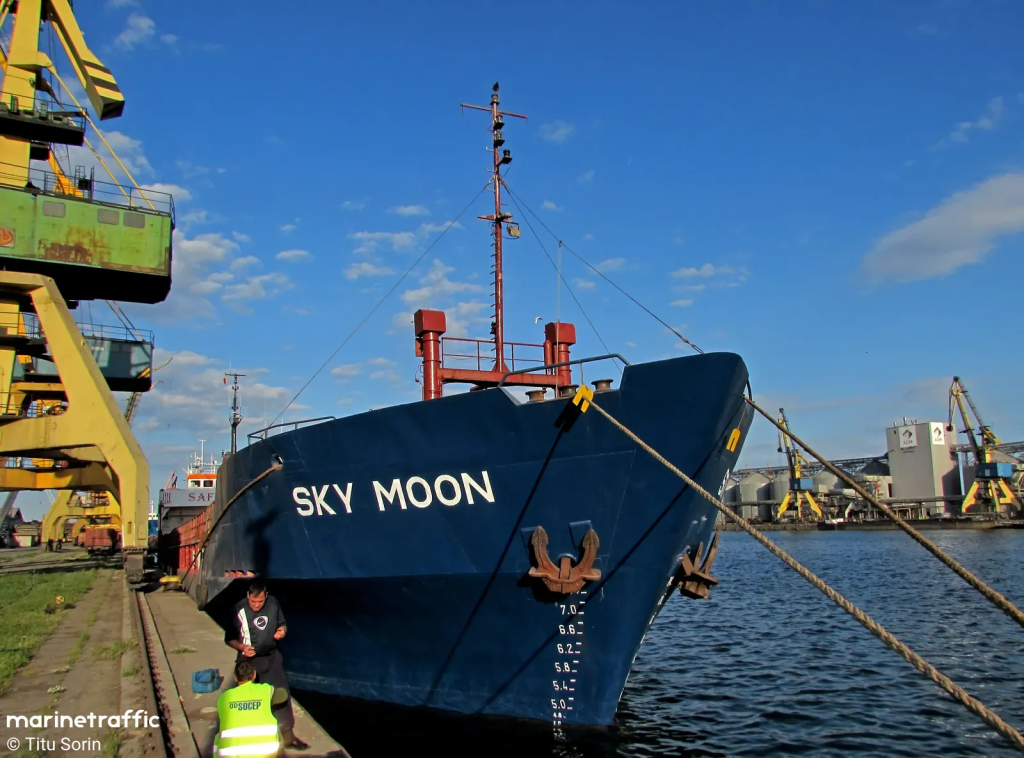
When back in 2016, the first ship we had on the Danube was arrested — the Sky Moon, which was carrying soda from Sevastopol to Giurgiuleşti — it had two packages of documents on it. One was issued in Sevastopol, and the other they were apparently going to present in Giurgiuleşti. And there are many such cases.
They also use a scheme where after Sevastopol they enter the port of Kavkaz and reissue the documents supposedly for the Kavkaz — supposedly they were loaded there. In fact, the ship came with grain from Sevastopol, entered the Caucasus already loaded and went further with the same batch of grain, but with documents issued for the Caucasus.
Previously, the Certificate of Origin was one of the main documents on the grain market, for those who loaded in Crimea, it was issued in Sevastopol. The document had a stamp with the name “Sevastopol” on it, etc. After we highlighted this, they began to issue everything in Anapa. And now they receive certificates of origin of grain from Anapa, although the ship was not there. Anapa is not used for loading large grain ships, but it is indicated in the documents. They use such methods. But with a more attentive attitude to this problem, they can be exposed. We do this.
And most importantly: if the state that receives the grain is interested in preventing this from happening, it can carry out more serious control at the entrance. This could be, for example, a laboratory that examines the origin of the grain. This could be the demand for primary documents on transportation — up to quarantine certificates, etc. There are such possibilities. Therefore, I hope that the attention drawn to these ships has shown, in particular: the state that receives this grain should check it more thoroughly.
By the way, one can also say about such accusations. Other countries, in particular Israel and Turkey, say: “Give us your evidence, and we will take a look.” This is generally the wrong approach, because we are restoring the picture literally piece by piece: we use photographs, satellite images, AIS data, screenshots and other materials from open sources — that is, evidence of this nature. And the other side at the state level falsifies documents, writes out any papers that confirm a version of the origin of the cargo that is beneficial to it and false. Of course, we cannot be compared, this needs to be understood and other methods should be sought. The state that receives the grain has such methods. We need to be more attentive to this and use them more actively.
— Are the vessels, which, as I understand it, are already part of a more stable fleet, trying to change the flag to a convenient one, the owner or somehow “play” with the documents in order not to fall under the sanctions lists? Do they remain with the same owners, names and flags?
— We saw this even before 2022, when the vessels sailed under convenient flags — for example, Palau and others. Then our embassy in London communicated directly with the administrations. The vessels lost their flag. We even had an interesting vessel that changed its flag five times in a row. That is, the vessel entered Crimea — the administration received a note. The administration checked the information and removed the flag. The vessel delivered the cargo, then stood idle for about a month, because it reissued the documents. What does it mean to change the flag, reissue all the certificates? First, it takes at least a month. Second, you have to pay for each document. Then the ship went to Crimea again, and this story was repeated: again a layover, again re-registration of documents, and again it went to Crimea. And so on five times.
We could not understand the economic basis of these actions, but it happened, we recorded it. There were many such flags. And then we managed to work very seriously – more than fifty times the ships lost their flags.
And now mainly Russian ships go to the occupied ports. There are several more ships on which work is ongoing. Recently there was one such ship, work was carried out on it, and we expect changes. That is, we have actually driven them into the Russian segment. For the most part, these ships have Russian owners and Russian flags. They are the ones who are engaged in the export of stolen grain.
— And can insurers, for example, influence such transportation?
— Yes, they can. And this is generally a very promising direction. It must be said that in 2023 the IMO adopted a resolution condemning the war in Ukraine. In particular, it confirmed the status of closed ports and appealed to the entire maritime community: agents, insurers, buyers, sellers, shipowners – everyone involved in these cases. It was about avoiding visits to closed ports and generally any transactions with them. This was very important, because from 2014 to 2023, IMO supported us, but this support was based on Ukrainian legislation, there was no separate resolution. In 2023, it first appeared, and we constantly refer to this document. This is important.
Regarding insurers: on the one hand, this is a business, and it is very difficult to influence it. There is no state regulation here so that you can appeal to the state. This is more of a business. But, on the other hand, when situations arise in which a company loses its reputation, money from downtime, etc., the insurance market must also inevitably react.
By the way, most of the insurers we see are Russian, but not all. The ships that appeared in the Israeli case — Panormitis, Asomatos – another ship that came to Egypt in this case — seem to be registered in the Marshall Islands, but are of Greek origin. And there are hardly any Russian insurers there. They have been very prominently featured in this story. Perhaps the market will still react, raise rates for such transportation and make them even less profitable. It would be good.
— And, in addition to Panormitis, do you know of any cases when, after your publications, a ship with stolen grain lost a buyer or, again, insurance? As I understand it, now in most cases these are Russian companies, so the question is perhaps not very relevant. But have there been any cases when, after your publications, diplomatic actions or due to the decisions of the companies themselves, ships lost something?
— Of course, there are results over all these years. For example, everyone is talking about Panormitis in Israel. However, in 2023, we also recorded a ship that was loading in the port of Kavkaz. The grain was delivered from the occupied Crimea, and the ship also arrived in Israel.
There was no such publicity then: we published the material, diplomats probably did something too. Most diplomatic actions are not public, so we simply do not know about it. We wrote then that the buyer was a large company – a transnational agricultural holding from the USA, from Chicago, which also had assets in Ukraine. We wrote to the company, no one answered us, but the ship was not accepted. That is, there is a reaction. Although there are many such ships there, ships with grain go to Israel from the Caucasus, we simply cannot prove the origin of the grain from the occupied Ukrainian territories every time.
There were such examples in Lebanon. There were both publications and the work of the embassy. In July 2022, the ship loaded in Feodosia and arrived at the Lebanese port. It was going to go to Syria, but on the approach it changed its mind and showed that it was going to Lebanon — this happened literally in the evening. And the next morning our ambassador was at a reception with the president of Lebanon.
This level of diplomatic work contributes to solving problems. Because publications by themselves do not bring results. They become the basis for the state to take certain actions later.
— The next question is about the interaction of your team with ports of other countries or maritime administrations. If you can talk about it, do you communicate with them? Do you warn them that a certain vessel is heading to them?
— We had such attempts back in 2016, maybe in 2017. But no one answered us. And we, in principle, refused to do so. We realized that it is better to act through embassies — it seems more effective. In general, it is better for the state to work in this direction.
When there is a request for international legal assistance, when there is criminal proceedings against this vessel, everything is formalized, there is a court decision — it is simply a different level than if we wrote something ourselves.
At the beginning, when we just started working, we wrote to the embassies ourselves. We were answered, and we even saw some results. Then our diplomats started working more actively. We simply stopped doing it. The difficulty here is that reporting something needs to be accompanied by evidence. It would be more correct for it to be at the state level. Our direct interference in the work of state ports of other countries is not the best format. Therefore, we still leave it to our diplomats and the Prosecutor General’s Office, which deals with international legal assistance.
— And our Ukrainian diplomacy, our law enforcement agencies, if you can say so, contact you? Do they have their own channels through which they learn about such vessels and decide what to do next at the diplomatic level?
— They contact us. We always respond, because this is, in fact, the goal of our project. This is a volunteer project, we do not make money from this activity. Its goal is to change the situation and help Ukraine in this war. Therefore, of course, we provide information to everyone who contacts us.
They contact us from various agencies. This is the SBU, which is conducting criminal proceedings, and there are others. In general, many consult with us on maritime issues, we transfer the evidence we have collected. Then it all enters the state’s circulation, and then they themselves deal with state affairs among themselves. As a rule, we are also involved in each such case.
— I have a few more questions about Turkey, which often appears in your investigations. Is it a question of geography or the country’s conscious indulgence in Russian schemes?
— Geography is certainly an important factor. Turkey is a very complex issue. On the one hand, we saw: back in 2017, they adopted a Circular banning flights with the occupied Crimea. It is violated from time to time, but it is still referred to. Sometimes it works, sometimes it doesn’t. They take the position of equality of the parties. As I have already explained: the Russians give them documents, and we give them documents. Sometimes they can decide in our favor — one in ten cases, for example. And most often they say: “They gave us the documents. We can’t help but believe.” Something like that.
— So everything is “not so clear” for them?
— Yes, this is a difficult question. This is such “eastern” diplomacy. Here we need to continue working, insisting, proving, improving this interaction. Of course, this is necessary. For example, the same Panormitis. He came to Turkey, to Iskenderun, but they didn’t accept him there. By the way, he returned to the port of Kavkaz and unloaded this grain.
— So they still couldn’t sell it?
— The publicity was so great that, I think, no one dared.
— I just had a question about how difficult it is for a ship with a “toxic” cargo to find a port for unloading. Let’s assume, as in the case of Panormitis: the ship arrived in Israel, there was publicity, the cargo was refused, and it was forced to look for another port. When it entered Turkey before the Caucasus and tried to unload somewhere, how does this happen? Is this the same network of companies that you mentioned, and they are looking among themselves for where to deliver the grain if it was not accepted here?
— First, it is impossible to stop it completely. They will still try to export the grain somehow. Our tactic is to build obstacles to make it difficult for them to do so.
— And it is unprofitable.
— Yes. This is also one of the ways. When this happens, the ship usually stands for a long time. This is demurrage, etc. Then they still find some option. We have recorded cases twice when the grain was returned. In 2022, this happened with Turkey: it did not accept the cargo of the Fedor ship, and it was returned to Sevastopol, where it was loaded. Panormitis is the second such case.
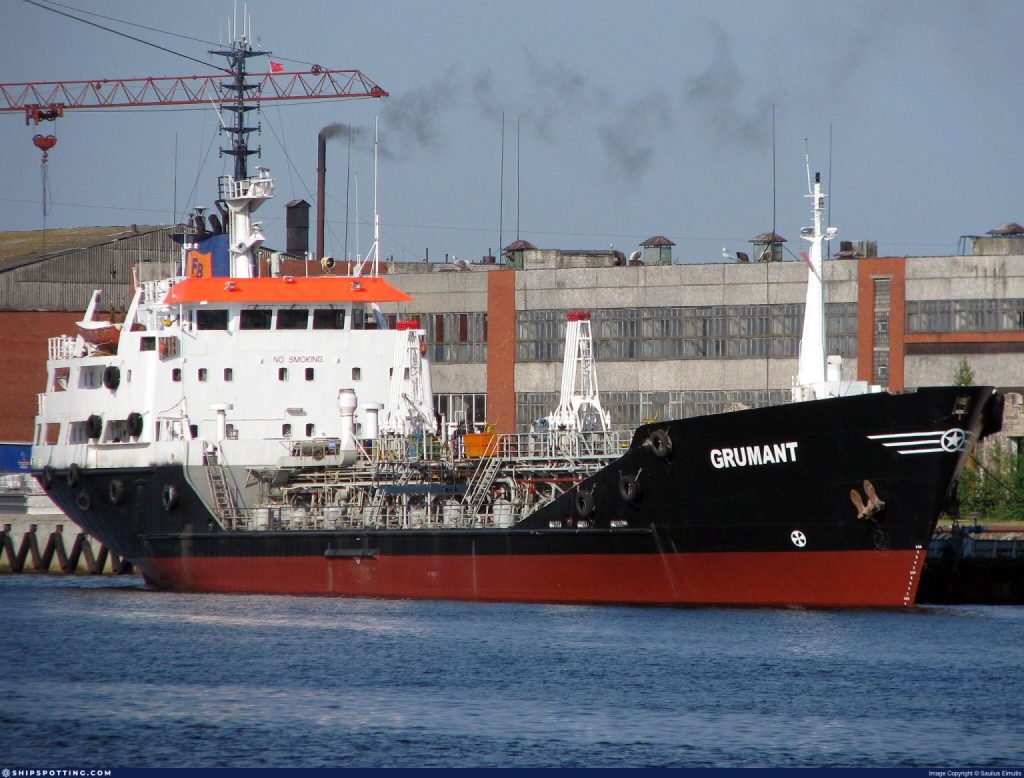
And usually they put this grain somewhere. For example, recently Grumant was not accepted by Turkey, and it went to Libya, and to that part of it where it is difficult to achieve anything. But for them this is always a problem: unnecessary expenses, time, and time is money. In any case, it works, but they usually find somewhere to put the cargo.
— And how often do such cases occur, as with Panormitis, when the buyer changes his mind at the last moment, no longer wants to buy this grain and says: “No, sell it to someone else”?
— Rarely. And most often the decision is not made by the buyer. In the case of Panormitis, it was the Israeli company that refused before the Israeli authorities began to react. The first to refuse was the agrotrader. This is very important because it is a good example. In other cases that we know of, the decision was made by the state. For example, Lebanon, Turkey — the decision was made by the state, not the company.
By the way, many foreign agrotraders, including Turkish and other companies, work with UN food programs, participate in humanitarian projects, etc. They appreciate this, for them it is a serious opportunity. Therefore, they will probably be more careful about this.
After the contract was terminated in Lebanon, all market participants learned about this story. Lebanon is not such a big country, and there are not many people in agribusiness there. So everyone knew about it, the media wrote about it, discussed it. After that, we no longer see ships going to Lebanon. That is, it also affected those who, perhaps, would like to accept such grain, but understand that there will be problems.
And then there are quite large losses, because a ship with grain is millions of dollars. And, as a rule, the buyer pays for the cargo even before it arrives at the port. He finds himself in a vulnerable position: he has already paid the money, but he cannot receive the grain. In any case, these are losses, because the ship is simply standing still, and you have to decide what to do next.
Then the market also reacts. If you have a problem, no one will buy your cargo for the same price – they will offer it cheaper. So in general, it somehow works.
— What is the most difficult thing for you in the investigation process: to recreate the route of a ship that constantly turns off and then on the AIS, to find documents for grain or something else?
— Here it must be said that we do not write about all cases. We do not deal with statistics in principle. We refuse to answer the question of how many tons or ships, because we do not deal with statistics and have never set a goal to cover 100% of all cases. This is impossible. We only write about cases where we have evidence and certainty that it really happened.
There must be some evidence that can confirm this. Only when we can confirm it do we write about it. The most difficult thing is, of course, to confirm the origin of the grain. It is not enough to simply record that it was loaded in Berdyansk, Kerch or Sevastopol and that the state border was violated. It is necessary to prove that the grain comes from the occupied territory. Then it is already a war crime – the export of resources from the occupied territory. This is probably the most difficult thing. And it is not always possible.
— And if it is possible, how can it be done? To track the entire chain of grain transportation — from its, relatively speaking, collection in the occupied territory to shipment, etc.?
— This is a process that is very carefully documented. That is, a car is driving — documents are drawn up for it. The car brought the grain to the elevator — documents are also drawn up there, and so on.
— Why do you think we still do not have high-profile cases regarding the transportation of stolen Ukrainian grain in international courts today? Should this already happen after the war — in The Hague, for example?
— In my opinion, this should happen in 2022. And we expect that it will still happen. This requires very serious work on the part of our law enforcement agencies. The Prosecutor General’s Office should probably play a key role, because this is exactly their level, and they should be preparing for this. So far, we have not seen any systemic actions.
Recently, they have become more active, they have started sending requests for international legal assistance. This is not only to Israel, but also to Turkey, they have even sent to Syria. This is good, very good. But more radical solutions are needed, in particular, bringing these cases to court. The problem is that this is a complex legal process. Even at the very beginning of the full-scale aggression, people approached me: “Everyone is for us now, everyone wants to help. Let’s initiate something, the courts, etc.”
But the courts work on the principle of adversarial proceedings: our evidence against their evidence. This is an incorrect statement of the question. Now both Turkey and Israel have said: “Provide evidence, you have not provided complete evidence.”
And how can our law enforcement agencies provide complete evidence regarding the occupied territory? This is impossible in principle. How can we demand that SBU operatives go to the occupied territory and collect evidence there? This is the wrong approach from the very beginning. Therefore, it is difficult, but some solution is needed here.
Probably, it should be an international court — not some economic court, but an international court that can really make such a decision. And here you need to understand how, for example, to estimate the volume of exported grain. We always refer to NASA Harvest. They use satellite technologies, collect data around the world, assess yields and food resources, and predict possible risks. It is very good that they make such estimates every year for both the occupied and Ukrainian-controlled territories. Therefore, I believe that today this is the most relevant source for such an assessment.
As for such schemes with grain, they are very difficult to prove. It so happened that it is not always possible to collect evidence and prove it. They use transshipment from ship to ship, sometimes there can be several such transshipments. There can also be several agreements: one company brings, another loads in Berdyansk, and a third delivers to a bulk carrier.
Such schemes help them hide the origin of the cargo and complicate the work of those who try to expose them. It is because of the existence of these schemes that ships with stolen grain go to different countries of the world. Here it is necessary to say that the Black Sea zone in the area of the port of Kavkaz is a zone of increased risks. There is a massive export of stolen grain. Therefore, attention should be drawn to any ship that leaves this region.
It may not violate anything and may not even be involved in such schemes. But due to the fact that these channels are used for the mass export of stolen grain, everyone needs to be more careful, understand the risks that may arise, check documents, etc. This is probably important.
— Do you think the international community’s attention to such cases of stolen grain is increasing over the years or maybe decreasing? Or maybe it wasn’t active enough from the very beginning, and it depends on each case?
— It’s such a wave process, because the greatest attention was in 2022. It was somewhere in May, summer, maybe even in the fall there were publications. And I generally tell students about it, because it was a unique event in investigative journalism, because most major media from different countries conducted their own investigations, based on their sources, using their own independent methods. Someone consulted us, someone simply used our materials, someone wrote to me when the article came out: “Thank you, we used it.” Of course, many used it, but they proved it independently, separately and very powerfully. And there were, I think, dozens of these publications. And this is not the case when such cases are reported in the news format. These are independent separate investigations. At that time, there was a lot of attention, there was still this “grain corridor”.
At that time, Turkey accepted both Ukrainian and stolen grain, and the public paid attention that this should not be done. Then, interest in this topic seemed to fade away, everything somehow stabilized.
In general, it must be said that our largest and most influential guarantor in this situation is the Defense Forces of Ukraine. Because it is thanks to them that our Odesa ports, ports on the Danube, function. Well, and we expect that they will also pay attention to grain thieves. Then this will really affect the situation. And our task is to support this topic, to show the world that these shipments are illegal.