Russia sues Korean shipyard over gas carriers for Arctic LNG 2
14.09.2026 - 12:06
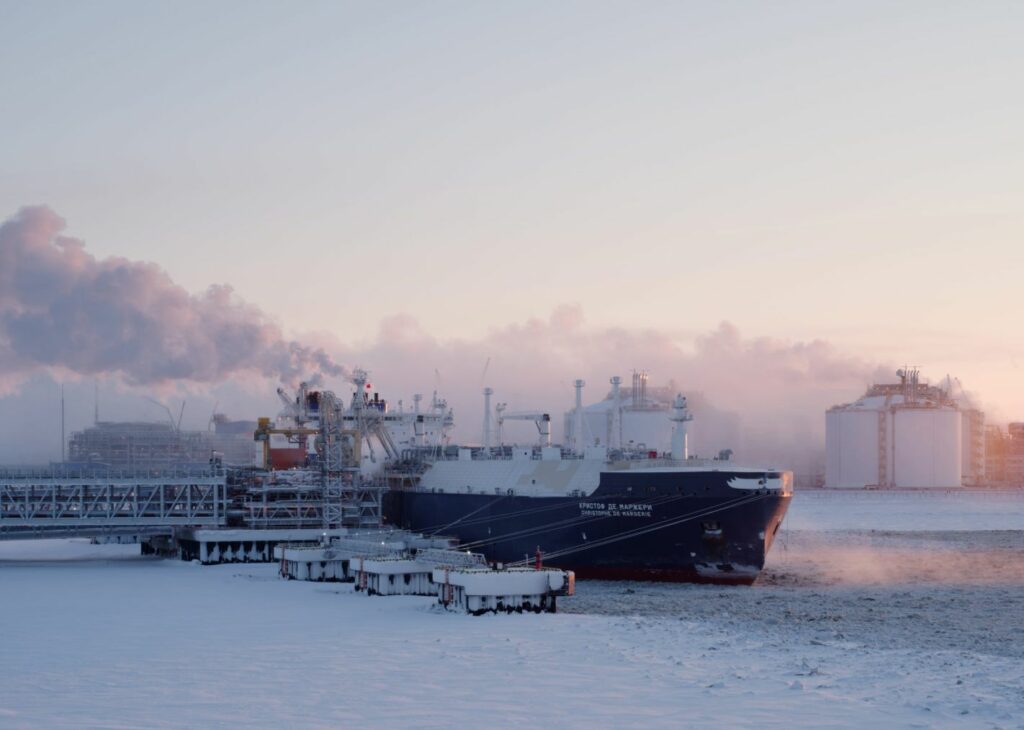
The Russians have filed a claim for 1.37 trillion won with the Singapore International Arbitration Center. The Russian side has not yet provided a calculation of damages.
The Russian gas project “Arctic LNG 2” is demanding about $1 billion in compensation from the South Korean shipyard Hanwha Ocean for the broken contracts for the construction of gas carriers. Gospodarka Morska writes about this.
The application to initiate proceedings at the Singapore International Arbitration Center (SIAC) was filed on September 1. According to Hanwha Ocean, the amount of the claim currently amounts to 1.37 trillion won, or approximately $1.02 billion. The company noted that the amount may increase further, since the Russian side has not yet provided a detailed calculation of damages.
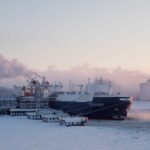
The case concerns contracts for the construction of specialized Arc7-class gas carriers, adapted for navigation in severe ice conditions. Hanwha Ocean, formerly known as Daewoo Shipbuilding & Marine Engineering, was to build six of these vessels: three for Russia’s Sovcomflot and three for Japan’s Mitsui O.S.K. Lines.
The contracts for the vessels for Sovcomflot were cancelled due to sanctions imposed after the start of a full-scale war against Ukraine. The current lawsuit concerns the violation of so-called Step In Agreements related to the terminated shipbuilding contracts.
Hanwha has announced its intention to defend itself in arbitration while seeking a peaceful settlement. This is not the first dispute over these contracts for the Korean shipyard. Other Russian shipowners have previously made claims regarding canceled orders.
The construction of a specialized fleet was one of the key elements of the Arctic LNG 2 business model. Novatek’s project envisaged the production of about 19.8 million tons of LNG per year from a terminal on the Gydan Peninsula. To transport gas to Asia, ships capable of navigating independently in a crisis are needed – the Arc7 gas carriers have reinforced hulls and systems for operation in Arctic conditions. They were supposed to open the project to the shortest route to China.
Sanctions have radically changed this model. Arctic LNG 2 began production in December 2023, but the first deliveries – all to China – did not start until August 2024. American sanctions have limited access to technology, financing and the necessary fleet.
The significance of the dispute goes beyond a few ships. The Northern Sea Route is one of the key elements of Russia’s strategy for exporting raw materials from the Arctic to Asia. The route runs along Russia’s Arctic coast – from the Kara Sea to the Bering Strait. For transporting LNG to China, this reduces the voyage to about 15 days, compared to twice the traditional route through the Suez Canal.
By August 2026, the route had transported about 6 million barrels of oil, almost half of the total volume for 2025. In 2025, Russian cargo accounted for about 60% of the total volume of transportation via the Northern Sea Route, and LNG, oil and condensate – about 83% of Russian transportation.
However, ice-class gas carriers are much more complex and expensive than standard vessels, and after sanctions, Russia’s ability to obtain them is limited. Because of this, the Arctic LNG 2 is now using more complex logistics schemes, including transshipment at floating storage facilities in the Murmansk and Kamchatka regions. Some of the cargo is then delivered to China by other vessels, including routes bypassing the direct passage through the Northern Sea Route.