Other countries are already learning from the experience of Ukrainian ports. Interview with the head of Ukrport, Dmytro Barinov
20.03.2026 - 17:25
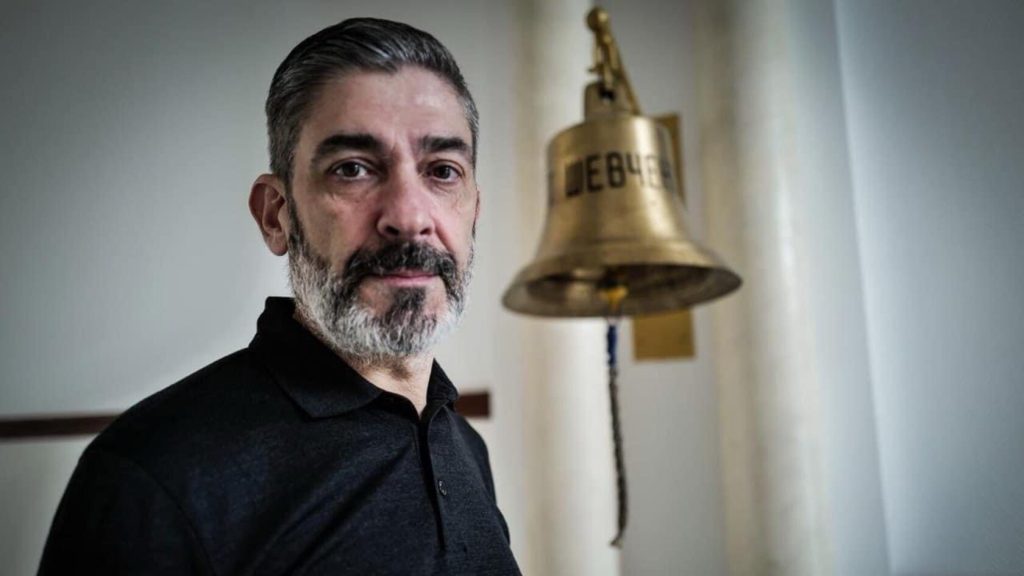
Foreign partners and experts are interested not only in cooperation, but also in studying the experience of the Ukrainian port industry, which operates and develops in conditions of war.
USM spoke with the former deputy head of the USPA, and now the head of the Association of Ports of Ukraine (“Ukrport”) Dmytro Barinov, about the practical experience of Ukraine that other countries can adopt, how the port industry adapted during the years of full-scale war, and why the focus of the Association’s activities is to establish a conversation between business and government.
About the work of ports during the war, the most important lessons and interest from other countries
Ukrainian ports were actually the first in the 21st century to start operating under conditions of systematic shelling and a naval blockade. What solutions or practices developed over these years can be useful for ports in other countries?
Yes, indeed, in the 21st century we actually became the first to face such challenges. If we recall the events of 2022, even before the start of the full-scale invasion, the Russians announced naval exercises and actually blocked part of the Black Sea. That is, the blockade began even before February 24. After the invasion, all seaports of Ukraine were completely blocked. Russian ships were in the Odessa area, and everyone expected a possible landing. In parallel, missile strikes began, and later drone attacks, which only intensified over time.
One of the first challenges was the situation with ships that remained blocked in ports. There were more than a hundred ships under foreign flags, and about a thousand crew members, also foreigners, were on board. We organized their evacuation, and some ships were assigned Ukrainian crews so that they could keep a minimum watch and monitor the condition of the ships. This was necessary, because it was impossible to leave the ships unattended. Another problem was cargo. A large number of goods were blocked in the ports, including dangerous goods – those that could catch fire or explode. We began to act in fact as dry ports or logistics hubs: we unloaded ships, took cargo out of the port territory and redirected it to other routes. Some were sent by rail, some by road.
After that, a significant part of the export was redirected to the Danube ports. The load on this direction became unprecedented – even in Soviet times there was no such thing. The infrastructure was not ready for this: neither the roads, nor the ports themselves. However, we quickly adapted. We worked very closely with colleagues from Romania and Moldova, simplified procedures, increased the number of pilots on the canals, in particular on the Sulin Canal. Thanks to this coordination, we managed to achieve quite good results.
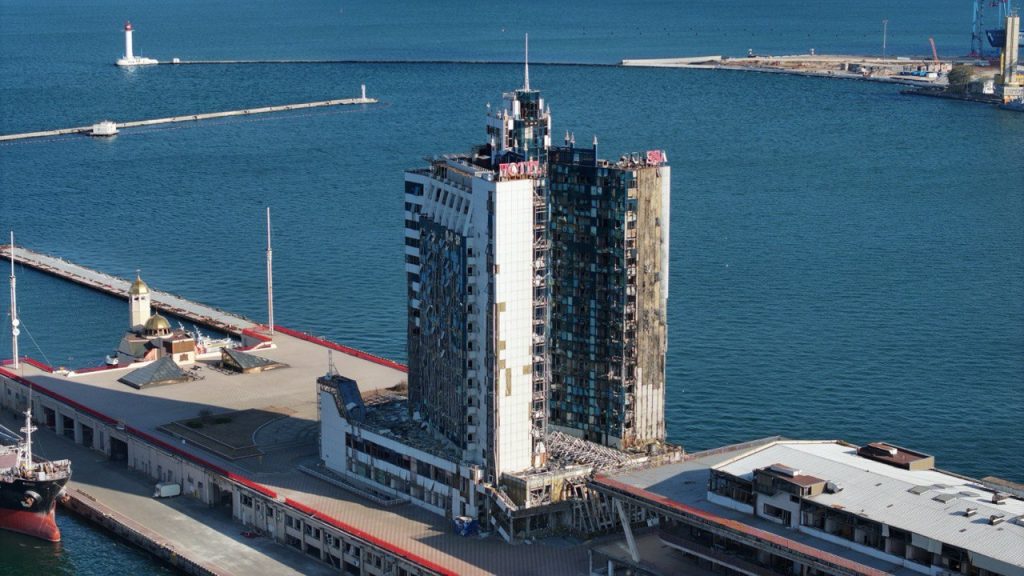
The destroyed sea terminal in the city of Odesa.
The main lesson of this period is coordination. First of all, with the military, because the ports immediately came under their control. Also with the border service and other state structures. Without clear interaction of all these services, it would be impossible to organize the work of the ports in such conditions.
Later, the so-called “grain initiative”, the Istanbul corridor, came into operation. This was a separate, complex mechanism: a coordination center with the participation of four parties operated in Istanbul, and inspection teams consisted of representatives of Ukraine, Turkey, and Russia. Setting up this system was also not easy, but it allowed for the partial restoration of sea exports.
So this is more of a question of diplomacy than just communication?
I disagree. Diplomats do their part and agree on framework conditions, but after that our practical work begins. Everything needs to be organized and implemented at the level of daily operational activities.
For example, when a ship wants to enter a Ukrainian port, it submits a corresponding notice. This request is checked: whether the ship can enter, whether it is on sanctions or other restrictive lists. After that, the ship moves to the Bosphorus, where it undergoes an inspection. Only after permission can it proceed along a designated corridor to Ukrainian territorial waters.
Then the ship undergoes inspections again, after which it can move to the port. It is also important here that everything is ready: cargo, a free berth, no queue. It is necessary to minimize the time when the ship is idle under processing, because this is critical for the efficiency of the ports. And this whole process takes place in both directions – both at the entrance and at the exit. In fact, this entire complex system is coordinated by us.
At the same time, problems have arisen. Later, Russia began to actually block the work of inspections. If, according to the procedure, the inspection of a ship was supposed to last about half an hour, it could be stretched to three hours. Because of this, the throughput capacity dropped sharply: instead of 10–15 ships per day, the ports accepted only three. This is very little.
As a result, during the year of the grain initiative, we managed to export about 32 million tons. On the one hand, this is a large volume, if we take into account the complete blockade at the beginning of the war. But potentially we could export three times more.
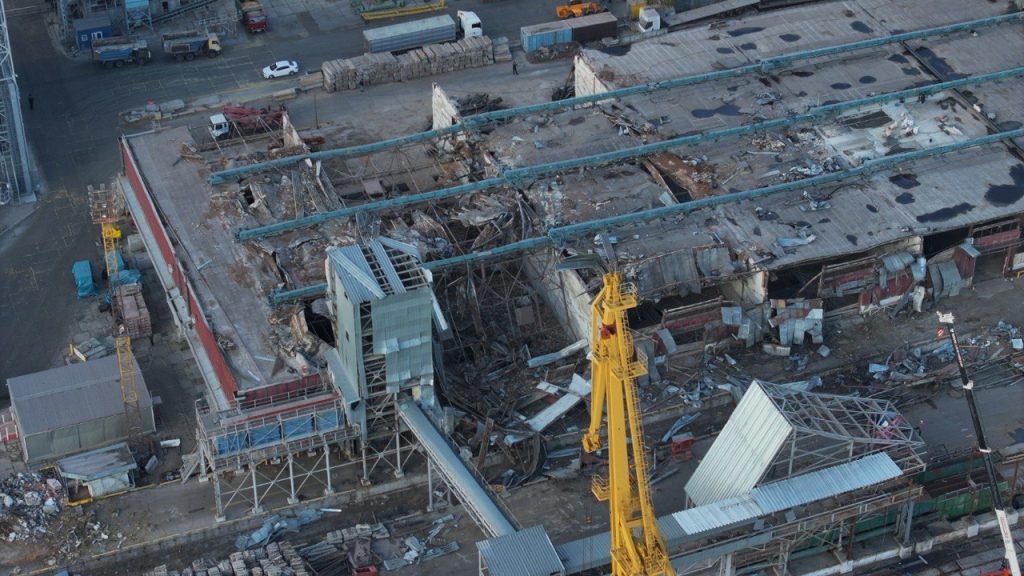
Russian shelling of port infrastructure in Ukraine.
How do we do this now, when this mechanism works without unnecessary Russian involvement?
This system should work without Russian participation. Thanks to the Ukrainian sea corridor, which is provided by our naval forces, we have already transported more than 177 million tons of cargo, which is many times more than if the inspection story had continued.
And this is happening despite constant air alerts. For example, in 2024, we estimated that there were about 850 hours of continuous alerts, in fact, more than a month of port downtime. Of course, this is a loss of time – a period that, if not taken away, we could have increased our exports. But even in such conditions, the system continues to work. Ports constantly face restrictions, blockages, problems with energy supply, and we have to look for alternative solutions to maintain work.
The main conclusion from this experience is the critical importance of coordination and communication between all services. In peacetime, this was often perceived as a formality. But in wartime, it is this interaction that comes to the fore.
By the way, when I speak to foreign colleagues, I advise them to practice these mechanisms now — even before a crisis situation arises. Such things need to be practiced in advance.
Are there any other practices or tips that you share with representatives of foreign ports based on Ukrainian experience?
Yes, absolutely. One of the most important things is protecting people. We must remember that the greatest value of any port is its workers, so their safety must be a priority.
Last but not least, there is the issue of shelters. They existed in Ukraine before, but the war showed that this is not enough. Shelters should be located as close as possible to workplaces. Large bomb shelters, which require a 10-15 minute walk, do not work in such conditions. Mobile shelters are also needed – such that, for example, a crane operator can quickly get down from the crane and be in a safe place in a short time. The same applies to ship crew members or other port workers.
Sometimes there are literally seconds to react. For example, I once calculated that a ballistic missile launched from Crimea could reach Odessa in less than a minute, about 40 seconds. Therefore, shelters should be available literally next to the work areas so that people can use them quickly.
It is also important that the shelters are of different sizes – for a few people or for larger groups, for example, truck drivers who are in the port area and waiting to load or clear.
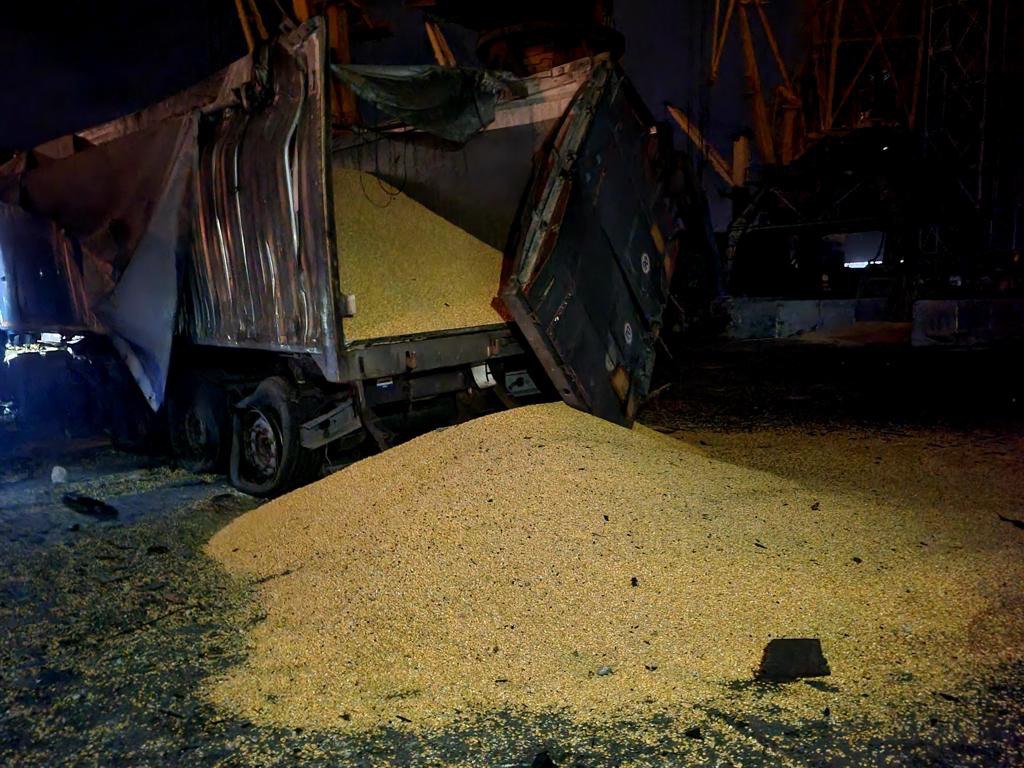
A grain truck damaged by shelling.
Another important aspect is energy autonomy. Port infrastructure must have alternative power sources. For example, port access systems, terminals or loading equipment must be able to operate from generators or other backup power sources. This is especially important in the event of long blackouts, so that the port does not completely depend on the central power supply.
We have already said that people are the main capital of ports. But I would like to clarify: to what extent have security and the organization of work in Ukrainian ports changed in general to minimize military risks?
The changes have been drastic. For example, when an air raid alert is announced, all work immediately stops. Workers move to shelters according to designated routes. Of course, such procedures did not exist in peacetime, but now it is a mandatory part of the work…
I also mean social and organizational changes. For example, did work schedules, working conditions, or other internal processes change that were not directly related to the shelling?
Yes, of course. When it all started, we transferred people to remote work as much as possible – those who could work remotely. This was done in order not to concentrate many employees in one place and reduce risks.
In addition, the blockade of ports meant a lack of income. No ships – no payments, respectively, financial resources gradually decreased. But we understood that people are the most valuable thing there is, so we did not lay off employees. Even in difficult times, we tried to keep the team: we switched to part-time employment, paid people two-thirds or half of their salaries, but supported them as much as the financial situation allowed.
Our employees continued to go to work every day, performed those tasks that were possible in those conditions, and maintained the infrastructure in working order.
This, by the way, gave results. When the Istanbul Initiatives were signed on July 20, 2022, the first ship left the port of Odessa on August 1. That is, the enterprise was actually out of business for almost half a year, but just ten days after the corridor opened, we were able to resume shipments.
This became possible precisely because we kept people and maintained the infrastructure in good condition. And I also consider this experience an important lesson for other ports: in crisis conditions, you need to keep the team.
You mentioned some key practices — coordination, protecting people, and supporting infrastructure. Are other countries interested in these experiences, especially those that may also be at similar risks? Do we have to actively promote and explain these approaches ourselves?
We don’t intentionally “push” anything, but, of course, there is always a desire to share our experience — to tell how we worked and what solutions we applied. And there was a lot of interest in this.
Many colleagues from other countries simply have no idea how port infrastructure works in wartime. For example, when I talk about the consequences of the Kakhovka dam explosion, it comes as a real shock to them. After that, hundreds, and possibly thousands, of small river mines brought by the Dnieper River entered the Black Sea. They could end up in the port waters and pose a serious threat.
We prepared for such a scenario in advance: we purchased special booms — floating barriers that are installed on the water. They work not only on the surface, but also at a depth of about two meters, so they can detain dangerous objects and prevent them from entering the port waters.
When we talk about such solutions, foreign colleagues immediately begin to be interested in the details: where exactly we purchased them, who the manufacturer is, how the protection system is organized. That is, our experience really arouses great interest, and many want to understand how these practices can be applied in their own country.
Have there been requests from foreign partners, for example, to come in person and see how it works in practice?
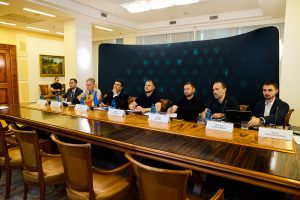
There have been many such cases and many delegations have already arrived. I personally received hundreds of specialists from other countries – both political and professional. We met, communicated and shared our experience.
Now there is also interest in further cooperation. Some countries plan to hold their own discussions on these issues and invite me and other specialists to present the Ukrainian experience to a wider audience to discuss how it can be applied in practice.
The topic of cybersecurity is of particular great interest. After all, in addition to missiles and drones, there are also cyber threats. For example, we remember attacks on infrastructure, in particular on the systems of Ukrzaliznytsia. In such situations, sometimes one has to return to very simple solutions – for example, temporarily switching to paper procedures. This is not a complicated solution, but it works.
Therefore, great attention is now being paid to cyber protection: backup systems, interaction with state structures responsible for security, and organization of work in the event of cyber attacks.
For many of our foreign colleagues, this experience is new — they don’t write about such things in textbooks. These are practical lessons that, unfortunately, had to be learned in wartime.
After meetings, they often ask how they can help. We are now summarizing such requests together with members of our association. In particular, partners from Japan, Canada, and other countries are offering assistance — from energy equipment to technical support for the infrastructure that has been damaged. I see that they sincerely sympathize and try to support us.
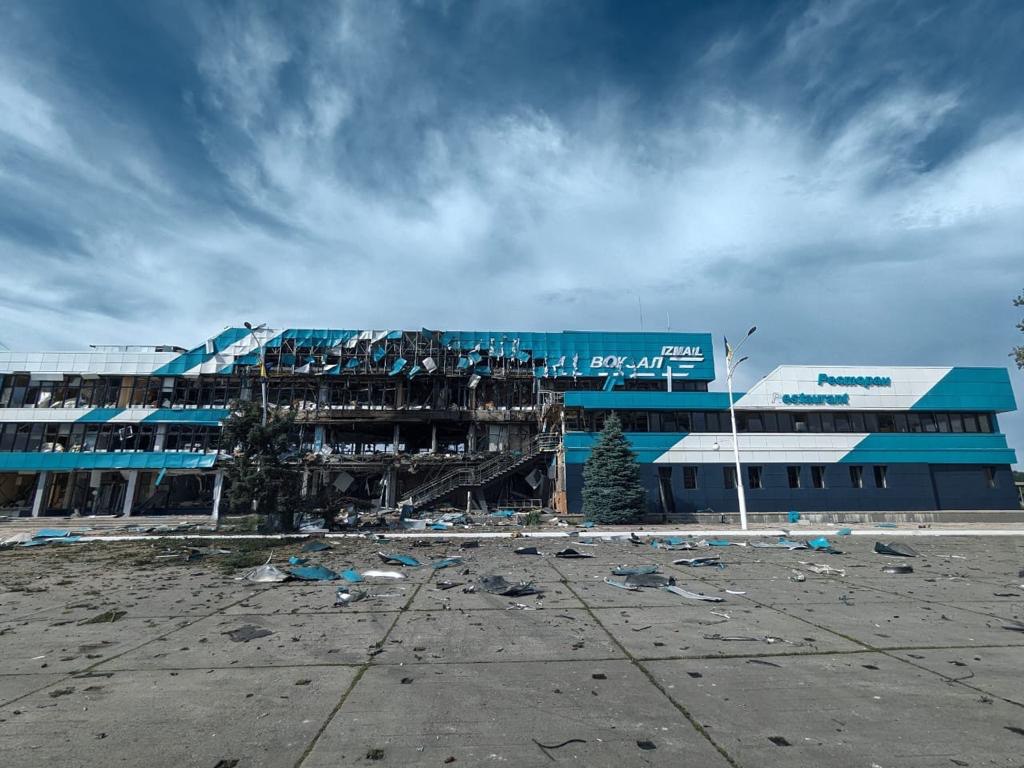
The marine terminal in the city of Izmail, damaged by Russian shelling.
The value of Ukrainian experience for Middle Eastern countries, Ukrport’s plans and why Ukraine needs to create a dialogue between port business and the government
I would like to return to the recent summit. Do international partners understand the real scale of the challenges that Ukrainian ports and port workers have been working with for over four years?
Speaking frankly, not completely.
And what exactly, in your opinion, prevents them from fully realizing this?
If you look at other regions of the world, for example, the situation in the Persian Gulf or the Strait of Hormuz, when threats to shipping arise there — war, bombing, or blockades — the international community reacts very quickly. Within a few days, naval forces from various countries are already deployed there: the USA, France, and other allies, to ensure the safety of navigation.
The situation in Ukraine is different. For four years now, we have been practically alone with the Russian threat. We are constantly talking about the need for greater protection — primarily air defense — to reduce shelling and allow ports to operate normally. Solutions are also needed for the safety of shipping in the Black Sea.
After all, free navigation is a basic principle of the international system, which must be supported by the world community. Despite this, even now, it is difficult for many to imagine what it means to work in such conditions not for a few days or weeks, but for years. A full-scale war has already lasted longer than World War II. This is an extremely long period of constant risk, constant threat, and at the same time the need to ensure the functioning of port infrastructure.
You mentioned the situation in the Persian Gulf. We are all closely following the events there now, because it directly affects global shipping. In your opinion, are these conflicts similar? And can the Ukrainian experience be useful for those countries that are currently facing attacks from Iran?
In my opinion, these situations are very similar. Even the same types of drones are used – shaheeds. That is, the threats are actually the same: shelling, attacks on infrastructure, blocking shipping.
When a blockade occurs, it works according to a similar logic everywhere. Ports are stopped, ships cannot enter or leave, flights are canceled, problems arise with the evacuation of crews. The question immediately arises: what to do with the cargo, how to restructure logistics, what alternative routes can they be sent by.
We in Ukraine have already gone through all this and worked it out in practice. For example, in the first days of the full-scale invasion, the so-called agricultural headquarters was created. We constantly communicated with large agricultural companies and exporters to take into account their needs: how many vessels are needed, which cargoes should be prioritized, how to organize work so that the interests of all market participants are taken into account as much as possible.
Openness and constant dialogue with business played an important role. From the very beginning, we spoke honestly and directly to the market: if cargoes are blocked – for example, grain at elevators, oil or other products – we need to explain what is happening, what steps are being taken and what plans there are. Such transparency helps reduce tension and allows the market to adapt.
I am convinced that it is this openness and constant communication that has become one of the key factors that allowed us to maintain the system. Many countries did not have similar experience before, but now, unfortunately, they will also have to gain it. And to some extent they gain this experience by observing how Ukraine acted.
I wanted to move away from the international topic a bit and ask about your association. What are your plans and key tasks for this year? Obviously, an important part of your work is communication with foreign partners and exchange of experience, but what else is on your list of priorities?
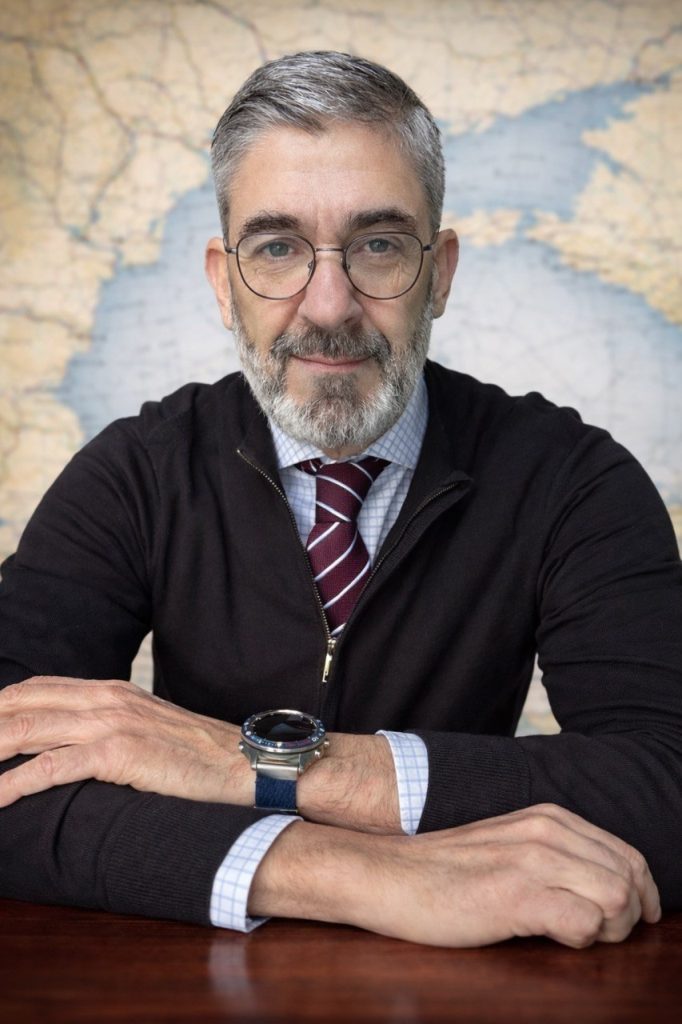
I was elected president of the association relatively recently. Before that, it was headed by Yuriy Borisovich Kruk for 14 years, may his memory be blessed. The association itself was created at the beginning of Ukraine’s independence. At that time, it was formed mainly by state-owned ports, because private operators practically did not exist.
During this time, the industry has changed significantly. More than a hundred private operators and stevedoring companies have appeared, the port system has been reformed, and administrative functions have been separated from direct cargo work. Today, the association has 49 members — and these are not only port operators, but also businesses related to the port industry in general. Among them are both private and state-owned companies.
One of my key tasks is to make the association more modern and transform it into a real service organization for its members, together with the association’s board. We must represent their interests both domestically and internationally, in dialogue with the authorities, with foreign partners and with professional organizations.
Previously, the association had about ten different committees: legal, mechanization, reforms and others. Now we plan to focus on three or four key areas that concern our members the most.
Businesses operating in the port industry primarily want clear and transparent rules of the game. People want to be able to plan their activities, be confident in their ownership rights and have guarantees for the future for their companies and families. These are the issues we want to make central to the association’s work.
We also focus on international experience. For example, my colleague Patrick Verhoeven, with whom we worked together on the supervisory board of the Sea Ports Administration of Ukraine, is currently vice-president of the International Association of Ports and Harbors. This is a large global organization that unites about 250 ports from different countries – from Japan to the USA.
We do not plan to simply copy their model, but we can adopt best practices. At the same time, in the opposite direction, we are ready to share our experience – in particular, how to work in war conditions. Such a dialogue is very useful for both sides.
It is also important that the association becomes a professional voice of the industry, because in addition to state structures, there is also a private sector, and its interests must also be represented.
A good example is the port of Orlivka. It started as a small ferry crossing, but in fact it has turned into a full-fledged port. At the same time, this facility has been subjected to drone attacks and serious destruction several times. For business, the question arises: will there be compensation, how to rebuild the infrastructure, what support can be counted on.
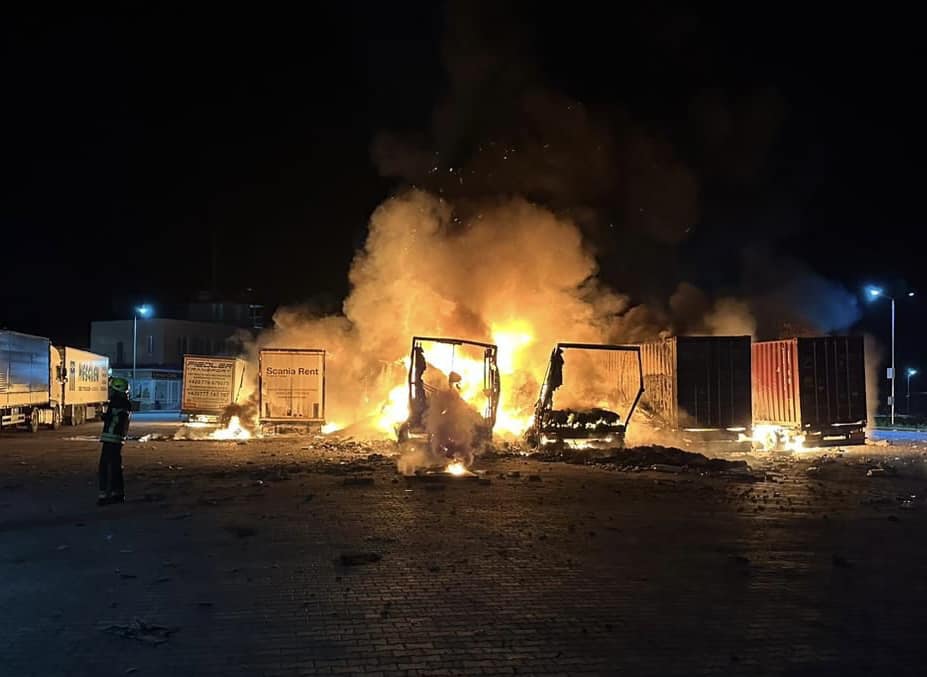
Russian shelling of the Orlivka checkpoint in October 2024.
It is in such cases that the association should take these issues upon itself – raise them at the level of the Verkhovna Rada, specialized committees or ministries. In fact, we should become the voice of the industry, the voice of people “from the sea.”
How optimistic is business today about the future?
This is a philosophical question, but there is an answer to it. I am sure that business looks at the future quite optimistically.
The best indicator of this is investment. If companies invest money in creating new capacities or modernizing existing ones, it means that they plan to develop, not preserve the business. For example, if we talk about the Danube direction, about twenty new terminals have been built there in recent years. Business invested their own funds in them, and no one forced anyone to do this. This is their conscious choice.
The same thing is happening now: ports are developing, new capacities are being created, terminals are being modernized. And this is despite the constant threat, daily attacks, destruction, shelling.
At the same time, we must understand that Ukraine is an export-oriented country. In some agricultural crops, we occupy first places in the world, in others – second, third or fifth. We are also a large exporter of mining and metallurgical products – ore, metal. All these volumes must reach world markets, and a significant part of this export passes through ports. Alternative routes, railway or road transport, simply cannot provide such a scale of transportation. Therefore, ports remain strategic infrastructure and the current war has shown that this is not only a matter of economics. Ports are also politics and the security of the state, this is what feeds you and me.