Flexitanks – the new fragile cargo? What has changed and why old approaches no longer work
19.05.2026 - 12:38
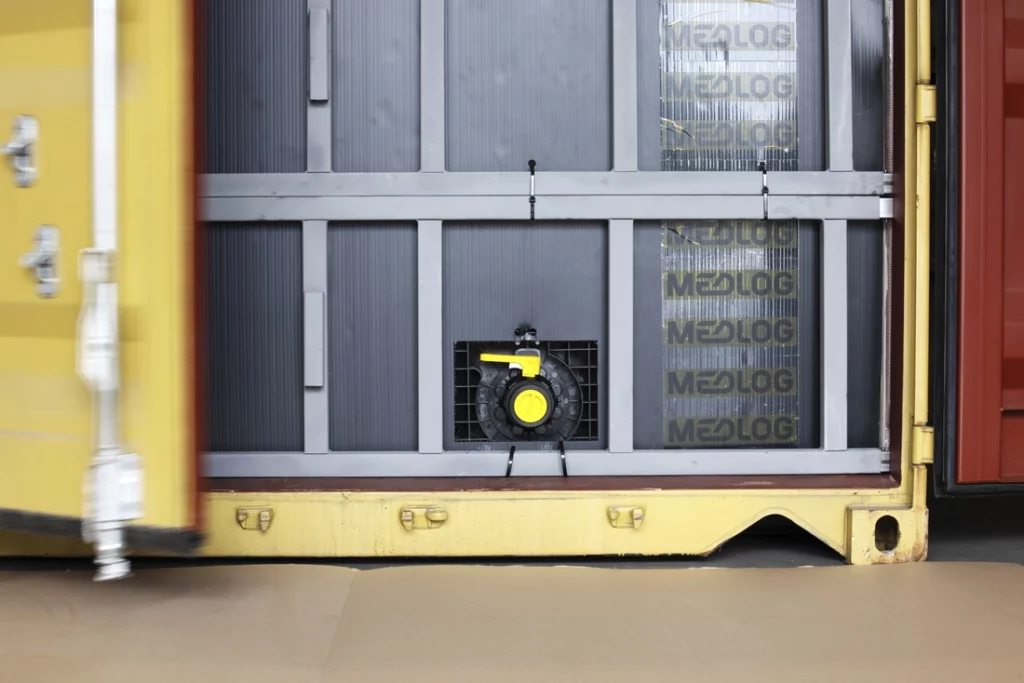
Disruptions to Red Sea routes, unstable schedules and increased cargo control requirements are changing the perception of flexitanks in global logistics. A format that was considered primarily a cheaper alternative to tank containers a few years ago is increasingly turning into a segment with increased operational risks.
Why old approaches to flexitank transportation no longer work, Eugene Perez Baro, founder and CEO of Porta Maris Logistics, told in a blog for USM.
At first glance, the very formulation of the question sounds paradoxical. Flexitanks were created as an efficient, flexible and cost-effective solution for transporting bulk cargo in a standard container. But today, flexitanks are difficult to consider only as a simpler alternative to a specialized tank. This is a format in which even a small mistake can have a very high price.
And it’s not that the flexitank itself has become weaker. The entire system around it has become more fragile. That is why in 2025–2026, flexitanks will increasingly behave as a new fragile cargo – not in a physical sense, but in an operational and commercial sense. A few years ago, the market looked at flexitanks primarily through the prism of economics. And there was logic in this.
According to IUMI, the number of flexitanks in the world has increased from approximately 400 thousand in 2010 to over 1.5 million, and transportation volumes already reach about 36 billion liters. The segment is growing precisely because of lower cost and easier access to capacity. But the same IUMI directly emphasizes: despite the economic advantages, it remains only a partially regulated format and is a separate area of increased attention for the insurance market due to the high risk of damage and complete loss of cargo.
Why has this become critical now? Because it is not the product that has changed, but the environment in which it moves. Navigational disruptions in the Red Sea persisted, and the level of transit through the Suez Canal in early May 2025 remained approximately 70% lower than the average level in 2023. In addition, concerns about the Strait of Hormuz, a critical node through which about 11% of world maritime trade passes, increased in 2025. For container logistics, this means longer shoulders, more transhipments, higher turbulence of schedules and a greater load on the entire supply chain.
For conventional dry cargo, this is already a problem. And for flexitanks, this is a multiplication of risks. Because here it is not only the capacity inside the container that is vulnerable. The whole bundle is vulnerable: the condition of the container, doors, seams, previous repairs, the presence of sharp zones, filling temperature, filling speed, product density, liquid behavior in transit, and the discharge scenario at the destination.
Key risks include unsuitable containers, installation errors, overloading or underfilling, previous damage, unusual transport loads, and the consequences include not only loss of cargo, but also cleaning costs, overloading, container downtime fees and environmental incidents. In other words, flexitank today is no longer just a container. It is a regime of increased discipline.
It is also important to understand that the market already has enough actual cases to stop treating such transportation as a simple container solution. From experience, the most common problems in flexitank operations include container damage, errors during installation and filling, problems with container doors, impact incidents, and fermentation. And for the market of vegetable oils, juice concentrates or other sensitive food cargo, this is especially important because a logistical error ceases to be simply operational. It immediately becomes a commercial claim on the quality of the goods.
That is why the old approaches no longer work. The market has already changed, but many people’s approaches to flexitanks have not. There is still a false temptation to reduce everything to cost, put the bulk cargo in a standard container, control the loading, and think that this is enough. But it is precisely this simplified logic that does not work today. The most expensive failures occur where responsibility is dispersed, control is fragmented, and logistics itself is still perceived as a set of separate actions. In fact, we are talking about a holistic system that must be built into the client’s business and be responsible not only for the process, but also for the final result.
It is significant that even the market itself is becoming less lenient towards a do-it-yourself approach. In June 2025, ONE introduced enhanced requirements for flexitank containers, explicitly stating that their use changes the initial operating conditions of the equipment and requires special procedures. Among the new requirements is mandatory standardized external labeling. This is a very important signal: the market is formalizing control, because the old informal approach is already too expensive.

For food cargo, the requirements have become stricter: the market is no longer satisfied with simply delivering the goods. It is also necessary to prove that it was carried out correctly at all critical stages. And here it is not the date of introduction of new rules, but the direction of changes that is important. Food logistics is moving towards greater traceability, fixing conditions and responsibility for quality in transit. For flexitanks, this means one thing: operational discipline is no longer an advantage – it becomes a basic requirement.
What does this mean in practice? For me, it means a simple thing: mature work with a flexitank begins not with booking, but with checking the entire chain. Cargo, container, route, temperature regime, scenario of actions in case of failure – all this must be calculated before departure.
But this is not a matter of theory, but of practice. Our experience in multimodal transportation, including with flexitanks, shows us a simple thing: this format does not tolerate improvisation. It is not enough to simply buy or ship it. It must be assembled as a system where the route, control and responsibility work together.
So my answer to the question is: yes, flexitanks have become the new fragile cargo. But not because the material has changed. But because the market has become longer, tougher and less tolerant of weak preparation. In 2026, the winner will not be the one who simply found the cheapest solution. The winner will be the one who better assembled the system: container, route, filling, control, documents, traceability and responsibility for the final result.
This is what adult logistics is all about today.