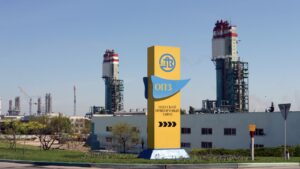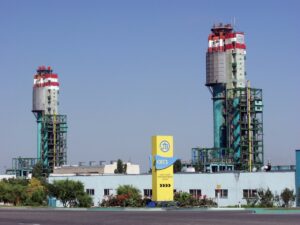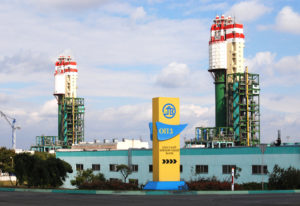
The Odesa Port Plant was considered as a potential site for grain transshipment, — the head of the State Property Fund
30.06.2026 - 15:03
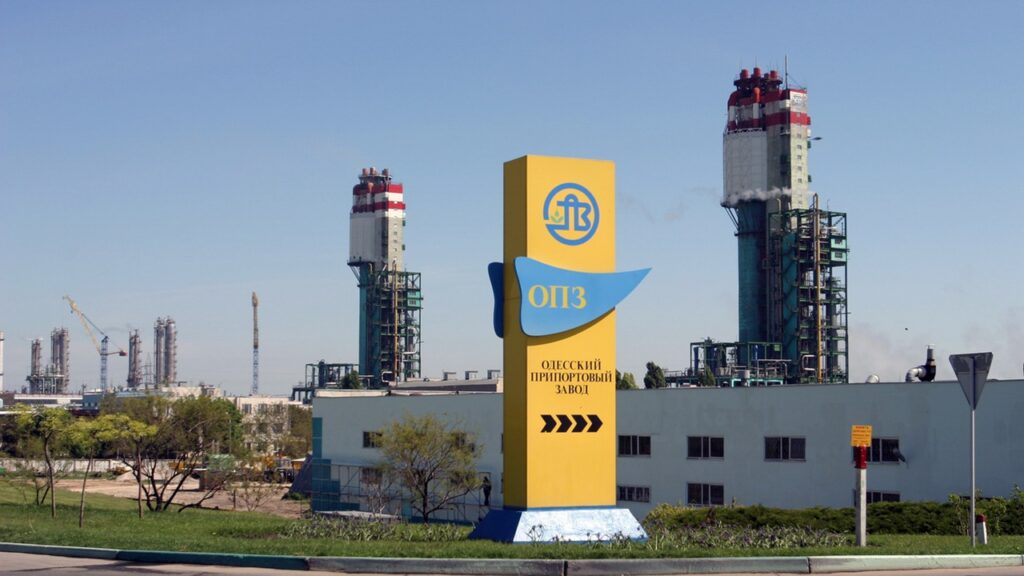
The head of the State Property Fund said that within the framework of privatization last time, the Odesa Port Plant was considered as a small private port for transshipment of agricultural products.
This was said by the head of the State Property Fund Dmytro Natalukha in an interview with the “Glavkom”.
According to him, last time, when trying to put the Odesa Port Plant up for privatization, among the interested trading participants was a large, very capable and resourceful agricultural company.
“It considered this asset not so much as the production of ammonia and urea, but rather as a potential site for transshipment of agricultural products. They, it seems, did not even hide that they did not rule out that they would demolish the excess there, build “sleeves”, cranes and warehouses – and there would be such a small private port purely for transshipment of their products onto ships,” the head of the State Property Fund said.
Dmytro Natalukha noted that the new owners have the right to do so, but this way of using the OPZ can be considered a negative externality. We are talking about consequences that are not obvious today, but will occur in the long term.
“The maximum that can happen with such an approach in the long term is probably an increase in the volume of transshipment in 5-10 years. But the number of jobs, taxes paid will not increase many times over, and no serious related infrastructure will appear. Because transshipment is an activity with low economic complexity and high operational automation,” Natalukha added.
In particular, the official believes that from a long-term perspective, it is more interesting to preserve the intended purpose of the Plant and be interested in an investor who will develop the production of urea and ammonia.
“This is a more complex technology, which means more jobs, more related businesses: someone produces packaging for this product, someone provides logistics, etc. In addition, the war in Iran increases the attractiveness of this asset: 30% of ammonia in the world was supplied through the Strait of Hormuz from the Persian Gulf countries. Accordingly, now the price of ammonia has simply skyrocketed, and everyone has taken a completely different look at the same Plant. If last year the plant had been sold to agricultural “smugglers,” Ukraine would no longer have a chance to compete in the global ammonia market,” the head of the State Fund for the Production of Ammonia emphasized.