A separate control regime in EU ports is proposed for ships carrying Ukrainian grain
27.08.2026 - 10:01
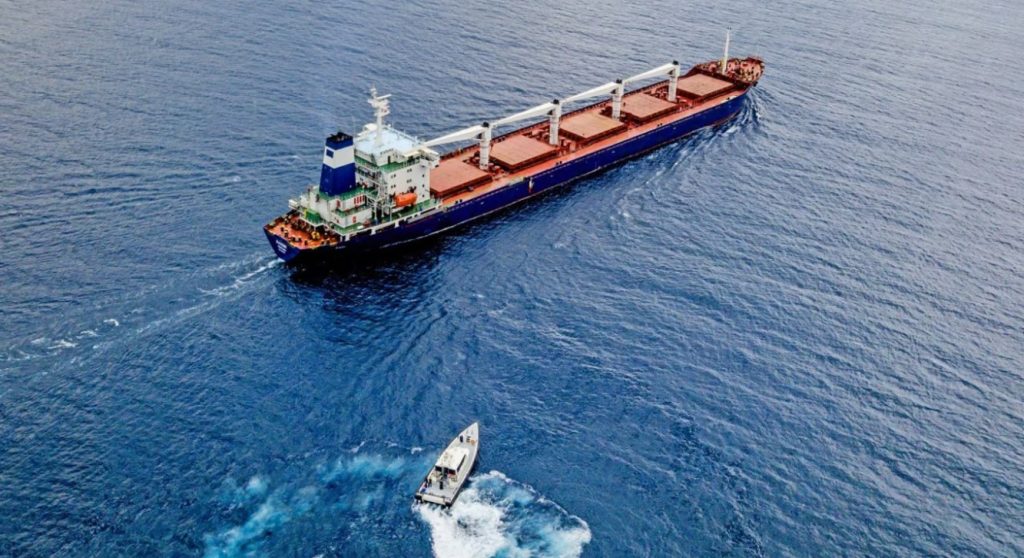
Europe is proposed to create a special Port State Control regime for vessels carrying Ukrainian agricultural exports.
The founder of Marelis Navigation S.A. Konstantin Sobol proposed to create a temporary special Port State Control regime for vessels transporting Ukrainian agricultural products from the ports of Great Odesa.
According to Sobol, more and more shipowners are refusing to send their fleet to Ukrainian ports due to military risks. In many cases, the crews themselves do not agree to such voyages.
At the same time, there is still a segment of the fleet on the market, mainly older, whose owners are ready to work in the Ukrainian direction. However, for some of these vessels, another problem arises – an increased risk of Port State Control (PSC) inspections in European ports.
According to Sobol, individual flags or classification societies can form an unfavorable risk profile for the vessel. In this case, after the voyage from the Ukrainian port, the shipowner may face an in-depth inspection, detention of the vessel, additional costs and downtime at the port of unloading.
As a result, he notes, a situation arises when the vessel is ready to accept military risks and enter the Ukrainian port, but the owner refuses the voyage due to possible regulatory and commercial risks already in the EU.
Sobol believes that the European Commission, EMSA, Paris MoU and IMO, together with Ukraine, could consider creating a temporary special PSC regime for vessels transporting Ukrainian agricultural products. At the same time, he emphasized, this is not about lowering safety standards – the requirements of SOLAS, MARPOL, STCW, MLC and other basic standards should remain in force.
According to his proposal, vessels that leave directly from Ukrainian deep-sea ports could undergo an enhanced independent inspection of their technical condition. In particular, this concerns the condition of the hull, main engine, steering, fire-fighting systems, rescue equipment, navigation, environmental safety, documents and crew qualifications.
After successfully passing such an inspection, the vessel could receive the right to a special temporary PSC procedure in the first port of unloading in the EU.
Sobol emphasized that this should not mean exemption from inspections or admission to European ports of technically dangerous vessels.
In his opinion, the mechanism could operate for 6-12 months and apply only to vessels transporting Ukrainian agricultural products directly from Ukrainian ports to EU countries.
Such an approach, according to him, could increase the available tonnage for Ukrainian exports, support farmers and exporters and help maintain Ukraine’s maritime connection with European and world markets.
USM previously reported that without a maritime corridor, Ukraine could lose up to half of its iron ore exports.