Drones attack Russia’s largest oil terminal in the Baltic for the third time
1.09.2026 - 11:26
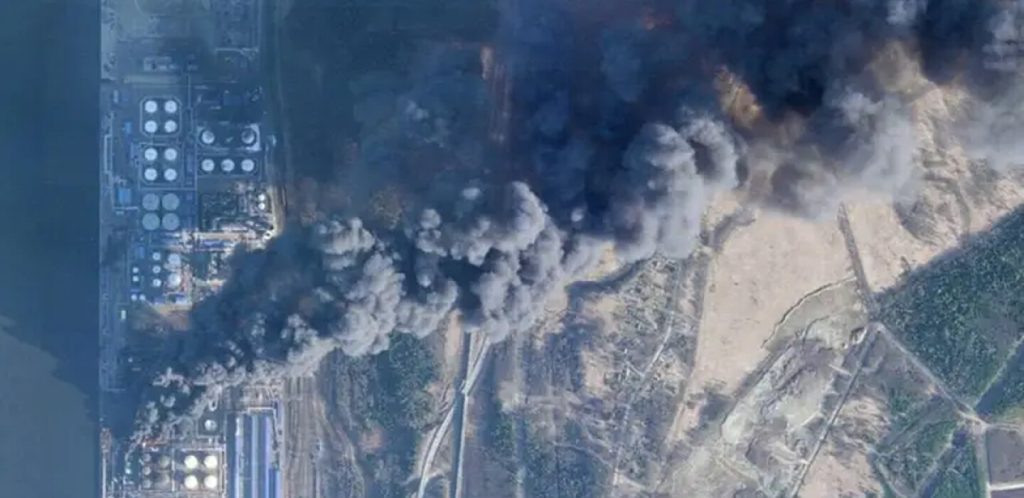
Ukrainian drones have once again struck one of Russia’s largest oil terminals in the Baltic.
The attack was reported by the Russian governor of the region, Alexander Drozdenko.
On the night of September 1, Ukrainian drones attacked the port of Ust-Luga in the Leningrad region for the third time in six months. It is one of Russia’s largest sea trade ports in the Baltic and a key oil export hub.
The port of Ust-Luga, together with neighboring Primorsky, provides more than 40% of Russia’s maritime oil export capacity. That is why the terminal regularly comes under attack — previous attacks have already caused significant damage to the Kremlin’s oil budget.
According to the Financial Times, the strikes on both ports at one time reduced Russia’s seaborne oil exports by 70% and cost the country about $970 million per week. Reuters reported that after the attacks on the pumping station in Unech, through which oil is pumped to Ust-Luga, the terminal was operating at half capacity — about 350,000 barrels per day.
The systematic nature of the strikes indicates a consistent strategy to weaken Russia’s oil export capacity. Each attack forces the terminal to stop loading, put out fires, and repair damaged infrastructure, which directly reduces the amount of oil that Russia manages to ship for export.
On the night of August 14, an attack on the same facility had already led to a fire in the port area, and in late March 2026 — to a fire in the port and the adjacent industrial zone.
At the same time, in the four weeks leading up to August 16, Russian oil supplies fell to 3.58 million barrels per day — the lowest level since late April.