Tariffs in Moldova. Why discounts on railway tariffs for the transit of Ukrainian cargo will have a positive impact on exports
18.08.2026 - 16:58
After increasing risks for sea exports, Ukraine is again actively looking for alternative routes for cargo. One of these directions was railway transit through Moldova, where the local railway agreed to a 50% discount on the transportation of Ukrainian goods until the end of 2026.
In the text, USM, together with TEUS owner and director Dmytro Kazanin, explains why this decision is important for exports and imports and how it can change logistics through Reni, Izmail, Giurgiulesti and Romanian ports.
Why did Moldova agree to such discounts?
After the actual cessation of full-fledged sea exports through the ports of Greater Odessa, Ukraine began to urgently expand alternative routes. One of them was the railway corridor through Moldova – both in the direction of the Danube ports and further to Romania and Constanta. The main problem of this route for a long time remained its cost: high tariffs on the Moldovan section made the railway less competitive compared to road transportation and other directions.
The approach to such a route itself is not new. Moldova already provided rail transit of Ukrainian grain in 2022–2023, when, after the start of the full-scale invasion, Ukraine was forced to restructure export logistics. The issue of reducing tariffs was also discussed long before the current sea blockade: in June 2024, Ukrzaliznytsia and Calea Ferată din Moldova created a working group that, among other things, was to work out tariff conditions for Ukrainian transit.
In 2026, Moldovan Railways already applied special discount rates on a number of transit routes. In particular, since March, a rate of 0.70 to the base rate has been applied to all types of cargo on certain routes through Basarabiasca, Etulia, Giurgiuleşti, Ungheni and Velchinets. For grain, meal, ore, sunflower oil and other cargoes, there were separate tariff conditions depending on the route and volumes.
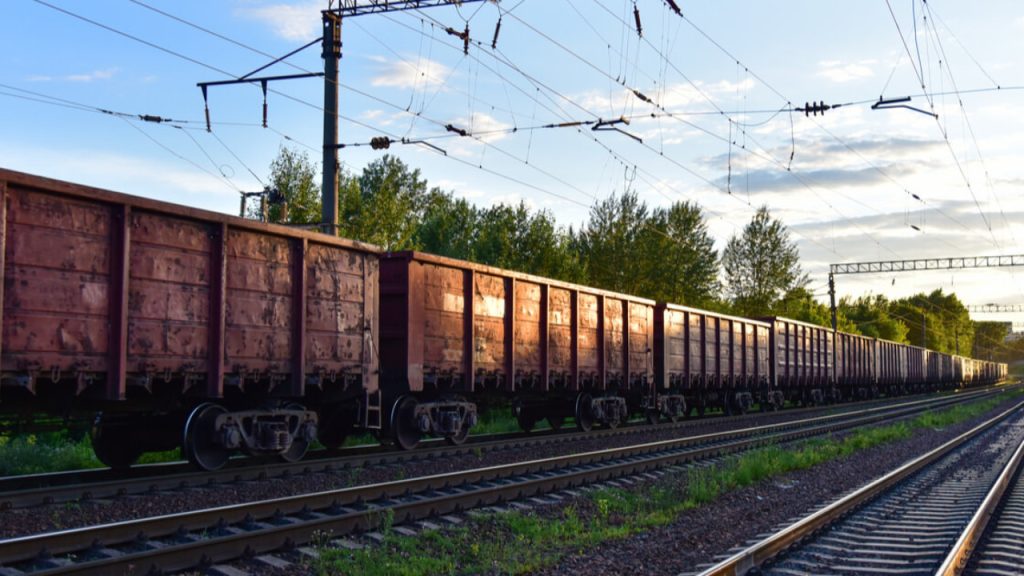
However, after the intensification of Russian attacks on Ukrainian shipping and port infrastructure, the tariff issue became more critical. In early August, Kyiv proposed to Chisinau to reduce the nominal cost of rail transit by 50% in order to increase the transportation of Ukrainian grain through Moldova to the Romanian port of Constanta. At that time, the Moldovan side in response offered Ukraine to guarantee certain volumes of cargo, and the parties continued to agree on the terms and parameters of the route.
In parallel, in August, Moldovan Infrastructure Minister Vladimir Bolea met with Ukrainian Infrastructure Minister Mykola Kalashnyk in the Odessa region. The parties discussed the development of railway communication and increasing transit.
After negotiations, CFM agreed to reduce the tariff for transit freight by 50%. The discount will be valid until the end of 2026 and covers a number of routes through the Moldovan railway network. It applies to all types of cargo in certain directions, as well as separately to grain, meal, cake, oil, ore and cargo in tanks. At the same time, the application of the discount was not tied to the guaranteed volume of transportation.
For Moldova, the decision also makes economic sense. Chisinau expects to receive additional transit and income for its own railway. Moldovan Prime Minister Vasile Tofan stated that the country can earn several million euros on Ukrainian cargo and should not miss this opportunity. At the same time, the decision caused dissatisfaction among some Moldovan farmers, who fear competition with cheaper Ukrainian grain.
For Ukraine, the importance of the route lies primarily in additional capacity. According to the Minister of Agrarian Policy Taras Vysotsky, about 500-800 thousand tons of Ukrainian agricultural products can be transported by rail through Moldova per month. The first task is to reach about 500 thousand tons, after which the volume can be increased to 800 thousand tons. This will not replace the seaports through which the bulk of Ukrainian agricultural exports passed before the blockade, but it makes the Moldovan route one of the key reserve corridors.
Economic benefits of tariff reduction and impact on logistics to ports
As the owner and director of the logistics operator TEUS, Dmytro Kazanyn, told USM in a comment, reducing tariffs for transit of goods through the territory of Moldova by 50% is indeed a very important decision for Ukrainian exports and imports, especially for the logistics of southern Ukraine and the Danube direction.

“Previously, the high cost of rail transit through Moldova significantly limited the use of this route. In many cases, road transport economically won over railways, even despite lower carrying capacity and other operational restrictions. Because of this, some cargo owners and traders simply did not consider the railway route through Moldova as competitive,” the expert notes.
In his opinion, reducing the tariff by 50% can significantly change this economy. Railways will once again be able to compete with road transport, especially for large consignments of grain, oilseeds, meal, fertilizers and other bulk cargo.
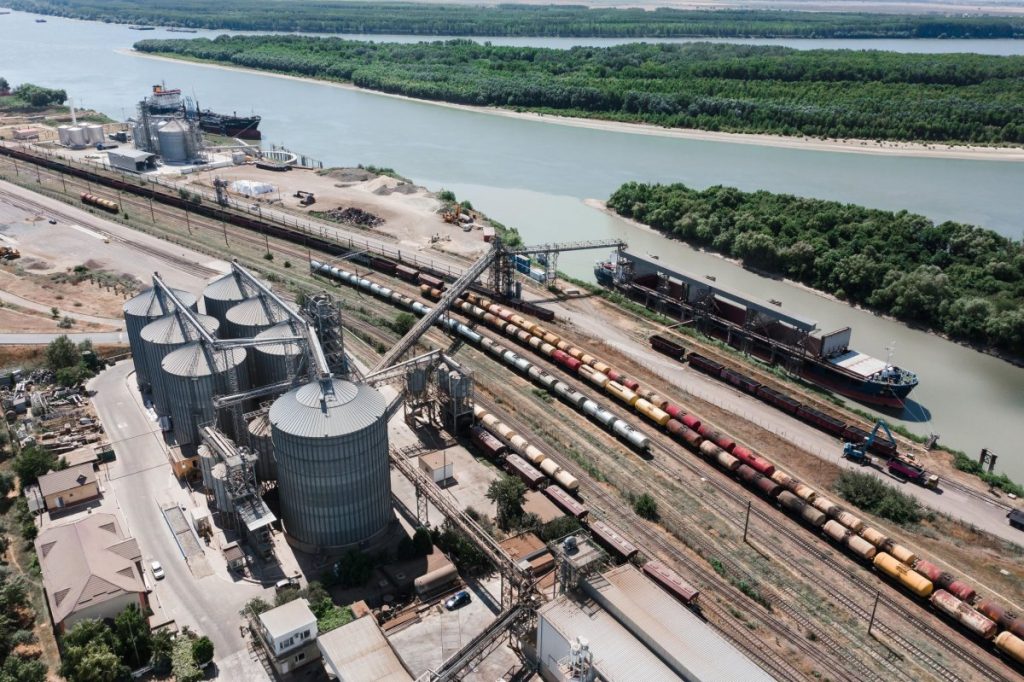
Separately, this can change the balance of cargo flows between the ports of Izmail and Reni. Before that, a significant part of the cargo was forced to gravitate towards Izmail precisely because of cheaper land logistics. For the trader, the key factor was often not only the cost of transshipment in the port itself, but also the full logistics cost from the loading point to the ship’s side. Due to the expensive transit through the territory of Moldova, the delivery of wagons in the direction of Reni often lost to alternative routes, so Izmail received additional load. Now Reni can become much more competitive.
“And this is especially important during periods of shallow water on the Danube. Reni has an important logistical advantage – the ability to work with vessels with a larger draft compared to individual sections and routes in the direction of Izmail. When the water level on the Danube drops, every additional 20–30 centimeters of permissible draft directly affects the amount of cargo that can be loaded onto the ship, and accordingly, the cost of sea freight per ton,” notes Kazanin.
According to the expert, this is why the reduction in the cost of rail transit through Moldova is not just a discount on a separate section of the route. It actually opens up the possibility of redistributing cargo flows between Izmail, Reni, Giurgiuleşti and Romanian ports in a new way.
For Ukrainian exports, this means more alternative routes, better competition between modes of transport and ports and, as a result, a potential reduction in overall logistics costs.
For imports, the effect is no less important. Through this corridor, it is possible to more effectively organize deliveries to Ukraine of fertilizers, fuel, bulk and other bulk cargo from Romania and the Danube region.
“In the current conditions, the main value of such a solution is in the creation of another economically viable route. Ukrainian logistics should be as diversified as possible: railway, road transport, the Danube, ports of Greater Odessa and alternative routes through Moldova and Romania should complement each other,” the expert notes.
Finally, Dmytro Kazanyn suggests considering a 50% tariff reduction as a real incentive for the development of the Ukraine-Moldova-Romania transport corridor and as an opportunity to significantly increase the role of Reni in Ukrainian exports and imports.