How ONE works with Ukrainian cargo without calling at ports: a blitz interview with a representative of the line’s agent
27.07.2026 - 17:41
Despite the intensification of Russian attacks on the ports of Great Odesa, container logistics, although it has encountered its own difficulties, has not stopped: Ukrainian cargo continues to be served through European hubs, land routes and dry ports.
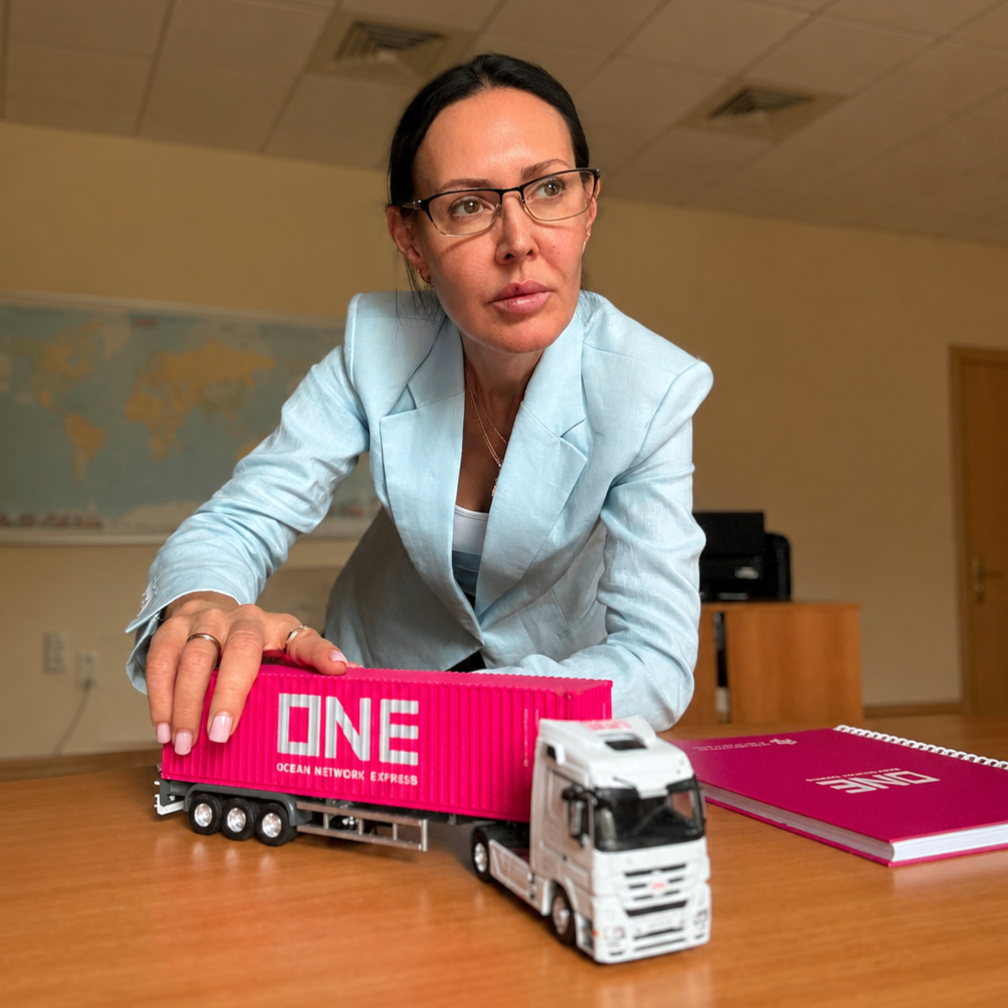
About how a container line without direct ship calls works, why cargo redirection is not just a change of route on the map, and what risks for the market may increase in the fall, USM spoke with Olena Radchenko, Deputy Director for Corporate Development and Finance of United Liner Agency Ltd., an agent of Ocean Network Express in Ukraine.
After the actual shutdown of the ports of Great Odesa, how much has the logistics of container cargo changed for Ukrainian clients?
First of all, I would like to clarify the wording a bit: in my opinion, it is not entirely correct to talk about the actual complete shutdown of the ports of Great Odesa. At the same time, the recent intensification of attacks has significantly affected the ability to maintain regular and predictable container services.
For ONE in Ukraine, there has been no fundamental restructuring of our work model right now, since we did not have direct ship calls to Ukrainian ports before. Over the past years, we have continued to serve Ukrainian cargo through European hubs and land routes. Therefore, for us this is no longer an emergency solution, but a proven operating model.
Which routes or European hubs are currently taking on the main load for import and export?
The main alternative directions, as in recent years, remain Poland and Romania – primarily Gdansk, Gdynia and Constanta, with subsequent delivery of cargo by road or rail to Ukraine. Other European hubs, in particular Hamburg, are also used, but in much smaller volumes.
For imports, much depends on where the container is located at the time of the route change. Cargo that is already in the last transit hubs – Istanbul, Piraeus, Port Said – will most likely be redirected through Constanta. For containers that are at earlier stages of transportation, the route can be revised in agreement with the client, including in favor of Polish ports.
With exports, the logic is similar: for already loaded containers, an accessible and economically acceptable route will be sought, and for new shipments, clients will again consider options via Poland and Romania – depending on the cost, availability of transport and timing.
In your post you write that the presence of a container line on the market is determined not only by ship calls at the port. How does this work in practice for ONE in Ukraine?
The presence of a container line on the market is much more than the presence of its ship in the port.
ONE continues to work with Ukrainian clients through us, UNITED LINER AGENCY LTD, as a local agent: bookings are accepted and supported, customer service, document flow, financial support, control of container equipment, coordination of transportation with European offices and the global ONE network are provided.
That is, the physical route of the container changes, but neither the presence of the line on the Ukrainian market nor work with the client disappears.
What services remain available to Ukrainian business even without direct ship calls at Ukrainian ports?
The global ONE network remains available to Ukrainian business for both import and export. The difference lies in the route: the Ukrainian part of the transportation is provided through alternative European ports and land transportation by road and rail.
Therefore, the lack of direct access does not mean the lack of access of the Ukrainian client to the global container service.
Which links of the container logistics chain are currently the most vulnerable?
In my opinion, today it would be wrong to single out only one most vulnerable link. In war conditions, the risk does not end at the port gates.
The logistics chain is terminals, depots, warehouses, railway and automobile infrastructure, carriers, customs, equipment. And, most importantly, behind each of these links are people.
Unfortunately, there is no place in Ukraine today that could be considered 100% protected from military risks. Therefore, the sustainability of logistics depends not so much on the absolute safety of one route (it cannot be guaranteed today), but on the availability of alternatives and the ability to quickly rebuild the entire chain.
How quickly can a business restructure container routes after a sudden stop or restriction of port operations?
The experience of the last four years has shown that Ukrainian business is able to adapt extremely quickly. Sometimes a solution has to be found literally the next morning after another attack.
But rerouting is not just changing a line on the map. You need available capacity in an alternative port, road or rail resources, container equipment, terminals, depots, customs procedures and coordination of all participants in the chain.
Therefore, the speed of restructuring depends not only on the container line or agent, but on the throughput capacity of the entire alternative infrastructure.
Do you see the risk of further growth in rates, delays or shortages of container equipment?
I would divide these three risks.
As for container equipment, I currently see no reason to expect a repeat of the situation in 2022. During this time, certain equipment stocks have formed in Ukraine, inland depots and dry ports are operating, and the market itself is much better adapted to alternative logistics. At the same time, local imbalances by individual container types or regions are, of course, possible.
Similarly, I would not expect an automatic significant increase in global sea freight rates precisely due to the termination of certain measures to Ukrainian ports. Rather, it will be a matter of redistribution of cargo flows within global networks. Certain short-term fluctuations in services related to the Black Sea are possible.
Instead, I see a greater risk of cost growth in the land part of logistics. If significant volumes are again redirected by road and rail through Poland and Romania, demand for this resource will grow.
For cargo that is already on the way and now needs to be redirected, certain delays are almost inevitable. Much will then depend on the duration of the situation. If restrictions on sea services are prolonged, the load on land routes and border crossings will increase, especially as the autumn peak of the export season approaches.
Despite the enormous adaptation of Ukraine’s land logistics in recent years, its throughput capacity is still not unlimited and cannot completely replace maritime capacity.
What solutions could strengthen the resilience of Ukrainian container logistics in conditions where the maritime corridor may stop due to attacks?
In my opinion, resilience today does not lie in finding one “ideal” route, but in preserving the maximum number of working alternatives.
Over the past four years, Ukraine has already done a huge amount of work to diversify logistics. That is why today we are not automatically returning to the situation of spring 2022. There are established routes through Poland and Romania, road and rail solutions, inland depots, dry ports, and accumulated experience working through European gateways.
Therefore, it is important not to contrast sea and land routes. Ukraine needs direct maritime services when the security situation allows them to be maintained, but at the same time it needs strong alternative corridors through the EU, capable of accepting additional cargo flows in the event of disruption of maritime services.
And it is no less important to maintain the professional presence of international carriers and their agents in Ukraine.
As long as Ukrainian business continues to trade with the world, the professional infrastructure that provides this connection must remain and work.
Photo: Olena Radchenko’s social network