Russia Arms Its Gas Carriers in the Baltics with Machine Guns
29.06.2026 - 13:18
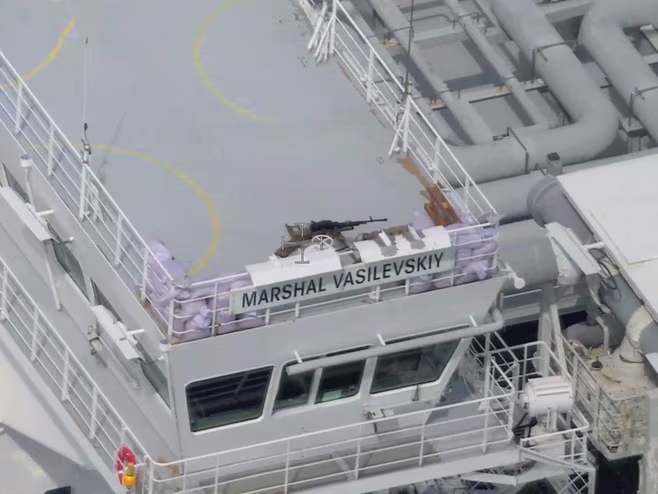
Estonian border guards have recorded heavy weapons on a Gazprom vessel in European waters for the first time.
Russia has armed the gas carrier Marshal Vasilevsky with heavy machine guns during its voyages in the Baltic Sea. This is reported by Helsingin Sanomat.
The picture was taken by an Estonian patrol aircraft in the Gulf of Finland in mid-May. This is the first photographic evidence of the installation of heavy weapons on a Russian civilian vessel in European waters. On the wheelhouse of the almost 300-meter gas carrier, two 12.7 mm Kord machine guns, lined with sandbags, were noticed on both sides. These weapons are capable of firing up to 10 rounds per second and hitting targets at a distance of up to 2 km.
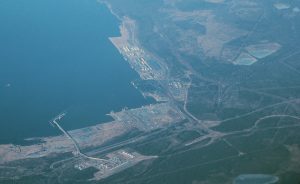
The vessel belongs to the state-owned company Gazprom Flot and has been sailing on one route since October 2024 – between the Portovo terminal in the Leningrad region and Kaliningrad. The sea route is virtually the only way to supply Russian gas to this strategically important enclave between Poland and Lithuania.
The Marshal Vasilevsky is not formally part of the “shadow fleet.” The ship flies the Russian flag and has a transparent owner, so unlike tankers under false flags, European forces are unlikely to be able to detain or board it.
Experts believe that the weapons are primarily a NATO signal. Against drones, such machine guns are of little use due to their strong recoil — therefore, their purpose is not defense, but deterrence of boarding. According to a source in European intelligence, after the appearance of such weapons, the probability of boarding the ship is “zero.”
The investigation also found that Russians with a military past have been on board every voyage since August 2025. At least 24 of them, according to the Dossier Center, served or are serving in the army, National Guard, or FSB — presumably as part of the ship’s security unit.
Recently, USM reported that the French navy had intercepted the “shadow fleet” tanker “Deliver”, which was transiting off the coast of Sicily.