Moldovan Foreign Ministry presents Russian Ambassador with a bottle of contaminated water from the Dnister
17.03.2026 - 13:13
The Moldovan Foreign Ministry strongly condemned the attack, which led to the leakage of oil products into the river and created serious risks for the environment and the security of the country’s water supply.
On March 17, the Moldovan Foreign Ministry summoned the Russian ambassador-designate in Chisinau, Oleg Ozerov, in connection with the pollution of the Dniester River after the Russian shelling. This was reported by the Moldovan foreign ministry.
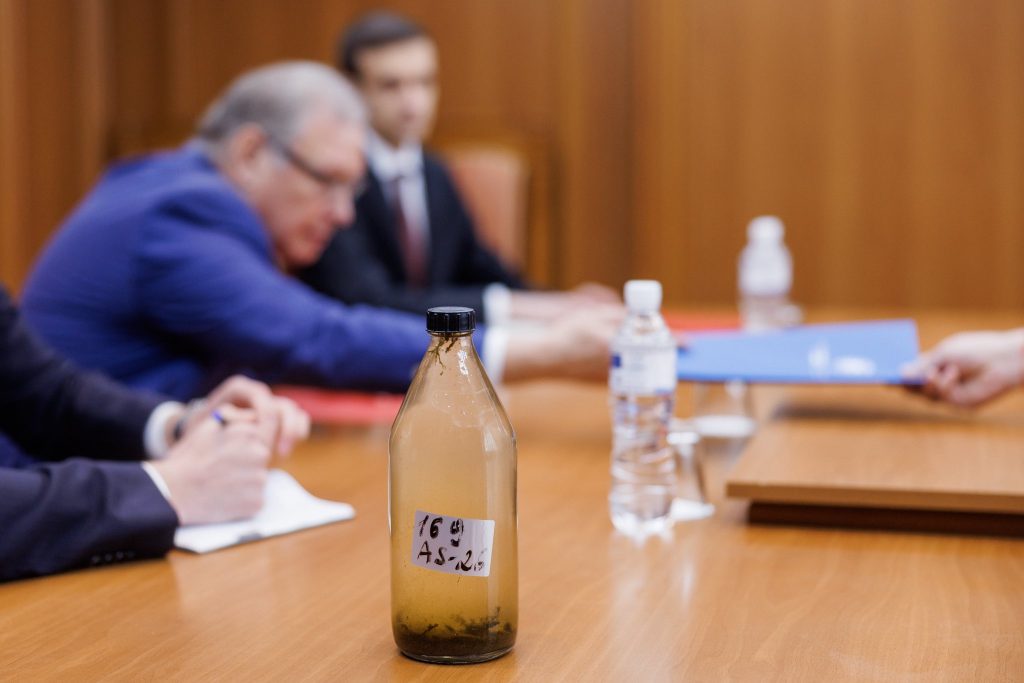
During the meeting, the Russian representative was handed a note of protest. In addition, a bottle of water from the Dniester was brought to the meeting room as a visual reminder of the consequences of the environmental incident.
The ministry emphasized that the Dniester provides water to about 80% of the population of Moldova and 98% of the residents of Chisinau, so any pollution of the river has direct consequences for the environment, people’s health and national security.
After the pollution was discovered, the Moldovan authorities have already imposed a 15-day ecological alert regime in the Dniester basin and have appealed to the European Union for help.
Moldovan President Maia Sandu previously stated that the cause of the pollution was the Russian attack on a hydroelectric power plant in Novodniestrovsk, Ukraine, on March 7. After that, Chisinau also sent an official request to Ukraine regarding the appearance of oily spots in the Dniester.
Also, the day before, USM wrote that a drifting Russian gas tanker threatens an ecological disaster in the Mediterranean Sea.