New risk. Can Turkey affect exports from the ports of Great Odesa?
11.08.2026 - 17:26
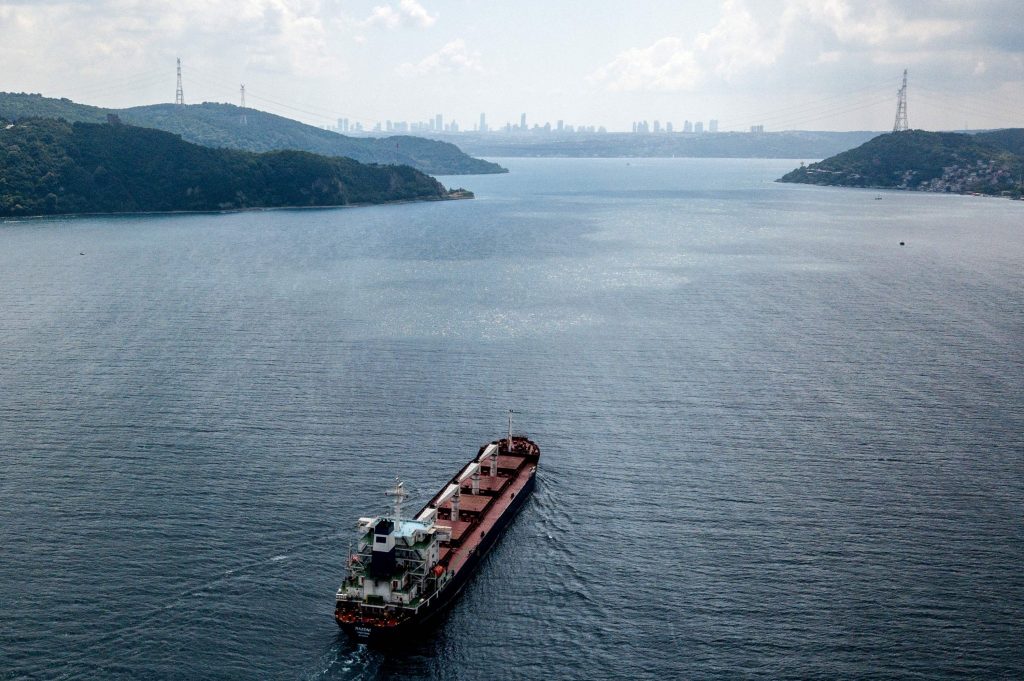
After the Russian Federation intensified its attacks on Ukrainian ports and civilian vessels, Ankara has shown that it is ready to use control of the Bosphorus and Dardanelles as leverage.
For Ukrainian exports, this means a new risk premium – even before the straits are actually closed. USM spoke with experts in the maritime and agricultural industries to find out how Turkey’s decision could affect shipping and the freight market.
This summer, Ukraine launched an operation against the vessels of the Russian “shadow fleet” in the Black and Azov seas to reduce the Kremlin’s revenues that it directs to the war. In response, Russia has intensified its attacks on Ukrainian ports and civilian merchant ships.
The situation has gradually moved beyond the immediate Ukrainian-Russian confrontation. After the attacks on ships, including Turkish ones, Ankara has made it clear that it is not ready to ignore the risks to its own merchant fleet.
Thus, on August 8-9, there were reports of a temporary restriction on the passage of commercial vessels through the straits. Later, Turkish officials clarified that shipping was not stopped, but temporary security measures were applied. According to them, traffic through the straits continues in accordance with the Montreux Convention.
At the same time, Turkish Foreign Minister Hakan Fidan called on Russia and Ukraine to declare a moratorium on attacks in the Black Sea. He stated that the war had already spread to the entire Black Sea region, and commercial vessels were no longer protected from attacks.
For Turkey, this is not only a security issue. Control over the straits gives Ankara one of the most powerful levers of influence over Black Sea trade. And Turkey has already demonstrated its readiness to use this lever.
“This is an invitation to the negotiating table”
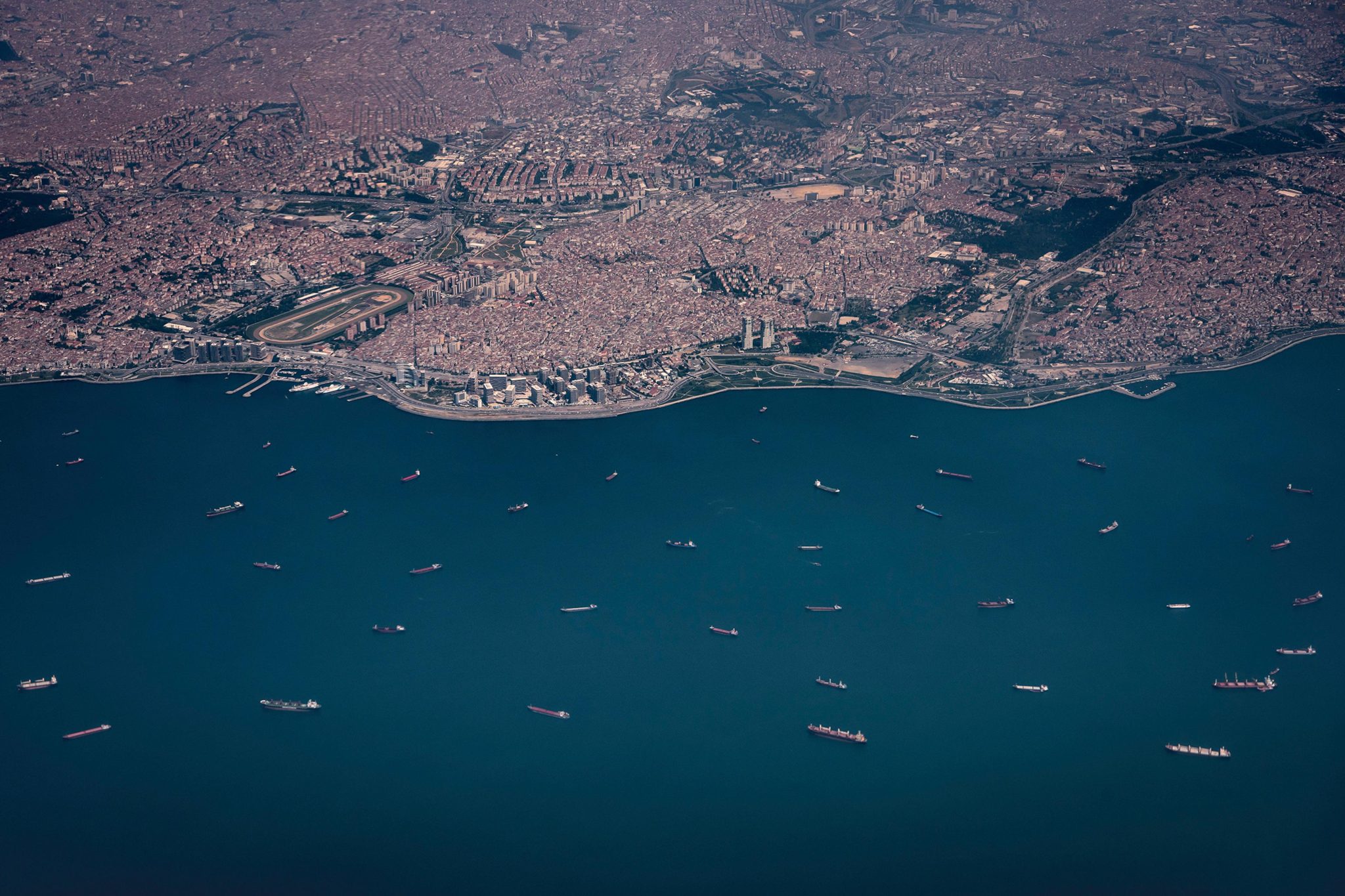
According to Barva Invest analyst Bohdan Kostecki, the threat of restricting traffic through the straits is not empty. Turkey does indeed have the tools to temporarily restrict shipping for security reasons.
“The threat is not empty. Turkey does have the leverage,” he notes.
Kostecki draws attention to the fact that in addition to the Montreux Convention, Turkish shipping rules are in force, which allow for temporary suspension of traffic in the event of an immediate threat to the safety of navigation, human life, vessels, property, or the environment.
At the same time, Turkey itself interprets the strait regime in this way. Its Foreign Ministry notes that the Montreux Convention guarantees freedom of passage for merchant ships, but this freedom does not mean “free and unregulated” passage, since navigation safety is an integral part of the strait regime.
Therefore, Ankara’s current actions should be perceived not so much as an attempt to block Black Sea trade, but as a demonstration that Turkey has the ability to influence it.
“Turkey has sent a clear signal — this is an invitation to the negotiating table,” says Kostetsky.
In his opinion, one should not expect a quick normalization of the situation: it could take weeks or even months if the mutual blows continue.

At the same time, the founder of Marelis Navigation S.A. Konstantin Sobol believes that Turkey’s current actions were more a test of the market’s reaction than a preparation for a long-term restriction of shipping.
According to him, market participants expected a clearer statement from Turkish President Recep Tayyip Erdogan about the possible closure or restriction of the passage of vessels through the straits. However, Ankara did not take such a step and, after short delays, resumed normal traffic.
According to Sobol, this indicates Turkey’s reluctance to enter a legally complex zone and directly violate the regime established by the Montreux Convention. At the same time, the very demonstration of the ability to influence the movement of ships was supposed to show Ukraine and Russia that Ankara can intervene in the situation if the risks for Black Sea shipping continue to grow.
At the same time, Sobol does not expect the current situation to paralyze Black Sea shipping for a long time. According to him, over the past few weeks, shipowners and charterers have already partially adapted to the new level of military risk, and the intensity of attacks on ships has begun to decrease.
“The Black Sea is actually a graveyard of ships,” the expert characterizes the situation, while emphasizing that the market has already learned to work even at a very high level of danger.
Sobol also admits that the parties may agree on certain rules that will avoid attacks on ships transporting grain, as was the case in 2023 against the background of the launch of the Ukrainian maritime corridor. Such a scenario, in his opinion, could significantly reduce the risks for the fleet even without a complete cessation of hostilities.
Who will lose more from restricting the straits?
Paradoxically, a short-term restriction on traffic through the straits could hit Russia harder than Ukraine.
Ukrainian maritime exports are already under much more serious restrictions due to Russian attacks on the ports of Great Odesa. Therefore, according to Kostetsky, an additional reduction in traffic through the Bosphorus does not create as fundamentally new a problem for Ukraine as it might seem.
“That is, the aggressor suffers more from such stops than Ukraine,” the expert notes.
However, this does not mean that Ukraine will not suffer additional losses. Even short delays force shipowners and traders to take into account another element of uncertainty: a vessel may be ready for a voyage, but not have guaranteed access to the Black Sea. And the market insures against uncertainty.
Risk premium is already included in contracts
The most interesting effect may not even be in the physical closure of the straits, but in the behavior of buyers of Ukrainian grain.
Kostetsky says that international traders are already beginning to include military risk not only in freight, but directly in the terms of contracts.
“Definitely so. This applies not only to the risk premium, but also to the contract terms,” he says.
According to him, contracts are increasingly including expanded provisions on military risks, force majeure, and the possibility of terminating the agreement.
For the Ukrainian seller, this creates a fundamental problem. If the buyer is given the right to withdraw from the contract in the event of a deterioration in the security situation, in fact, part of the entire risk is transferred to the producer or exporter.
“Such an article practically turns the contract into an option for the buyer: if the situation suits him, he fulfills it; if not, he can withdraw from the agreement with virtually no risk,” Kostetskyi explains.
That is, the ship can still physically pass through the Bosphorus, the port can be operational, and the grain can be ready for shipment – but the buyer will already have the opportunity to include in the contract a scenario in which this will not happen.
And changing this trend, according to the expert, will be difficult without a real and lasting improvement in the security situation.
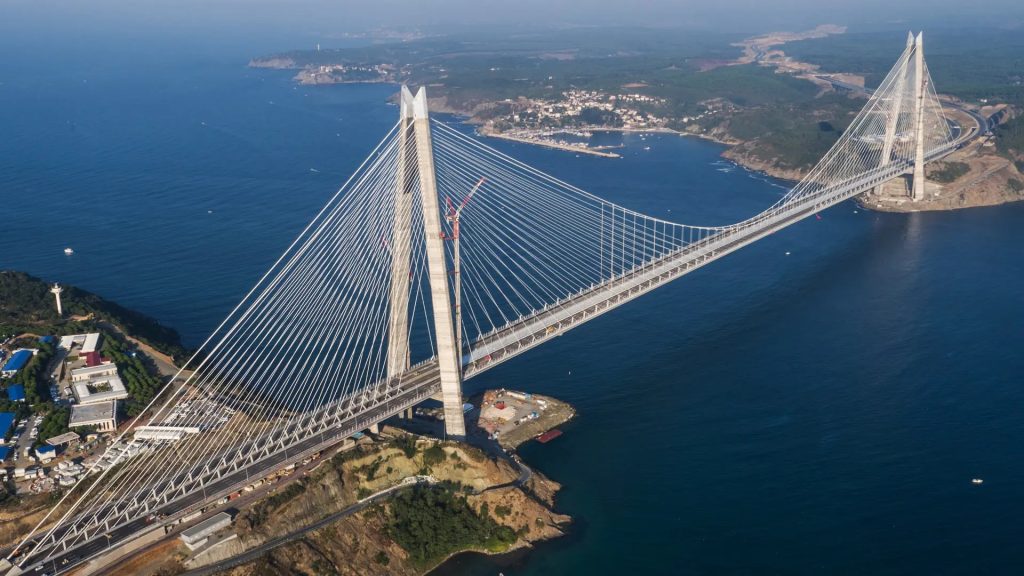
Turkey also pays for the risk
Co-founder and director BPG Shipping Gennadiy Ivanov believes that Ankara has its own economic interest in the situation.
He reminds that the reduction of shipping through the Turkish straits also means losses for Turkey itself.
“I personally have been waiting for Erdogan’s appearance since last week. In addition to the reaction to the shelling of Turkish ships, this is a good reason to become a “food peacekeeper” again and let Turkey earn money. In addition, the reduction of traffic through the straits is a loss of the Turkish budget, “says Ivanov.
Therefore, Ankara is unlikely to be interested in a long-term blockade of the straits. Its interest is rather to demonstrate control, to force the parties to pay attention to Turkish demands and at the same time to preserve its own trade flows.
This is in good agreement with the latest statements of the Turkish authorities. Ankara did not announce a complete suspension of the passage of commercial ships, but made it clear that the safety of navigation has become a separate issue for it.
Ukraine lacks its own fleet
Ivanov sees another systemic problem of Ukrainian exports in the current crisis – dependence on foreign tonnage.
According to his assessment, a significant part of the vessels in applications for Russian ports belong to Russian companies. Against this background, he once again emphasizes the need to develop Ukraine’s own fleet.
“Our ports are effectively blocked today. Now imagine that Ukrainian grain traders owned their own fleet,” Ivanov wrote at the end of July.
Such a fleet, in his opinion, would allow Ukrainian companies to better control freight, demurrage and logistics, as well as partially hedge risks when certain routes become inaccessible.
Ivanov recalls that large Russian agro-traders began to implement this strategy after 2015. Before the start of a full-scale war, they formed their own fleet, which helped them maintain export competitiveness even after the introduction of sanctions.
“Since 2018, I have been emphasizing the need for Ukraine to develop its own fleet, and after 2022, this topic has become especially relevant,” Ivanov said.
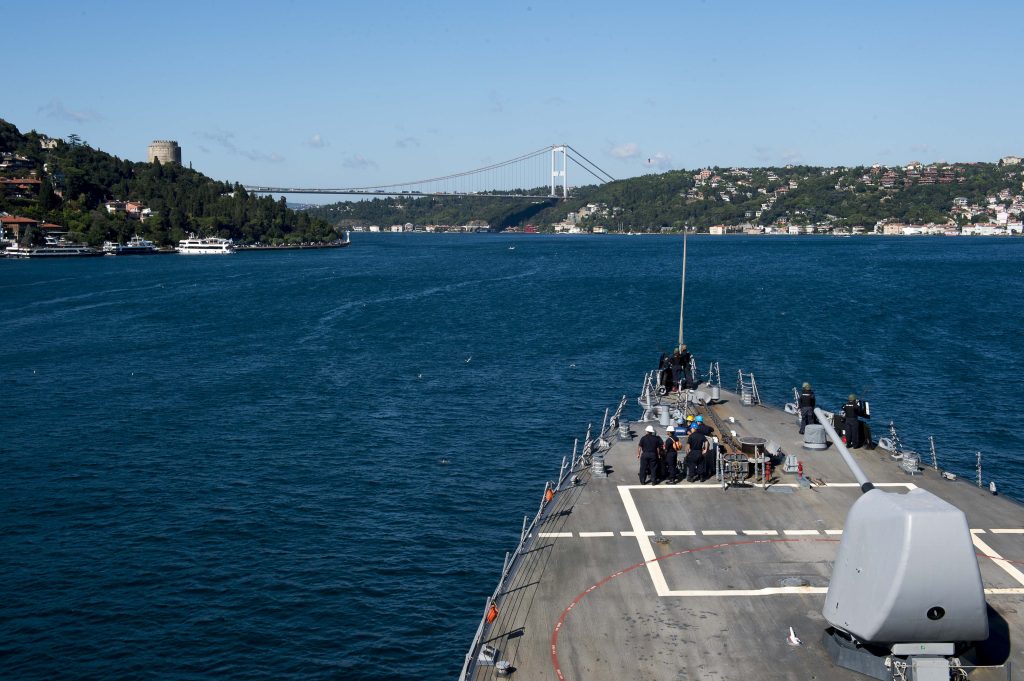
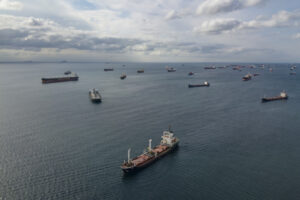
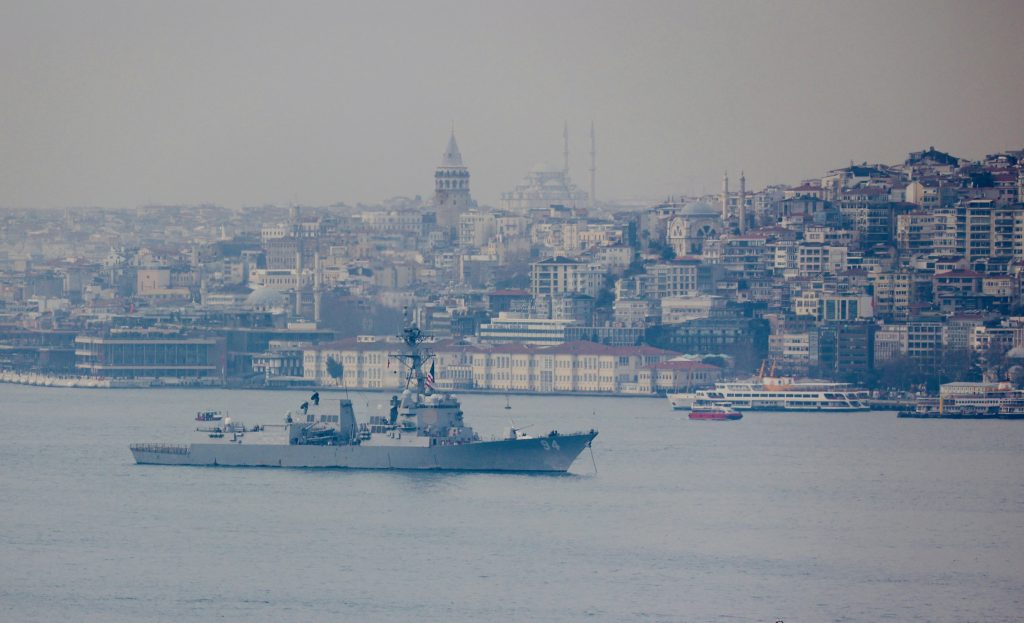
150828-N-AX546-208 BOSPHORUS STRAIT (Aug. 28, 2015) The guided-missile destroyer USS Donald Cook (DDG 75) transits the Bosphorus Strait en route to the Black Sea. Donald Cook is conducting naval operations in the U.S. 6th Fleet area of operations in support of U.S. national security interests in Europe. (U.S. Navy photo by Mass Communication Specialist 1st Class Sean Spratt/Released)
The Black Sea has become even more expensive
Ivanov also warns against trying to view the current attacks as another short-term episode.
In his opinion, the attacks on civilian shipping have become a logical consequence of many years of degradation of security at sea – from piracy to Houthi attacks in the Red Sea and the current attacks on merchant ships in the Black Sea.
“What is happening today in the Black Sea is a natural result of many years of inaction by everyone,” he believes.
And although the world market is able to partially compensate for the reduction in Ukrainian grain supplies from other countries, this does not mean that Ukrainian exports will remain without consequences.
Part of the tonnage that operated in the Ukrainian corridor may idle or switch to other routes. If the blockade is prolonged, old ships may leave the market altogether, which will eventually create an additional tonnage deficit.
As a result, the Ukrainian exporter will have to pay not only for the very fact of passing a dangerous route, but also for the uncertainty surrounding it.
That is why the main risk for Ukrainian agricultural exports now is not necessarily the formal closure of the Bosphorus.
A world in which the Bosphorus is formally open may turn out to be much more expensive, but no one can guarantee that tomorrow the ship will be allowed through, the port will work, the insurance will be valid, and the buyer will not take advantage of the new clause in the contract.
Daniil Popov