Almost the entire Black Sea has become a military risk zone: how will this change the cost of shipping?
23.09.2026 - 12:23
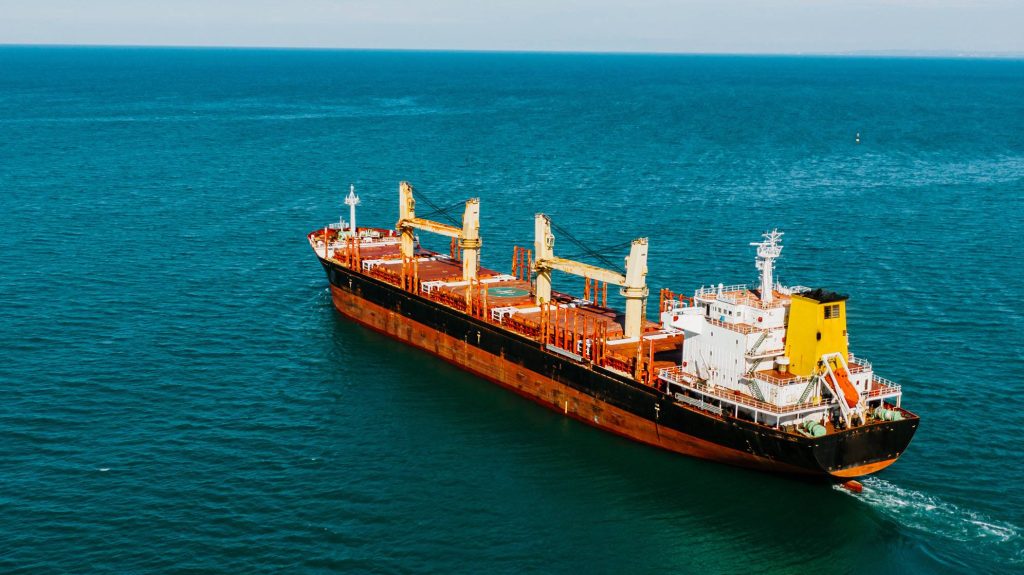
Almost the entire Black Sea has been placed within the Joint War Committee’s expanded military risk zone. For shipowners, this means longer periods of additional insurance coverage, and for cargo owners, a potential increase in freight and logistics costs.
USM spoke to market participants about how much the new risks will cost and how they could change Black Sea and Danube logistics.
On September 16, the Joint War Committee (JWC) of the London Marine Insurance Market expanded the list of military risk areas to cover almost the entire Black Sea. The exceptions are the territorial waters of Turkey, Bulgaria and Romania within 12 nautical miles.
The inclusion of an area in the list does not in itself mean a ban on shipping. However, insurers may require separate military risk coverage and an additional insurance premium for vessels entering such areas. Its size is determined individually depending on the vessel, route, insurer and current risk assessment.
Great Odesa — up to $150,000 in additional costs
According to the founder of Marelis Navigation S.A. Konstantin Sobol, the expansion of the war risk zone will directly affect the cost of ship insurance. For large ships heading to the ports of Greater Odessa, the war risk zone now actually begins immediately after leaving the Bosphorus. The duration of the passage through such a zone for large ships can be approximately 4 to 8 days, on average – about six (this includes the passage to Ukrainian ports, waiting for entry, as well as exit).
The exact insurance rate depends on the specific ship – its age, type, cost, cargo and other factors. Therefore, it is impossible to calculate a universal amount.
However, according to Sobol’s rough estimate, for a large ship, additional costs for War Risk can be about $25 thousand per day. With an average duration of stay in the risk zone of about six days, this can add about $150 thousand to the cost of the voyage.
In terms of cargo, this can mean an increase in price of about $2-3 per ton.
On the Danube route, ships will also pay for a longer period of stay in the War Risk zone, but the exact impact on rates there requires a separate assessment, Sobol noted.
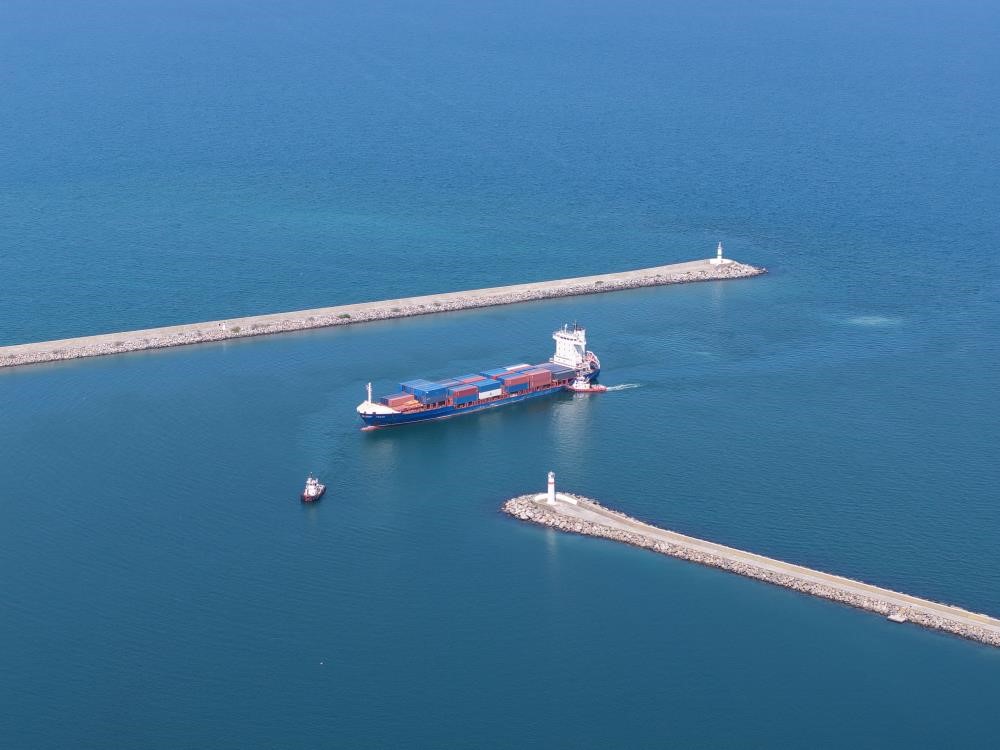
The Danube is rising in price moderately
Avalon Shipping Operations Manager Kateryna Kononenko recalled that previously the section from the Bosphorus to the Sulina roadstead was not considered a war risk zone. For ships heading to Ukrainian Danube ports, the war risk actually began to be calculated from the Sulina area.
After the expansion of the Listed Area, the risk may begin to be taken into account earlier – as soon as the ship after the Bosphorus goes beyond the 12-mile zone of territorial waters. For the voyage to Sulina, this approximately means one more day of passage one way and one day back, that is, approximately +2 days of stay in the war risk zone.
As for freight rates, Kononenko does not expect a sharp jump in freight for the Ukrainian Danube. Ships that were waiting in line at Sulina had already paid war risk for the waiting time. According to Kononenko, insurance is usually initially paid for a certain period, and then the cost is adjusted in proportion to the actual time the ship was in the risk zone.
Kononenko suggests that the market may try to set a certain additional premium, but there is no talk of a several-fold increase in freight. The main question for her is how insurers will calculate the risk for ships that do not go to Ukraine, but during the passage through the Black Sea fall into the new Listed Area? We are talking about the ports of Romania, Bulgaria and Georgia.
Previously, ships to Galati and Braila did not pay war risk. But now it is unclear whether the fact of the ship’s stay in the Listed Area will be decisive, or whether insurers will take into account the port of destination. Currently, on the Galati-Braila route, freight is approximately 2.5 times lower than on comparable Ukrainian routes. It is there that the expansion of the war risk zone could potentially change the economics of flights more significantly if insurers start demanding additional coverage, Kononenko noted.
It turns out that for Ukrainian ports, the risk has already been largely built into the freight, and for Romanian ports, a new additional component may appear.
The idea of going along the coast within 12 miles is practically difficult, according to Kononenko. Theoretically, the ship could try to stay in the territorial waters of Turkey, Bulgaria and Romania in order to spend less time in the Listed Area. But this creates a number of problems: the route becomes longer, it is necessary to formalize the passage of territorial waters. In addition, agents and additional documents may be required, additional bureaucracy arises in Bulgaria and Romania, fuel costs increase and, of course, the duration of the voyage increases.
According to Kononenko, the route along the coast can add about 100 miles, so using it en masse as a way to avoid war risk is unlikely to be practical.
She emphasized that different insurance companies may interpret the new rules differently. For an accurate answer, the position of the insurers themselves or marine insurance lawyers is needed.
The main question is how WRAP will be calculated
Co-founder and Director of B.G. Shipping Gennadiy Ivanov said that at the moment, after the release of the JWLA-035 circular, the market is forming rates, and clearer indications are expected this week. Rates will start to be calculated a week after the release, which took place on September 16.
According to preliminary and not yet confirmed estimates, the rate may be about 0.10-0.20% of the insured value of the vessel. For a Handysize with an insured value of about $12 million, this will mean an additional premium of about $12-24 thousand.
In terms of cargo, this may add about $0.40-0.80 per ton to the freight, if the stay in the zone does not exceed seven days. If a 50% No Claims Bonus is applied, the actual increase in freight may be about $0.20-0.40 per ton. Ivanov also suggests that an additional bonus for the crew may appear for passing through the military risk zone.
At the same time, Ivanov emphasized, these rates have not yet been confirmed. For comparison, he cited the current additional premium for transit through the Red Sea – about 0.20-0.30%, or 0.10-0.15% after applying 50% NCB.
Separately, B.G. Shipping asked insurers how exactly WRAP will be calculated for voyages through the Black Sea. In particular, if the premium is quoted for seven days, and the transition from the Bosphorus to Constanta takes about a day – it is unclear how the return transit will be taken into account after the vessel enters territorial waters, where the additional premium ceases to apply.
According to Ivanov, the most logical option for the market would be the option in which the premium is calculated for the actual time the vessel is in the Listed Area – from entering the Black Sea in ballast to leaving with cargo.
He called the worst-case scenario an approach where each entry into the Listed Area would be considered a separate insured transit. In such a case, the shipowner may need separate coverage for ballast and cargo passages on a 7+7 day basis.
Advice from lawyers
Artem Skorobogatov, a partner at Interlegal, also noted that the Listed Areas have been expanded to cover almost the entire Black Sea, with only the territorial waters of Turkey, Georgia, Bulgaria and Romania excluded. Previously, the notification requirements applied to the coastal waters of Russia and Ukraine.
He explained that now the insurer must also be notified of voyages that previously took place outside the zone, in particular, transit through the central part of the sea, voyages between third ports and ballast crossings.
Skorobogatov said that two days after the publication of the updated circular, on September 18, cancellation notices followed. The Swedish Club, by circular No. 452/2026, issued a Notice of Cancellation from 00:01 BST on October 1, 2026 regarding the list of high-risk areas with the re-approval of the conditions. Other clubs and underwriters issue their own.
In practice, this means that it is not the availability of military coverage that needs to be checked, but its validity period. For those whose voyage crosses October 1, the conditions and price are revised in the middle of the transaction, when the ship is already at sea. Quotes received before September 16 were calculated according to the previous areas, the lawyer explained.
Skorobogatov noted that the expansion of the zone is “not only the price”, but also notifications, trade restrictions and policy conditions, the violation of which removes the payment regardless of the connection with the loss.
The expert suggested the following plan of action for market participants:
• ask the broker about the status of cancellation notifications for each of your placements — hull, cargo, liability, downtime (the dates are different);
• receive quotes dated and for the actual dates of the voyage; their validity period is often 24 hours;
• clarify from what point the time spent in the zone is now counted — the border has shifted, and with it — the moment of the start of the countdown;
• finally — “find something that they can no longer take from you”.
The insurer can revoke almost everything in the program: for the vessel – with seven days’ notice, for the cargo – with 48 hours. But one thing doesn’t work that way – protection of the cargo from blocking. As soon as it is issued – they can’t take it away, says an Interlegal partner.
“Two conditions, both strict. You can only buy before the vessel has entered the zone: after entry, they won’t sell it for any money. Go through your program and find such a position in it,” Skorobogatov summed up.