Russia reduced sea exports of crude oil and petroleum products
6.10.2026 - 14:22
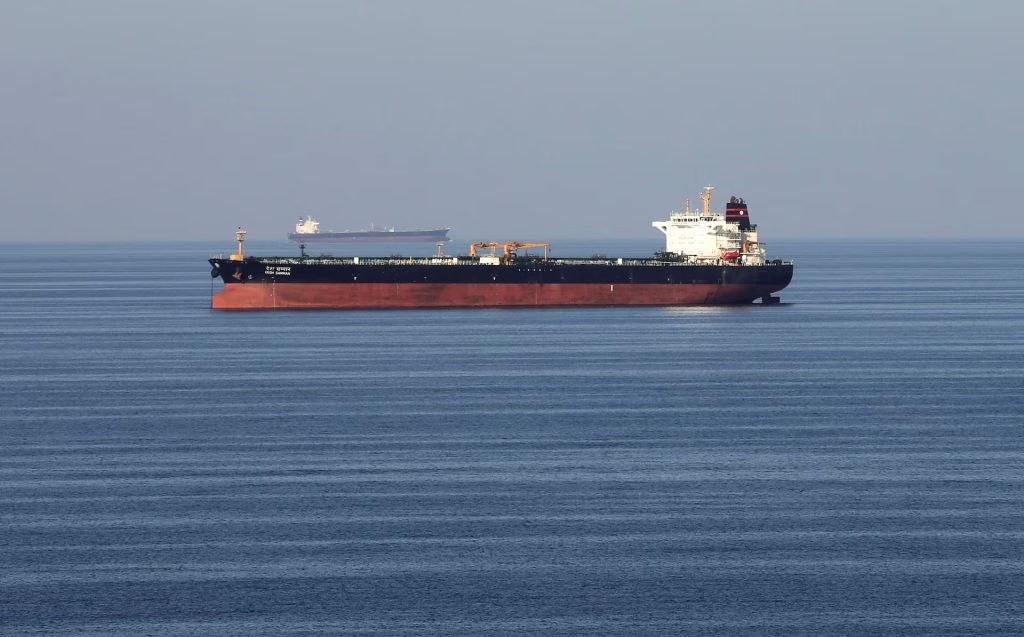
In terms of region, analysts said, supplies through Russia’s Black Sea ports fell the most in August.
Crude oil exports from there fell by 55.9% compared to July and by 53.1% compared to last year. Exports of petroleum products fell by 52.1% and 79.2%, respectively, according to a September report from the KSE Institute.
Russia’s oil and petroleum product exports fell to their lowest level since 2018, with higher prices boosting export revenues by just $0.3 billion. In August 2026, total Russian oil and petroleum product exports fell by 410,000 barrels per day to 6.4 million barrels per day. Export revenues, however, rose by just $0.3 billion to $13.9 billion, as higher prices partially offset the decline in volumes.
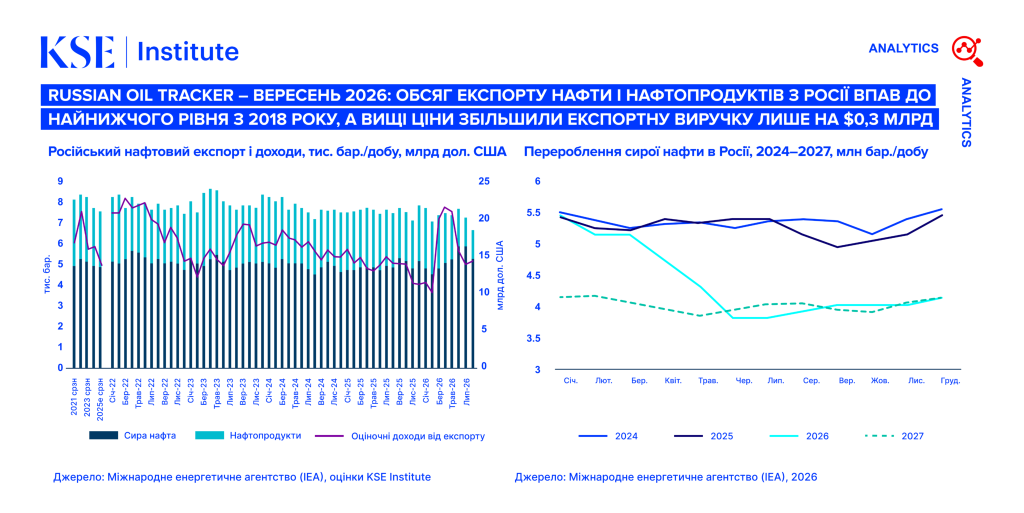
Seaborne exports of crude oil and petroleum products fell 6.1% month-on-month and 12.4% year-on-year to 4.9 million barrels per day. Compared with July, crude oil supplies fell by about 9% to 3.8 million barrels per day. Seaborne exports of petroleum products rose 4.6% to 1.1 million barrels per day from July, but remained about half the average level for 2025.
“The Ukrainian strikes continue to weigh on Russian refining. In July, refining volume fell to 3.7 million barrels per day, the lowest level in more than 20 years. By the end of 2026 and throughout 2027, the IEA forecasts it may only recover to about 4 million barrels per day on average. Russia may also extend restrictions on gasoline and diesel exports into October,” experts note.
Tankers insured by IG P&I carried 28% of Russia’s crude oil and 71% of its oil products. According to the KSE Institute, 168 loaded tankers from the shadow fleet left Russian ports or received oil during ship-to-ship transfers in August. In particular, 92% of them were older than 15 years.
As of September 25, the United States, the United Kingdom, the EU, Canada, Australia and New Zealand had together sanctioned 687 unique oil tankers. On September 24, Australia imposed sanctions on another 38 tankers. The number of vessels under sanctions by all six jurisdictions has since increased to 49.
The report said that Rosneft, Lukoil, Gazpromneft and Surgutneftegaz’s share of crude oil exports rose from 15% in July to 25% in August. Their share of petroleum product exports reached 17%.
At the same time, India reduced its imports of Russian crude oil by 24%, to about 2 million barrels per day, but this is still 18% higher than the average level in 2025. China increased its purchases by 18%, to 1.65 million barrels per day. Turkey increased its imports of Russian crude to 204,000 barrels per day, while Russian oil product supplies fell to 127,000 barrels per day, the lowest level on record.
In September, Russia also began supplying via a new Arctic route. Two tankers loaded about 1 million barrels of oil at the Severnaya Bukhta terminal after transporting it via the 790-kilometer Vankor–Payakha–Severnaya Bukhta pipeline, a more complex and expensive route than the existing ESPO pipeline.
Russian oil prices rose in August. Urals rose about $9 to $66 per barrel, remaining above the revised EU price cap. ESPO rose about $6 to $73 per barrel.
According to the KSE Institute’s baseline scenario, Russia’s oil export revenues could increase from $158 billion in 2025 to $193 billion in 2026, and fall to $158 billion in 2027. With increased sanctions pressure, they could amount to $166 billion in 2026, and with weak enforcement of restrictions, they could amount to $204 billion. Russia’s total losses from oil exports since March 2022 are estimated at $209 billion, of which $4.4 billion in August.
Read also: Russia is trying to create a new “shadow fleet” to circumvent sanctions.