Return in 2022: what will happen to Ukraine’s exports if shipping in Great Odesa remains suspended
5.08.2026 - 17:37

In an article for USM, GOL Commercial Director Volodymyr Guz and GOL CEO Pavlo Linnyk explain why land logistics cannot fully replace sea exports and what alternative routes businesses are looking for.
Just a month ago, Ukrainian sea exports were perceived as one of the few stories of stability in wartime. After the opening of the sea corridor, business gradually returned to its usual work model, and the Black Sea once again became the country’s main transport artery.
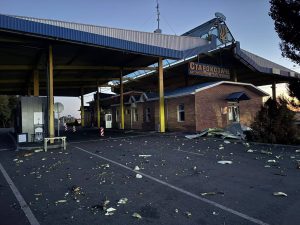
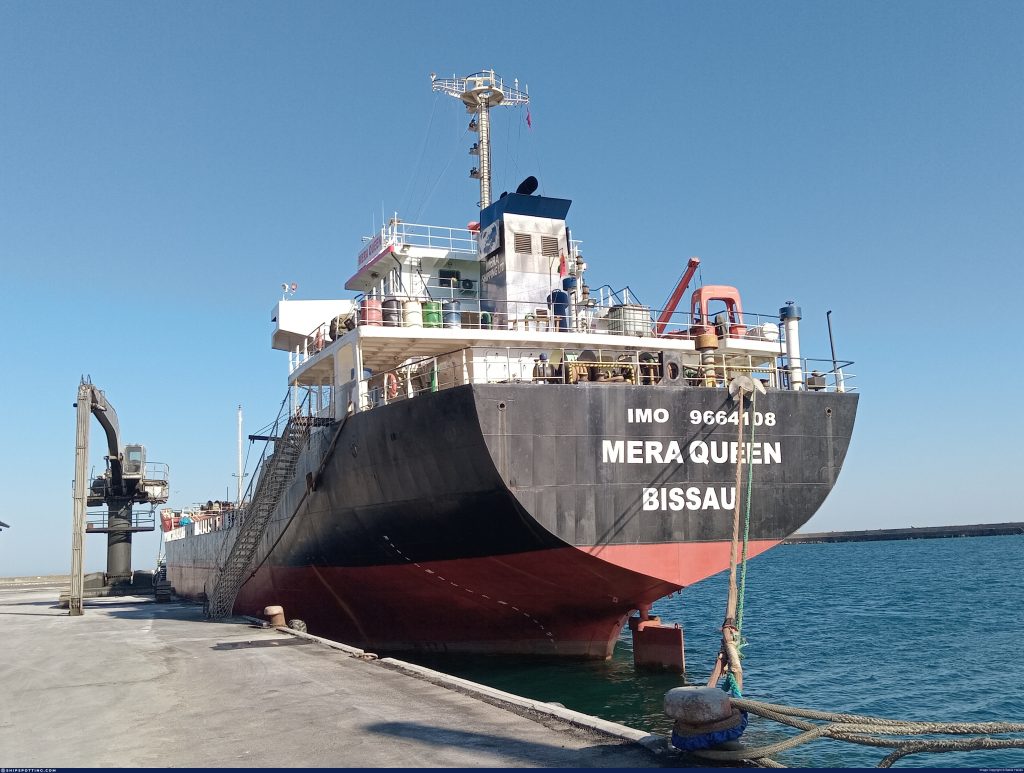
However, the recent massive attacks on the ports of Great Odesa and civilian vessels have dramatically changed the situation. Shipowners are postponing operations to Ukrainian ports, insurers are recommending avoiding additional risks, companies are suspending purchases at terminals, and the market is increasingly returning to scenarios that seemed to have remained in 2022.
However, the current situation is fundamentally different from the first months of a full-scale war. If then the main challenge was the physical lack of logistics routes, today Ukraine is faced with another problem – the export economy.
“The events of recent days really bring us back to the realities of 2022. Then shipping practically stopped, container lines stopped calling at Ukrainian ports, and general cargo transportation almost completely disappeared. But there is a fundamental difference between 2022 and today. If then the main problem was the lack of infrastructure, now the main challenge is economic,” notes GOL Commercial Director Volodymyr Guz.
Poland will not become another Odesa
After the start of the full-scale war, Poland became the main gateway for the Ukrainian economy to Europe. It was through Polish ports, railways and road crossings that a significant part of exports and imports passed.
However, today experts warn against the simplistic conclusion that Polish infrastructure is capable of completely replacing Black Sea ports.
“Poland is a critically important part of alternative logistics, but it cannot become a full-fledged replacement for Ukrainian deep-sea ports. These are different scales. Restrictions remain at almost every stage: railway crossings, different gauges, intermodal terminals, port infrastructure of the Baltic. To this we must add another factor – Polish logistics primarily works for the Polish economy,” says GOL CEO Pavlo Linnyk.
According to him, the greatest threat will not be a separate element of infrastructure, but a simultaneous sharp increase in the load on all links of the logistics chain.
This primarily concerns railway crossings, where, due to the different track widths, cargoes require reloading or changing wagons. Then there are queues at intermodal terminals, and then there is a shortage of free capacity in the Baltic ports themselves.
A separate problem may be the fact that a significant part of operators is already working almost at the limit of their capabilities. Over the past three years, businesses that have relocated to the west of Ukraine have actually formed permanent logistics flows. A sharp return of large volumes of exports can quickly create congestion at crossings, terminals and ports.
In three years, Ukraine has built a different logistics
Despite this, it would be a mistake to compare today’s situation with the spring of 2022.
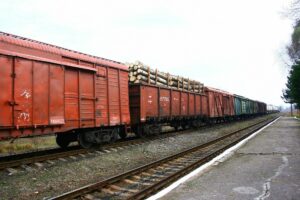
During this time, the border infrastructure has been modernized, new railway facilities have been opened, the Chop-Uzhhorod Eurorail has been launched, and the network of dry ports, terminals, and transshipment complexes has been expanded. The business itself has invested in thousands of wagons, containers, grain trucks, and modern equipment.
“The most important thing that has been achieved over the past three years is operational flexibility. Companies have learned to switch cargo between road transport, rail, the Danube, and the sea very quickly. It is this ability to quickly restructure logistics that is the main advantage of Ukrainian business today,” emphasizes Pavlo Linnyk.
According to his assessment, in terms of infrastructure, Ukraine and neighboring countries are much better prepared for crisis scenarios today than they were three years ago.
But the main problem is no longer logistics.
The paradox of the current situation is that even with the availability of alternative routes, their use is far from always economically justified.
In 2022, Ukrainian exports had a unique situation. Due to the shortage of products on world markets, the difference between the domestic Ukrainian price and the world price was so large that exporters could pay almost any logistics costs. Today, such a situation no longer exists.
“The world market today is not ready to pay more just because Ukrainian logistics has become more complicated. That is why returning to European routes means not just longer delivery – it means additional costs that someone must compensate for,” explains Volodymyr Guz.
He gives a simple example. If at the conditional price of wheat, logistics cost $ 30 per ton, and now it costs $ 60, then at an unchanged world price these additional costs cannot be passed on to the buyer.
“Either world prices should increase, but there are no prerequisites for this today. Or the purchase price for Ukrainian farmers will decrease. This scenario looks the most realistic now,” Volodymyr notes.
That is why the current crisis is already going far beyond the transport industry. It directly affects farmers’ incomes, the competitiveness of Ukrainian products, and the country’s foreign exchange earnings.
Which cargoes will be the first to change routes?
The most mobile remain containerized cargo, machinery, finished goods, some chemical products, timber and high-value-added cargo. For them, the use of intermodal routes through Poland, Slovakia, Hungary or Romania is technically possible.
In contrast, bulk export cargoes – grain, oilseeds, ore, metal products and other large-tonnage consignments – depend most on the work of Ukrainian deep-water ports. Their transfer to land routes means a significant increase in logistics costs and a sharp increase in the load on European infrastructure.
That is why, according to GOL experts, business is already diversifying routes today, but at the same time waiting for the restoration of safe shipping.
“We see two models of customer behavior. Some companies are postponing new shipments or immediately reorienting them to Poland, Romania or other destinations. Others are taking a wait-and-see approach, hoping that the situation with shipping protection will stabilize in the near future,” says the CEO of GOL.
Logistics is no longer the main problem
The events of recent days have shown that Ukraine is much better prepared for logistical crises than in 2022. Over the past three years, alternative transport corridors have been created, border infrastructure has been modernized, and business has learned to quickly change routes and work in a multimodal format.
However, the current situation has highlighted another problem. If three years ago the country was struggling to physically export products, today the main challenge is the economic feasibility of this export. And that is why the safety of shipping in the Black Sea is once again becoming not only an issue of the transport industry, but one of the key factors in the sustainability of the entire Ukrainian economy.