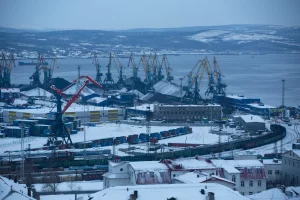
Russia faces mounting grain logistics problems after Novorossiysk strike
14.08.2026 - 13:13
After the shutdown of three key grain terminals in Novorossiysk, Russia has restricted cargo transportation to the port.
Russian Railways has restricted cargo transportation to the port of Novorossiysk from August 13 to 22. This was announced by the head of the Center for the Study of Occupation, Petro Andryushchenko.
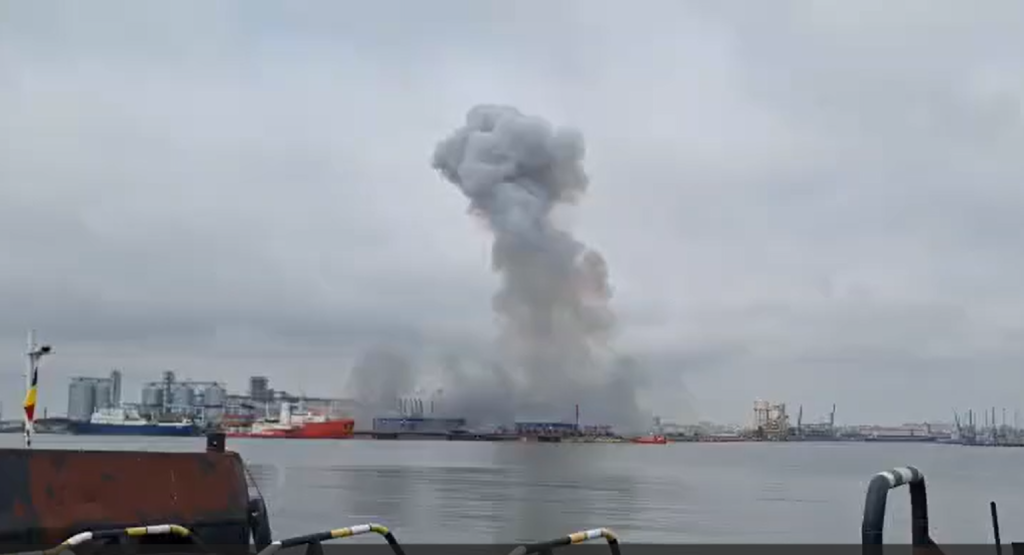
This follows the attack on the city on August 12, which resulted in the shutdown of three main grain terminals — NZT, NKHP, and KSK.
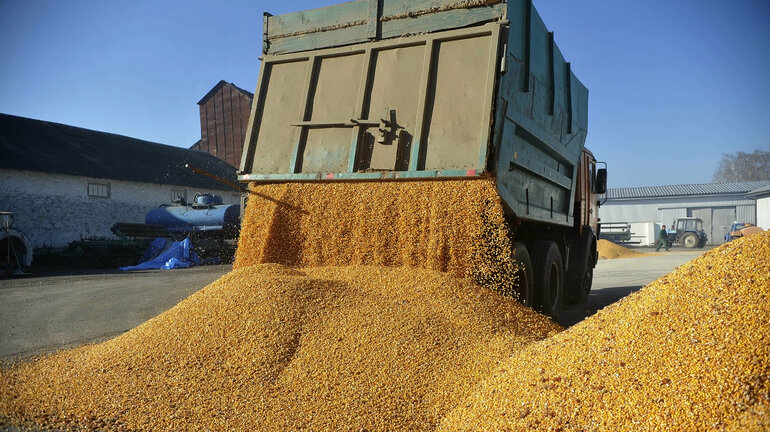
According to his estimate, the combined export capacity of the three terminals is about 26.1 million tons of grain per year. In particular, KSK stopped receiving grain by road and rail after the attack, as well as loading it onto ships.
Andryushchenko explains the restrictions by the state railway company Russian Railways as the need to avoid a buildup of wagons on the approaches to the port. If the terminals cannot receive and tranship grain, further increases in rail shipments create congestion in the logistics system.
At the same time, the problems of Russian grain exports began even before the attack on Novorossiysk. According to Andryuschenko, since July 10, exports through the ports of the Rostov region have actually slowed down due to restrictions on shipping. The Russian government is already preparing about 10 billion rubles in subsidies to reorient agricultural cargo from the Rostov region to Black Sea and Baltic ports.
Novorossiysk was supposed to become one of the key alternative routes, but after the last attack this opportunity is also significantly limited.
“If you add to this the problems of Taman, you get an almost closed system,” Andryuschenko notes.
According to his assessment, Russia could previously maneuver grain flows according to the Azov/Rostov — Taman/Caucasus/Novorossiysk scheme. Now, reorienting cargo from the problematic Azov basin to Novorossiysk is much more difficult due to the simultaneous suspension of grain transshipment and restrictions on rail transportation.
The first consequence of this may be the accumulation of grain at elevators and railway stations in the Rostov region, Krasnodar region and other regions.
“Russian Railways is actually forced to block the flow at the entrance so as not to receive thousands of wagons that have nowhere to unload,” Andryuschenko writes.
Other routes — through the Baltic Sea, the Caspian region and the Far East — remain available, but they are longer and more expensive. At the same time, according to the expert, more than 80% of Russian grain exports fall on the Azov-Black Sea basin, so it is impossible to quickly compensate for it with other directions.
The reduction in export opportunities may also increase pressure on domestic grain prices. According to Andryuschenko, in 2026 Russia has a significant harvest, but the possibilities for its export are narrowing. If a trader cannot promptly export additional volumes, his willingness to buy grain at previous prices decreases.
Against this background, purchase prices for basic grains in Russia are already about 18–20% lower than last year.
A separate risk arises for agricultural products from the temporarily occupied territories of Ukraine. Andryuschenko estimates the volume of grain already harvested there at more than 3.8 million tons.
Thus, a significant harvest simultaneously increases the supply of grain on the Russian market, while the main southern export routes face restrictions.
In such a situation, according to Andryuschenko, the chain looks like this: larger harvest — lower purchase prices — problems with the Sea of Azov, Rostov and Taman — shutdown of Novorossiysk grain terminals — restrictions on rail transportation — accumulation of grain within the system.
At the same time, even the restoration of Novorossiysk will not necessarily allow for an immediate return to normal operation. During the downtime, deferred cargo volumes may form, which, after the terminals open, will compete for railway capacity, elevators and berths with the new harvest.
It is significant that Novorossiysk’s problems began to manifest themselves even before the latest attack. According to Andryuschenko, in July the Novorossiysk Bread Products Plant handled 253.7 thousand tons, which is 34.3% less than in the same month last year. This was the worst start to the agricultural season for the terminal in the last four years.
Meanwhile, Ukraine has proposed to Russia to stop attacks on civilian objects in the Black Sea.