Trump announced an agreement with Putin on the supply of more than 4.8 million tons of diesel
10.10.2026 - 10:00
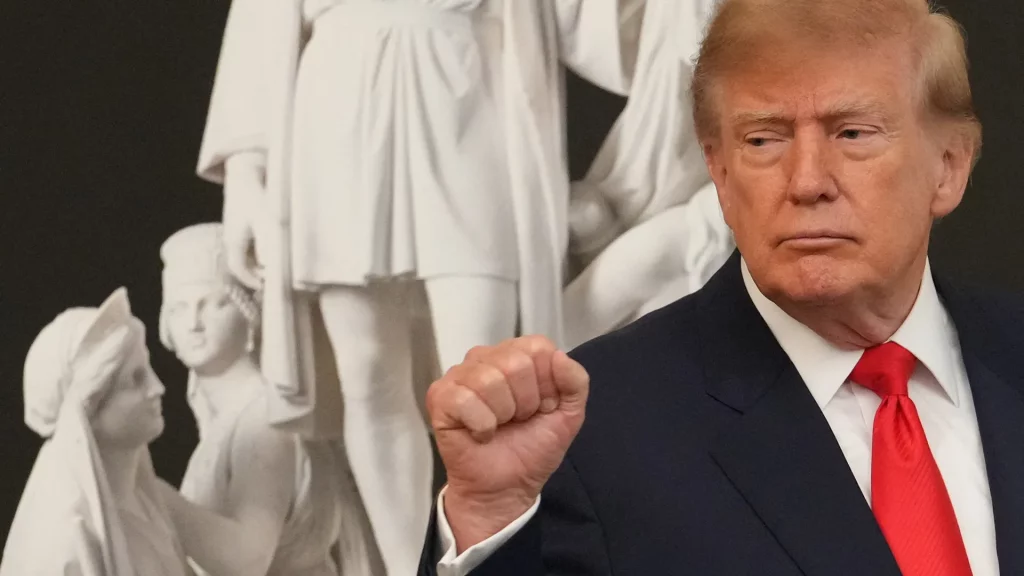
US President Donald Trump announced an agreement with Vladimir Putin on large-scale supplies of Russian diesel fuel.
Trump reported this on his social network Truth Social after a conversation with Putin. Information about the statement was also reported by Reuters.
The US Treasury Department has issued a license allowing the import of Russian diesel fuel until April 7.
According to the US President, Russia “should immediately deliver” more than 300 thousand tons of diesel fuel. Another 500 thousand tons are planned to be exported during November, and 1 million tons – immediately after that.
In addition, Trump said that depending on the state of Russian oil refineries, Russia should deliver another 3 million tons of diesel fuel in a short period of time. Thus, the declared volumes amount to more than 4.8 million tons.
Trump linked the agreement with his intention to reduce diesel prices in the US and on the world market.
After the conversation, the Russian side confirmed its readiness to supply oil and petroleum products to the American and world markets, but did not name specific volumes at this time.
After the call, Putin’s envoy Kirill Dmitriev highly praised cooperation between Russia and the United States in his post on X. During his visit to Washington last month, Dmitriev appealed to American officials with a request to grant licenses for the export of diesel fuel to the US market to all major Russian oil companies, sources familiar with the situation told Reuters.
Ukrainian President Volodymyr Zelenskyy commented on the information about the agreement between the US and Russian presidents. He recalled Europe’s recent decision to lift sanctions on Russian oligarchs, and also drew attention to the intensification of Russian attacks on Ukraine, in particular, a Russian missile strike on a house in Pryluky, air bombs on Kramatorsk – on ordinary city buses, as well as constant shelling of Kyiv’s energy sector, life infrastructure in Dnipro, Kharkiv, Odessa and other cities. As a result of these attacks, dozens of people died, hundreds more were injured.
Zelenskyy noted that the Russians are thus “compensating with such terror their inability to achieve their goals on the front,” and it is because of this weakening that Russian President Putin relies on attempts at backroom agreements to ease pressure on Russia in one way or another, “to buy more time and opportunities for war.”
“Any easing of sanctions against Russia without a clear and lasting de-escalation agreement with Russia is an obvious weakness, it plays into Russia, into killing more, fighting longer, respecting America even less, and causing even more losses and damage to the world,” the president added.
Zelenskyy also noted that Ukraine is ready for mirror de-escalation steps, and its strikes on Russian oil refineries and other oil facilities are Russia’s response to its several-year-old campaign of terror against Ukrainian energy.
“Ukraine will not burn Russian oil refining if Russia does not destroy our energy sector. We offer America just such an agreement and believe that the strength of the United States is sufficient to achieve such a compromise.
Gifts to Putin will not work for peace and any benefit for the civilized world. Russia will “repay” for diesel with further terror and meanness. Allowing Russia to sell petroleum products is an investment in a war that needs to be ended, not continued. We need real de-escalation with Russia, and in a mirror format.
We look forward to America’s fair support for our defense of lives, our defense of people in Ukraine, and a correspondingly strong conversation between the United States and Russia. Strong, not weak,” the president concluded.
The deal has also been criticized by U.S. lawmakers, including Trump’s Republican colleague Don Bacon, who said it was time to apply more sanctions recently passed by Congress, not roll back those measures.
“Now is the time to use these sanctions to squeeze Putin’s war machine, not reward the dictator by giving him more money while he continues to attack and kill Ukrainian civilians,” Bacon said.
Diesel prices fell after the announcement, but analysts said the deal may not be enough to deter them.
“I can’t overstate how much of a farce this is,” said Rory Johnston, an oil market researcher and founder of CommodityContext, adding that Russia typically exports far more diesel than the deal allows when its refining infrastructure is not under threat.
“This is clearly not a fix, but another stream to support a very tight diesel market,” said Jim Mitchell, an analyst at consultancy Wood Mackenzie.
Diesel prices, often a major driver of inflation, have surged 70% since the US-Israeli war with Iran began on February 28. The wars in Iran and Ukraine have caused a major global fuel supply crunch, sending average diesel prices in the US to $6.28 a gallon on Thursday, according to motorists’ group AAA.
Prices remain high despite two recent moves by Trump to boost fuel supplies: pressuring allies to release emergency reserves and expanding access to tax-free red diesel fuel, which is typically used for farm equipment.
Current U.S. ULSD futures fell nearly 5% after Trump’s announcement to around $4.67-$4.73 a gallon, or around $195-$200 a barrel. European diesel has also been trading around $1,400-$1,500 a tonne in recent days.
“Lower prices for Americans, especially our great farmers, ranchers and truckers, is my top priority,” Trump said.
Three industry sources told Reuters earlier on Friday that the U.S. president would issue a directive to some department heads in the coming days to find ways to control diesel prices.
The directive, which the newspaper’s sources said could be in the form of a presidential memorandum, would encourage officials to look for ways to circumvent local and state regulations that block energy production and use the Cold War-era Defense Production Act to boost oil and fuel production.
Under the Decentralization and Migration Agreement (DPA), the president can authorize U.S.-backed loans or loan guarantees to expand domestic production of critical materials and require companies to prioritize government contracts for essential goods.
The White House has been weighing how to use the DPA to expand refining capacity as a war with Iran exposes the United States’ vulnerability to supply disruptions and price spikes.
In September, oil executives told Trump administration officials that federal funds would be better spent on improving the efficiency of existing refineries or expanding them than on financing a new refinery, which would be more expensive and take years to build.
Earlier, USM reported that Britain had imposed sanctions on 12 tankers carrying Russian oil.