Suspension of the ports of Great Odesa. What to expect and how market participants are adapting
24.07.2026 - 17:25
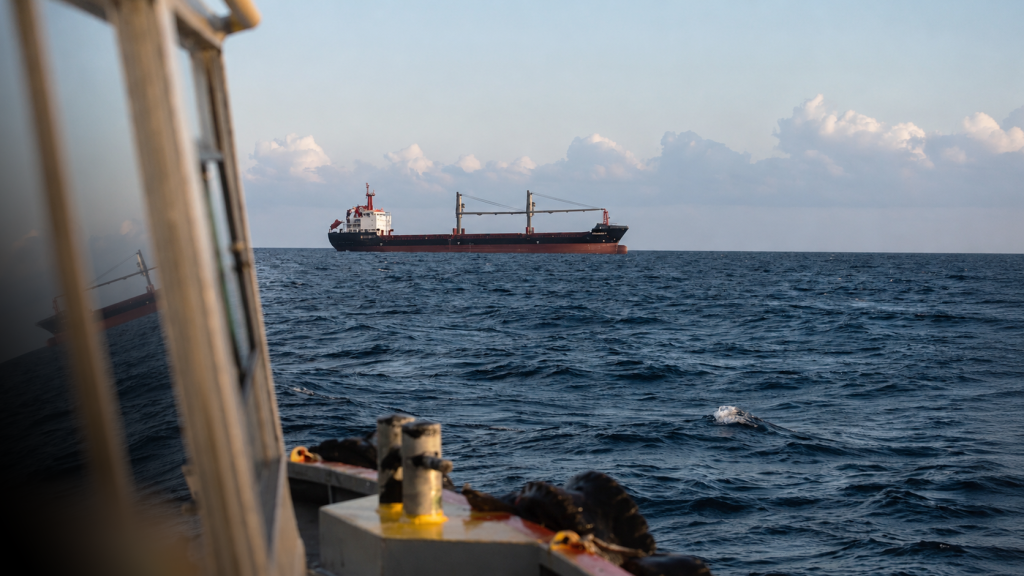
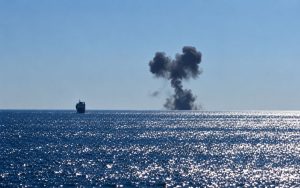
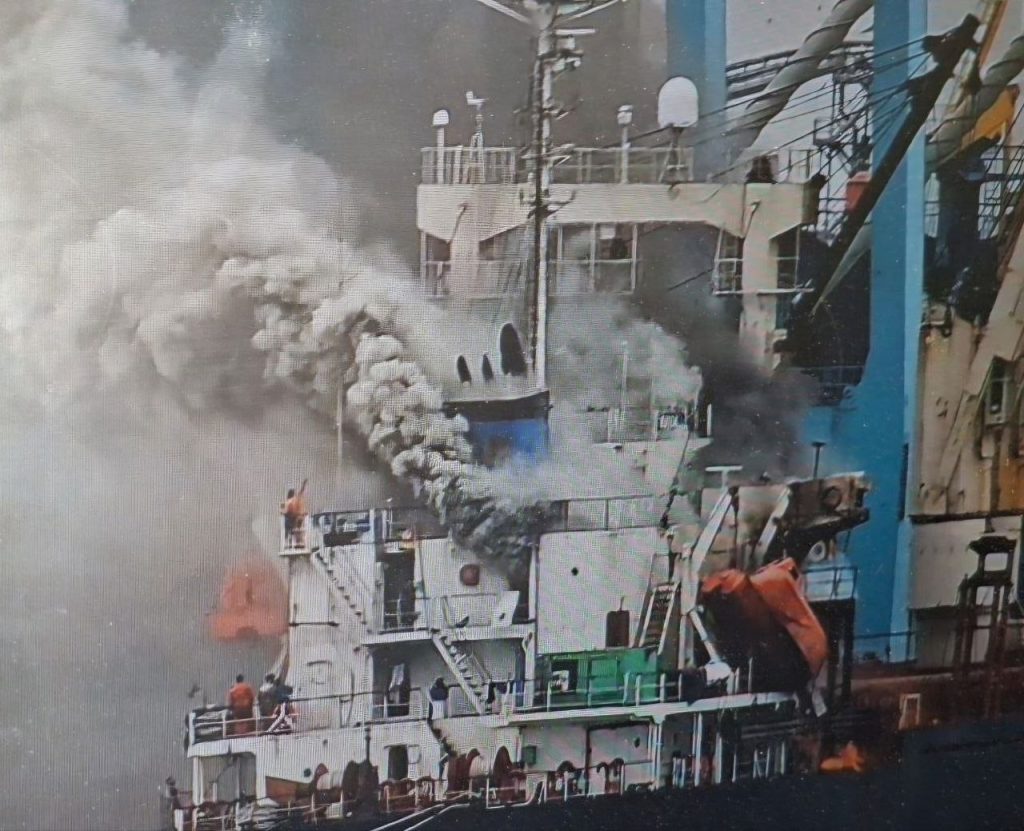
After the intensification of Russian shelling of the port and logistics infrastructure of the Odesa region, the work of the ports of Great Odesa has virtually stopped. Some shipowners have suspended operations to Ukrainian ports, and business has once again found itself in a situation where it is necessary to assess the direct risks to vessels, crews and cargo – and quickly look for alternative solutions.
USM has prepared a detailed material on what such a suspension could mean for Ukrainian exports, the freight market, insurance brokers, farmers, port operators and shipowners. Together with business and experts, we analyze how critical the current situation is, how to adapt logistics in the coming weeks and what will happen to the sea corridor in the event of further attacks by the Russian Federation.
Contents:
- Barva Invest: reactions on the agricultural market and potential export routes
- Barva Invest: reactions on the agricultural market and potential export routes
- Barva Invest: situation with the supply of fertilizers through ports
- Maersk, AMEU: losses in the container transportation industry, suspension of Maersk’s work in the VRF
- What do insurance market players say
- Marelis Navigation S.A: position of shipowners
- Interlegal: legal side of the issue
- Alternative routes, freight and the situation on the Danube
Kernel, “Nibulon”: reaction of agricultural companies
It is obvious that Russia has not stopped attacking ports throughout southern Ukraine since 2022, but the period of June-July 2026 can be called one of the most difficult. A new wave of attacks on the port infrastructure of Greater Odessa has turned into a systemic crisis for shipping since the beginning of July.
Kernel was the first of the major players to announce direct operational consequences. On July 13, the company announced that it had suspended the operation of the export terminal in Chornomorsk and the timing of its restoration has not yet been publicly announced.
USM requested a comment from Kernel, but at the time of publication of the article, the company had not yet responded. This text will be supplemented later.
Nibulon was the next to make a major statement. Thus, in mid-July, the company’s logistics director, Sergey Kalkutin, noted that, despite the difficult security situation, the company continues to purchase grain and has sufficient capacity to receive and store the new harvest. Two models of cooperation were proposed for agricultural producers: either to sell products at current market prices, or to store them in the company with the possibility of selling the grain later.
In a comment to USM, Serhiy Kalkutin noted that currently attacks on port infrastructure and vessels create additional risks for exports and inevitably affect the cost of logistics.
“The increase in freight and transport costs is ultimately reflected in the purchase price of grain, and therefore in the profitability of agricultural production. In fact, these additional costs fall on the shoulders of the farmer, because logistics is one of the key components of the export cost,” the expert notes.
At the same time, according to Kalkutin, the company tried to build a logistics model in such a way as to minimize the impact of such challenges.
“Accordingly, we continue to actively purchase grain through our own network of elevators and offer agricultural producers flexible models of cooperation: selling products at current market prices or storing them with the possibility of selling the grain later, when the market situation is more favorable. It is this flexibility that is one of the key tools for supporting Ukrainian agricultural producers today,” said the logistics director of Nibulon.
However, as Volodymyr Slavinsky, the trade director of Nibulon, added, agricultural producers today are forced to adapt to new working conditions.
“In fact, they are choosing between two scenarios: to gain time and transfer the grain to storage, or to obtain the necessary working capital and sell the product at the current price. Those who choose storage are looking for reliable infrastructure, clear conditions and confidence in preserving the quality of the grain,” Slavinsky said.
According to him, this is also confirmed by the company’s operating indicators. Demand for storage services has increased by approximately 30%. The ratio of grain entering for purchase and storage has changed from 80% to 20%, respectively, a week ago to 50% (purchase) to 50% (storage) today.
And on July 23, it became known that Allseeds was leaving Ukraine. The group of companies announced the suspension of operational activities due to increased Russian attacks on the port infrastructure of the Odessa region. The company also aims to ensure “the preservation of production assets, infrastructure, human and operational potential for a possible resumption of work after the stabilization of the security situation.”
Barva Invest: reactions on the agricultural market and potential export routes
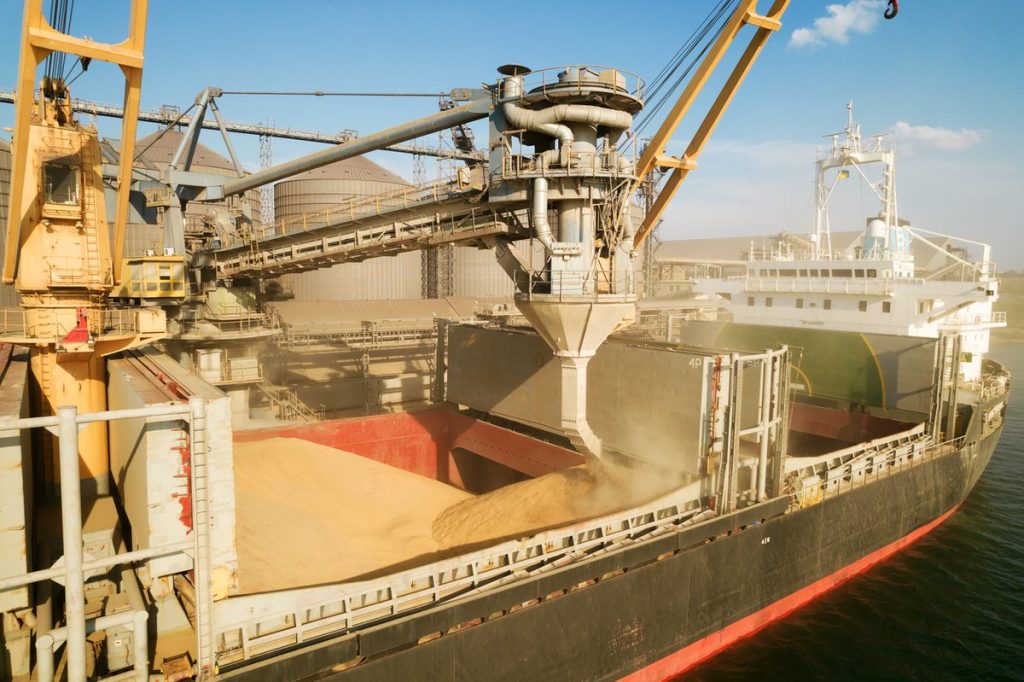
According to the head of the analytical department of Barva Invest, Pavlo Khaustov, the impact of the shelling of the ports of Greater Odessa on the agricultural market is already huge, but its scale will depend on the duration of the stoppage and the seasonal factor. Unlike 2022, when a full-scale blockade hit the market after the peak of the season, the current exacerbation occurred at the height of the export of early crops: primarily wheat, barley and rapeseed. For late crops – corn, soybeans and sunflowers – this is still the low season, when the market is delivering the last volumes before the new harvest. Therefore, the pressure on logistics is not yet maximum, but in the second half of autumn the situation may become much more difficult.
The very nature of the risks has also changed. The Ukrainian market has already adapted to regular strikes on port infrastructure: participants understood that it is dangerous to accumulate grain in ports or stand in line for a long time for transshipment. However, after the July shelling, risks have increased sharply for foreign shipowners, crews, and insurers. Ukraine can compensate for part of the risk with premiums, but, as Khaustov notes, money is not always able to “buy the desire to go under targeted shelling,” especially when there are safer directions on the world market.
Due to the sharp deterioration of the security situation, confusion has arisen in the market. Some agricultural producers would like to wait out the critical period, but it is currently unclear what period to focus on. At the same time, many farmers are forced to sell grain due to the need for working capital, fulfillment of shipment plans, or lack of storage space. A separate problem is cases of sprouted wheat grain, which cannot be kept in warehouses for a long time and must be quickly sold.
On the world market, prices for a number of crops have increased, primarily for those where Ukraine and the Russian Federation are significant suppliers. Theoretically, this should compensate for more expensive logistics with alternative routes, but in practice another limitation is triggered: the potential Ukrainian supply is now greater than the existing demand, taking into account the throughput capacity of the western border and Danube ports. While some producers are forced to sell, the buyer retains the opportunity to put pressure on the price. If early crops cannot be sold before the massive arrival of the late harvest, the problem may recur with greater force in the fall. The most vulnerable remain cargoes that are difficult to reorient to the western border. First of all, this is wheat, because in the EU it is limited by quotas that have long been drawn up. Barley is also vulnerable: its key markets, in particular Saudi Arabia and China, require large ship loads. Part of the volumes can be transshipped in Constanta, but supplies to China through Romanian ports are limited by certification issues. In addition, Romania itself is an exporter of some crops, so its logistics will be busy with its own harvest in the fall.
The situation looks better for rapeseed and sunflower oil, since the EU is already one of the key buyers of Ukrainian products. However, even in this case, logistics will be longer, more expensive and less accessible. Corn, on the contrary, may receive additional demand in Europe due to crop problems. If the consequences of bad weather in the EU are indeed significant, and Hungary becomes a net importer of corn, sales of this crop across the western border may expand. Soybeans also retain sales opportunities to both Europe and Turkey. At the same time, even for relatively stable crops, more expensive logistics and the discount that will be formed due to the limited Ukrainian routes will eat up a significant part of the producer price.
Barva Invest: situation with fertilizer supply through ports
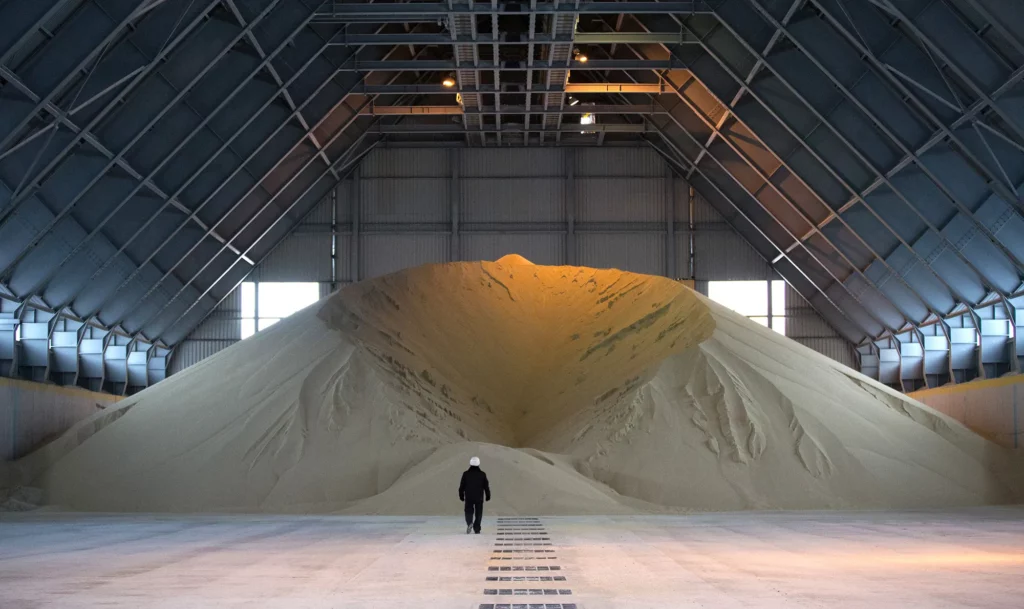
The issue of the fertilizer market is a separate topic, but, as Pavlo Khaustov explains, there is no direct reaction to the situation in the ports yet. According to the expert, the recent increase in prices for nitrogen fertilizers was primarily due to world quotations and the rise in gas prices. However, if the situation does not improve, the impact on fertilizer imports will become more noticeable. The most sensitive may be ammonium sulfate and urea, which mainly enter through ports: in 2025, the share of sea imports for them was 89% and 94%, respectively. Saltpeter imports through Ukrainian ports were banned in the middle of last summer, so importers have already adapted to this change. After the start of the full-scale invasion, significant volumes of fertilizer imports went through the ports of the Danube. If this direction is also blocked or significantly limited, importers will have to look for longer and more expensive routes. The market has already used delivery schemes through Romanian ports with further transit to the western border of Ukraine, as well as through Baltic ports with delivery to the border of Poland and Ukraine. However, such routes increase logistics costs and extend delivery times.
Maersk, AMEU: losses in the container shipping industry, suspension of Maersk’s work in the VRP
Of course, the second direction after bulk carriers, which was severely affected by enemy shelling, was the container market. As Viktor Berestenko, President of the Association of International Forwarders of Ukraine (AMEU), told USM, the recent attacks have already affected the container segment. However, a more painful factor is that in recent years this market in Ukraine has been growing rapidly.
Container transportation has been one of the most dynamic directions in the ports of Greater Odessa over the past two years. In 2025, the ports processed 215,748 TEU against 129,902 TEU a year earlier, that is, the growth was about two-thirds. In the first quarter of 2026, processing exceeded 63 thousand TEU, which is 43% more than in the same period last year. In fact, the market was on track to double the annual figure.
However, the worsening security situation is already forcing some shipping companies and feeder operators to temporarily suspend or change services to the ports of Greater Odessa. It is not just about the risks for vessels and crews. Impacts on port infrastructure directly affect the ability of individual terminals to handle container services, and therefore the stability of the entire chain.
According to Berestenko, the container market is one of the most sensitive segments of maritime transportation. Unlike the bulk carrier fleet, container lines operate on a clear schedule, so even short-term uncertainty can lead to a change in route or temporary cancellation of the service.
“Recent events have shown that for the container business, not only the formal presence of a working port is important, but also the carrier’s confidence that the service can be performed regularly and predictably,” the AMEU president notes.
As of now, Maersk and CMA CGM have officially announced changes in their work in Ukraine. At the same time, according to Berestenko, the impact may be broader than just the services of one or two global carriers.
“It is necessary to understand that Maersk used the services of the same feeder carrier, which also provided transportation for some other container lines. Therefore, the impact of these events will be broader,” Berestenko notes.
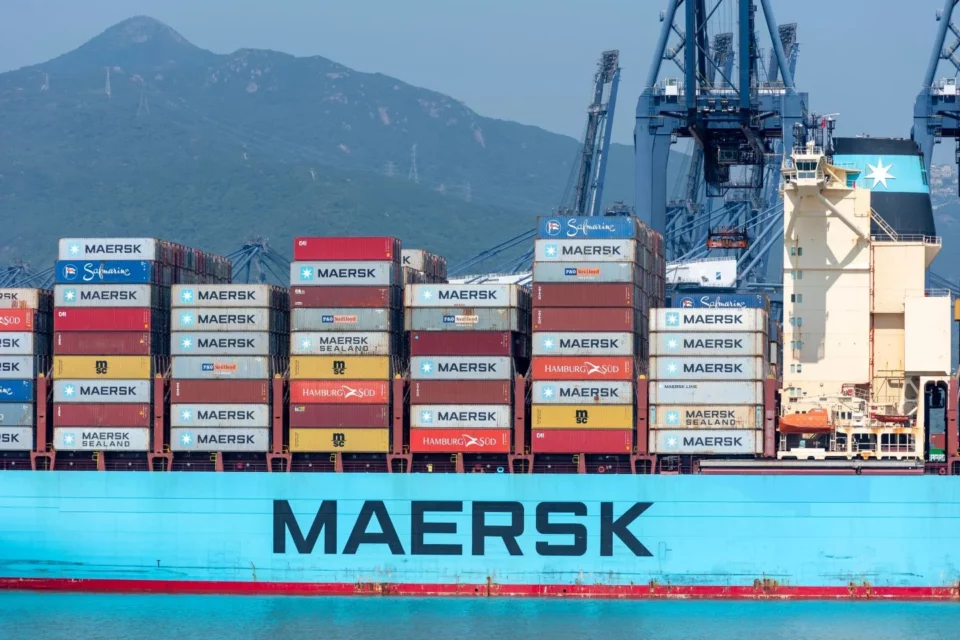
As a reminder, on July 22, Maersk Ukraine informed customers about the temporary suspension of service to Ukraine via the Black Sea Fishing Port. The company explained that due to the current situation, the feeder operator no longer has the opportunity to continue servicing this route.
In addition, import cargo that was supposed to be unloaded in Chornomorsk will be redirected to the port of Constanta in Romania. For export shipments, Maersk offered two options: free cancellation of the booking or changing the port of loading from Chornomorsk to Constanta, while maintaining the current sea freight rate for containers already delivered to the port. The company also announced that cargo delivery between Romania and Ukraine will be organized by road transport.
In a comment to USM, Maersk Ukraine CEO Roman Koloyanov noted that the timing of the resumption of work will depend on the security situation, which has “deteriorated critically.” The company declined to comment on the consequences of the attacks.
“What I observe: shipowners are massively refusing to enter Ukrainian ports as a result of targeted attacks on the fleet by the Russian Federation,” Roman Koloyanov briefly commented.
In fact, this means that the container segment is already entering a forced rerouting mode. According to Viktor Berestenko, if the security situation stabilizes in the near future, the restoration of container services can be measured in weeks, not months. However, the return to the level of work observed in May 2026 will depend not only on the state of the port infrastructure. This is a necessary but not sufficient condition.
“Decisions will determine the willingness of shipowners, feeder operators and container lines to return services to the ports of Great Odesa, the willingness of crews to work in this direction, as well as the availability of free feeder tonnage in the region. Vessels that have left the direction do not stand idle and do not return automatically,” Berestenko notes.
Therefore, the price of the pause for Ukrainian business is enormous. Rerouting containers through Constanta or Gdansk means additional land overhead, longer transit times and higher logistics costs for importers and exporters. If this situation drags on, it may not only make individual deliveries more expensive, but also reduce the overall activity of foreign economic operations.
What insurance market players say
USM also contacted an expert in the field of war risk insurance, who represents a large company, but wished to remain anonymous.
According to him, the current situation in the ports of Great Odesa is the most difficult since 2022. If earlier the market was already accustomed to regular attacks on port infrastructure, now the risk has shifted directly to vessels, crews and the raid zone. This has become a key factor that has changed the behavior of shipowners: the problem is no longer only in the cost of insurance coverage, but also in the reluctance to enter ports under the direct threat of shelling.
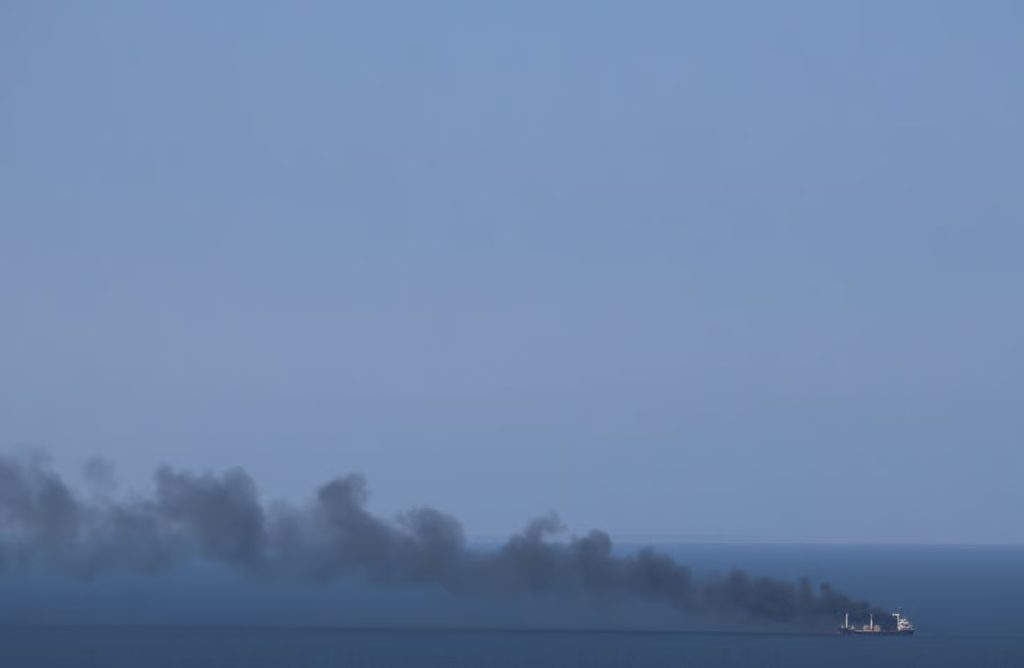
According to the expert, the worst situation is in the container segment. After the recent attacks, container lines have actually stopped calling at the ports of Great Odesa. Part of the cargo is already being reoriented to other directions, in particular through the ports of Poland and Romania. At the same time, insurance for the accumulation of containers at terminals is still maintained, but coverage for the sea arm from Great Odesa is currently not provided.
In the bulk segment, the situation has also deteriorated sharply. According to the expert, if in the fall of 2025 the main blow fell on the container infrastructure, terminals and individual container services, now the attacks are already affecting the bulk segment. Namely, it is the basis of Ukrainian exports. Therefore, the current escalation is much more dangerous for the market than the previous waves of shelling, which could stop the ports for several days, but did not create such a level of risk for shipping in general.
In general, war risk insurance for vessels in the direction of Great Odesa has not yet completely disappeared, but has become much more limited. Underwriters with whom the Ukrainian market works are still ready to consider individual cases, but the conditions have a very short validity period – in fact, up to 24 hours. During this time, the decision on coverage can be revised or revoked if the security situation changes.
Current rates, according to the expert, are approximately in the range of 0.3–0.5% of the vessel’s cost. Formally, this does not look like a very high level, especially when compared with the first months of a full-scale war, when premiums reached several percent. However, now the key problem is not only in the tariff: even affordable insurance coverage does not guarantee that the shipowner will agree to enter an area where there have already been cases of ships being damaged in the roadstead or in the corridor.
A separate risk is the consequences of the damage to the ship itself. If it loses seaworthiness, it is necessary to organize a rescue operation, towing and further settlement of the damage. In conditions of constant threat, this is much more difficult than ordinary insurance administration. Crews in such situations can leave the ship and refuse to participate in further operations due to the threat of repeated attacks.
According to the interlocutor, there are a lot of requests for insurance now, but the market physically cannot satisfy them in full. All clients are primarily interested in covering military risks, while basic insurance has actually faded into the background. Some underwriters, who previously had an “appetite” for such risks, are now refusing new cases altogether. For them, the question is no longer simply to increase the tariff, but in terms of the scale of potential damage.
In the container segment, damage to one cargo can be measured in tens or hundreds of thousands of dollars. In the case of a ship, it is already tens of millions, and in an unfavorable scenario, much larger amounts. That is why some insurers are not even ready to review rates, but simply refuse to take new risks.
Thus, the current crisis for the insurance market is not only in the increase in the cost of coverage. Much more important is the fact that some insurers and shipowners are starting to deviate from the direction due to the physical risk of damage to ships. If this situation persists, according to the expert, even the presence of individual insurance solutions will not guarantee a quick resumption of ship calls to the ports of Great Odesa.
Marelis Navigation S.A: opinion of shipowners
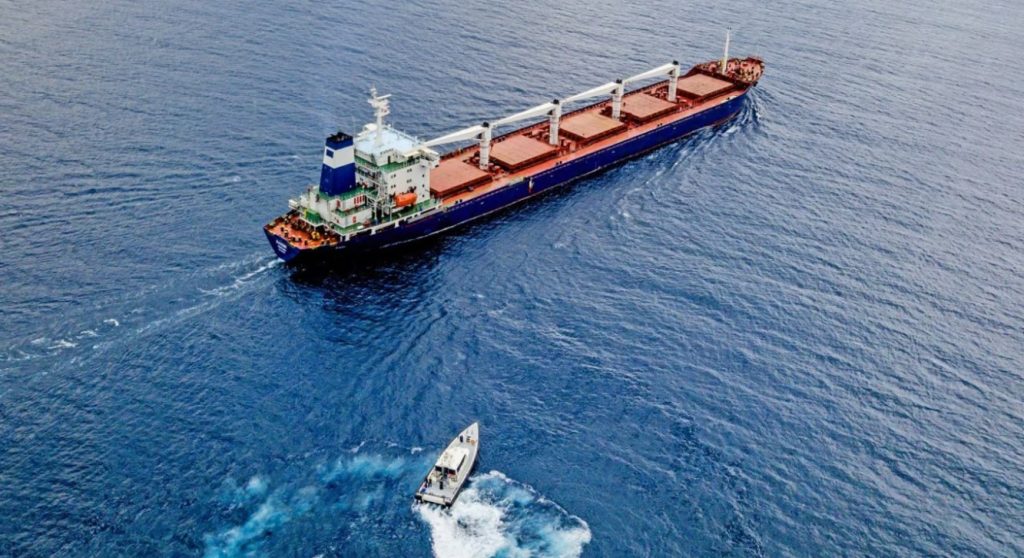
According to Konstantin Sobol, founder of Marelis Navigation S.A., after the recent attacks, shipowners are actually not ready to enter the deep-water ports of Great Odesa even for significant additional payments. He gives the example of a vessel whose crew refused to enter a Ukrainian port for a week, despite the proposed bonus of $500,000. In his opinion, this is the best example of the scale of the current crisis: the problem is no longer only in rates or insurance, but in the basic willingness of crews and shipowners to take on physical risk.
In such a situation, according to him, Ukraine’s exports and imports are actually put on hold. The railway can partially soften the blow, but it is not able to replace sea transportation. According to Konstantin, land routes and ports on the Danube, which are also at risk, can provide only a small share of the foreign trade flow, while the main volume of Ukrainian exports was based on the work of deep-water ports.
The consequences are already visible in the rates on the freight market. According to the expert, a few days before the last wave of shelling, renting a large vessel of the corresponding class could cost about $16.5–17 thousand per day. After the escalation, the similar rate increased to about $37 thousand per day. If we convert this into freight per ton for the route to China, then before the attacks it was about $42–43 per ton, and now the calculation comes out to about $74.5 per ton without taking into account the fuel index. After adding the fuel component, the increase may actually approach twofold. At the same time, he does not expect a quick improvement in the situation. The shipowner has already deployed part of his own fleet to Brazil. According to him, a similar logic may work for other vessels that planned to operate in the Black Sea: if the Ukrainian route becomes too risky, the tonnage will go to other markets. This, in turn, may affect rates in South America: an increase in the fleet supply there will potentially put pressure on freight and change the competitive situation for Ukrainian, Brazilian and Argentinean products.
At the same time, Konstantin emphasizes that he does not stop searching for vessels that are still ready to work with Ukraine. According to him, he is ready to take on a significant financial risk at the chartering stage in order to maintain the movement of cargo and prevent a complete stoppage of exports. This logic is no longer just about commercial calculations, but about the ability of the national economy to operate during wartime.
The shipowner calls a ceasefire or at least an end to attacks on civilian shipping the main condition for stabilizing the market. Without this, according to him, every vessel that leaves or enters the ports of Great Odesa remains a potential target.
Interlegal: the legal side of the issue
The legal dimension of the current crisis is not limited to the issue of future lawsuits against the Russian Federation. As Interlegal experts explain, commercial disputes that arise between shipowners, charterers, cargo owners, insurers and other participants in transportation are much more relevant for business now.
According to Taras Dragan, senior lawyer and attorney at Interlegal, the issue of directly holding the Russian Federation liable for damage from strikes on ports and ships belongs to the sphere of public international law. Such mechanisms already exist – in particular, within the framework of international judicial institutions and compensation initiatives, which are gradually taking shape. However, this is a long process that is unlikely to provide businesses with quick compensation for losses.
In contrast, in the private sphere, the number of disputes is already growing. First of all, we are talking about arbitration under charter contracts, in particular within the framework of the LMAA, when shipowners refuse to enter Ukrainian ports, citing military risks. Separately, disputes arise regarding general average, salvage of ships and the distribution of related costs. Another layer is trade contracts within the framework of GAFTA and FOSFA, where the parties resolve issues of non-delivery, loss or damage to cargo as a result of attacks.
Disputes with insurers are becoming no less important. They may concern coverage of war risks, compensation for losses or recognition of constructive total loss of the ship. That is, in practice, business is most often faced with the need to quickly resolve the commercial consequences of war in arbitrations, insurance procedures and negotiations with counterparties.
Interlegal lawyer Dmitry Karetnikov also draws attention to the fact that participants in maritime transportation often underestimate not the fact of an attack on a ship, but its legal consequences. There is still a misconception on the market that the main costs in such a situation will be borne exclusively by the shipowner. In fact, the consequences can directly affect both cargo owners, consignees, and charterers.
“This is especially important in the case of a general average or salvage operation. Part of the costs may be borne by the cargo owner or consignee, even if he is not a party to the chartering agreement, but only receives the cargo under the bill of lading. In such a situation, receiving the cargo may depend on providing guarantees or fulfilling other requirements related to the general average or salvage procedure. For businesses, this often comes as a surprise after the incident, when the cargo is actually impossible to pick up without additional legal and financial actions,” notes Karetnikov.
A separate risk is insurance coverage. Participants in the carriage do not always understand in advance what risks their contract covers, whether it includes general average, salvage or war risk losses. If these conditions are not analyzed before the event occurs, further settlement of losses can become significantly more complicated.
The issue of war risks in maritime contracts also arises. LLM and leading lawyer of Interlegal Diana Mikhailova notes that after the recent attacks, situations are increasingly arising when shipowners refuse to go to the ports of Great Odesa with already loaded vessels. To do this, they refer to the provisions on war risks, in particular War Risks Clauses and the standard provisions of the GENCON proforma, if they were included in the charter. In such cases, shipowners may require charterers to nominate an alternative port, while the vessel is idle awaiting new instructions.
For charterers, this means additional costs for cargo delivery to Ukraine, the risk of vessel downtime and potential breach of obligations to their own counterparties. At the same time, current maritime transport contracts, according to Interlegal, are still not fully prepared for such situations. Standard clauses leave the parties too much room for different interpretations.
The following questions are often raised: by what criteria should the port safety be assessed, can the shipowner refuse to call if the war risks were known at the time of concluding the contract, who pays for the downtime and change of route, and how the costs of extra war risk insurance are distributed. These are the issues that today form the main line of conflicts between shipowners, charterers and cargo owners.
According to the lawyer, the best way to minimize conflicts is not to wait for the moment when the ship refuses to enter the port, but to prescribe in advance the mechanism of actions of the parties in the event of an escalation of war risks. The practice of recent years shows that a well-prepared charter can be no less important than subsequent legal support.

Alternative routes, freight and situation on the Danube and in Romania
It is obvious that now the market is again starting to look towards alternative export and import routes that can soften the blow, but are not able to fully replace the deep-water ports of Greater Odessa. Thus, according to Barva Invest, in 2023, 41% of grain and oilseed exports, or 23.5 million tons, went through seaports; 37%, or 16.4 million tons, through the Danube; 22%, or 12.9 million tons, through the western border. After the restoration of independent sea exports, the share of the sea increased to 75% in 2024 and 87% in 2025, while the role of the Danube and the western border decreased sharply. The maximum monthly shipments through the western border reached about 0.9 million tons, and through the Danube – 1.3 million tons. That is, together, alternative routes can give approximately 2.2 million tons per month, and not immediately. For this to happen, several conditions must coincide: stable demand, the absence of new “restrictions” from the enemy, organized sales activity, and sufficient logistics capacity.
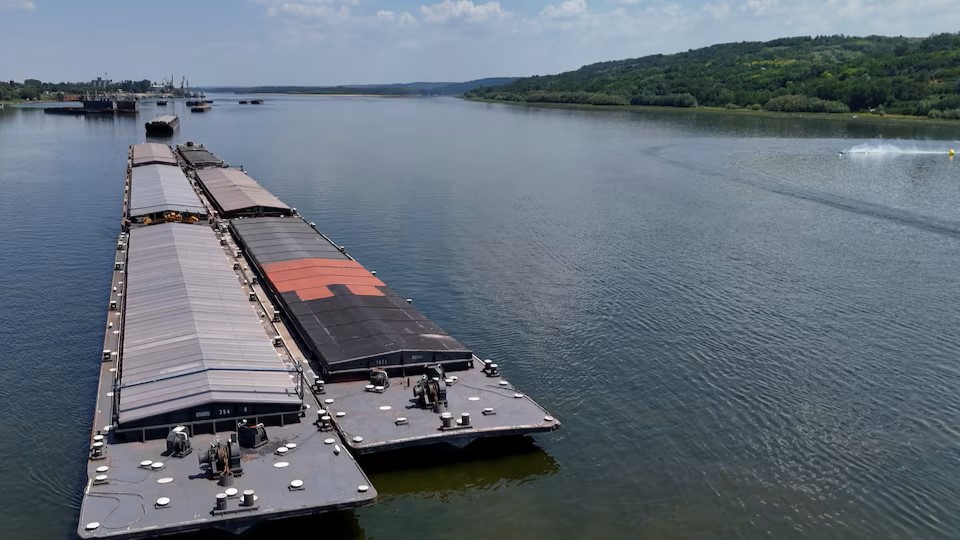
At the same time, the Danube itself is not a full-fledged alternative to the ports of Greater Odessa. For manufacturers in the Bessarabian region, this is a natural route, but for most other players, it is a longer and more expensive logistics without significant advantages. In addition, the access roads remain a vulnerable point of the Danube direction: bridges lead to river ports, which the Russian Federation has repeatedly struck, and the railway infrastructure has limited capacity.
Thus, according to analysts from Barva Invest, alternative logistics can only partially reduce the consequences of the new blockade, but not compensate for the loss of deep-water ports either in terms of volume or price. In such a scenario, the Ukrainian market will continue to live with a discount to world prices, fierce competition for buyers, and dependence on how quickly the stable operation of the maritime corridor can be restored.
Another logistics expert, who wished to remain anonymous, also confirms: it will not be possible to quickly rebuild for work on the Danube. A separate limitation for the Danube direction is not only the throughput capacity of ports or the canal, but also the availability of the fleet and crews. Part of the river tonnage after the decrease in activity on the Danube was sold, decommissioned, or simply put in storage. To return such vessels to work, time, documents, crews, and additional costs are required – that is, even if the demand for transportation increases sharply, the fleet does not appear on the market instantly.
According to Avalon Shipping Operations Manager Kateryna Kononenko, the first market reaction to the suspension of the deep-water ports of Great Odesa is already noticeable on the Danube. Freight rates have increased dramatically in just a few days. While on Friday small consignments to Egypt were fixed at $28–29 per ton, on Monday charterers were agreeing to $43–44. At the peak of the excitement, shipowners could even name higher rates, as some cargo owners found themselves under pressure from contracts that could not be fulfilled through the ports of Great Odesa.
The founder of Marelis Navigation S.A, Konstantin Sobol, also notes a huge increase in freight rates. According to data shared by an expert from USM, the dynamics of rates from Izmail show that the market has already reacted to the shutdown of deep-water ports with a sharp increase in the price of Danube freight. In some directions, rates have increased by $7–14 per ton in just two weeks. For example, transportation to the Sea of Marmara has increased in price from $28 to $35–40 per ton, to Mersin — from $33 to $40–47, to Lebanon — from $34 to $42–48. The sharpest movement is visible in the direction of Egypt (Egypt Med), where for consignments of 5–7 thousand tons, rates have increased from $35 to $43–55 per ton.
However, more important than the increase in rates is another signal: most shipowners who initially gave firm rates later withdrew them and refused to call at Ukrainian ports. That is, even an increased rate does not solve the problem, since the main limitation is still the shipowner’s willingness to accept the risk of the ship calling at Ukrainian ports.
At the same time, according to Kateryna Kononenko, it is on the Danube that this is still more like a short-term market shock than a stable new reality. Demand has indeed increased sharply, but for now some customers are simply checking an alternative route, seeing a high rate or complex logistics and postponing a decision.
Despite the increase in the number of ships heading towards the Danube, according to Kononenko, the situation does not yet resemble 2022, when significant queues formed on the approaches to Sulina, but logistics is really going into a more nervous mode, when everyone is trying to reduce the time the cargo stays at a potentially dangerous point.
At the same time, the Danube is not perceived by the market as a completely safe alternative. Some shipowners are already cautious about fixing from Ukrainian Danube ports and suggest considering other options, in particular the ports of Romania. The main risk is that in the event of continued attacks on the Odessa region, the Danube may also be under enemy pressure.
“The south of the Odessa region can take on part of the cargo flow, but not half of the exports. A share of about 30% looks more realistic, and that is provided that ports, agents, warehouses, cargo transportation and related infrastructure can quickly return to a more intensive mode of operation. The canal itself is able to withstand larger volumes: the market has already gone through periods when dozens of vessels were standing,” notes Kateryna Kononenko.
Romanian ports, primarily Constanta, in the event of a longer crisis may again become one of the key arteries for Ukrainian cargo. After the resumption of vessel calls to the ports of Greater Odessa, part of the cargo flow from Constanta returned to Ukrainian ports, so its turnover decreased. However, the situation is now changing: some of the import vessels that were going to Odessa cannot enter there, and the Danube does not pass through the draft. In such cases, the cargo is forced to go to Constanta. At the same time, the Romanian direction also has its limitations. Thus, even with the availability of an alternative route, the business receives longer, more expensive and less predictable logistics.
Founder and CEO of Porta Maris Logistics Yevgeny Perez Baro does not consider the Danube to be a full-fledged alternative to the ports of Greater Odessa. In his opinion, it is rather a backup route that can partially pick up cargo at a time when the main sea corridor begins to operate with interruptions.
According to Perez Baro, in the short term, the Danube can indeed remove part of the load from the market. In any case, business will look for working routes, but the scale here remains a key limitation: the Danube cannot physically replace the volumes that pass through deep-water ports, and at the same time it is not a zone of guaranteed security.
“In this system, the Danube can work as a temporary fuse, but not as a full-fledged replacement. It does not give the market the capacity, the economy of transportation and the stability that the ports of Greater Odessa provide. Therefore, any large-scale reorientation of cargo to the Danube automatically hits the margin, the speed of cargo turnover and, ultimately, the manufacturer,” the expert notes.
So the main question is not whether Ukraine has backup routes, since they exist and are partially working. The problem is that none of them today can painlessly replace the stable operation of deep-water ports, which is why each new escalation in the Black Sea almost immediately affects not only logistics, but also the price of grain within the country.
The same opinion is confirmed to USM by one of the logisticians working in the region, on condition of anonymity: Constanta may once again become an important artery for Ukrainian cargo, but this direction is not an empty reserve that is simply waiting for the Ukrainian flow. For the new season, local traders and logistics operators already have their own commitments, and Romania, Bulgaria and Serbia are also entering the season with their cargoes. Therefore, Ukrainian exports in Constanta will compete not only for rates, but also for a place in the logistics chain, barges, warehouses, railways and processing time.
The text is being supplemented…