“There must be a plan B and C”: how logistics planning has changed in Ukraine. Interview with Henri Petrosyan, Director of LUKRO
2.04.2026 - 18:06

For companies with many years of experience, working during a full-scale invasion has become a test of flexibility and forced them to learn to adapt quickly. At the same time, the logic of processes itself has changed: security guarantees, diversification of routes, and the ability to quickly rebuild processes have become the greatest competitive advantage.
USM spoke with Henri Petrosyan, director of the logistics company LUKRO, about how Ukrainian logistics has gone from collapse to adaptation, how approaches to transportation planning have changed, how political decisions affect routes, and what role practical experience plays in this.
On logistics adaptation, risks and the need for diversification
How has logistics between Ukraine and other countries changed since the start of the full-scale invasion? And what of what initially seemed like temporary solutions can already be considered the new norm?
The beginning of a full-scale war became a significant challenge for the Ukrainian logistics industry and radically changed the conditions for its functioning. Logistics processes became significantly more complicated, and delivery terminals increased. Some direct routes, in particular the China-Ukraine route, were closed, which forced a reorientation to routes through third countries, primarily European ones.
As a result, the number of combined transportations increased. Solutions that were initially considered temporary gradually became standard. For example, transportation through several countries, changing modes of transport, and in the case of railways, even changing the track. We can say that transportation has become more multimodal, and this is exactly the solution that the market came to due to war conditions.
Multimodal transportation is complex logistics with a large number of variables. Accordingly, how do you approach planning and forecasting routes in a constantly changing market?
Modern Ukrainian logistics in most cases involves the use of several types of transport with a combination of routes.
Of course, we also plan “standard” routes, but we always offer our clients several transportation options. For example, this can be delivery through Ukrainian or European ports. We consider various delivery options: the container can be transported by rail or through a warehouse, and then delivered by road or rail. In particular, for cargo from China, we use routes through European hubs.
Previously, logistics routes were clear and built over years, such as sea logistics via Odesa, Chornomorsk, Pivdennyi, with direct services from China or via transshipments.
Today, the situation is different: now logistics with Ukraine is almost always several alternative solutions. Accordingly, we immediately include this in the planning and offer clients several options so that they can choose the most effective option.
There are situations when, due to shelling or other force majeure, it is necessary to change supply routes. Do you plan several options, but have there been cases when it was necessary to quickly abandon one and switch to another?
Absolutely. There were such cases, and there are enough of them.
For example, a container route is planned via Constanta. But there were cases when, due to shelling of the crossing point in Orlivka, this direction became inaccessible, and all logistics flows had to be quickly reoriented, for example, through the Parubne-Syret checkpoint.
Another example is periods of active shelling of port infrastructure. At such times, a significant part of cargo flows were transported through Poland or through Constanta. Such routes are usually more expensive, but in wartime, security becomes a key factor – so businesses are forced to adapt quickly and choose alternative solutions.
How effective are such solutions for customers? It is clear that this makes logistics more expensive, because the logistical burden increases. But do customers agree to this due to the lack of alternatives, or is it primarily a safety issue?
It is primarily about safety. Usually, customers consciously incur additional costs, sometimes even significant losses, but fulfill their obligations.
For example, export through Odesa ports: this is mostly the transportation of raw materials, where price plays a key role in planning and signing contracts. But in conditions of shelling, the client — whether a trader or a manufacturer — still has to fulfill the contract, so he is forced to agree to more expensive solutions.
From real examples: there is one well-known container service that operates through the port of Pivdenny. But during massive shelling, in particular at the end of December, it had to urgently change logistics to ensure the fulfillment of transportation and close contractual obligations.
Today we work in very difficult, extreme conditions, but we already have an understanding of how to respond to daily threats. And this is key: it is not only important in what conditions we are working now, but also how logistics has gone this way – from complete collapse to the system we have today.
What factors today have the greatest impact on logistics processes? Can we say that these are primarily military risks, or is it a complex impact – in particular, regulatory and infrastructure restrictions?
In the current conditions, we observe a complex impact. These are military, regulatory and infrastructure factors.
But it is military risks that remain the most critical and decisive. They directly affect security, routes, the availability of port and transport infrastructure in general, the stability of transport corridors and the ability to carry out transportation on schedule. Constant shelling, threats to shipping, risks to land infrastructure – all this creates an environment of constant uncertainty.
At the same time, regulatory restrictions also have a significant impact. We remember situations with border blockades, in particular by Polish farmers and transport workers. For a country that is already operating in conditions of war, this created additional difficulties.
But these challenges were also overcome, and this is an important moment – both for us and for partners. This shows that Ukrainian logistics and business in general are able to adapt even to such conditions.
It is worth highlighting the insurance factor separately. In today’s realities, cargo insurance and risk assessment have become critically important. If before the war the level of insurance was quite low, now business has come to understand that it is a necessary tool that guarantees the safety of cargo.
We have already said that the market in general has learned to adapt to these conditions. And if we talk about you as a company, how much have you managed to adapt? Have you become faster and more flexible in making decisions?
Yes, we have definitely become more flexible, because we accepted this challenge together with the market. We have reoriented our tools, skills and business processes to new market conditions.
We are trying to work ahead of time – to analyze possible risks and factors that may affect transportation. It is clear that it is impossible to fully predict the situation, because we do not know what will happen tomorrow. But, analyzing both the global and Ukrainian markets, we are trying to prepare for different scenarios as much as possible.
Now logistics works in conditions of constant turbulence, and the one who is able to quickly adapt to changes survives. It is this ability that has become decisive for us.
I also wanted to talk about customers and their psychology. Obviously, the customer himself adapts along with the logistics business. How much has the customer’s profile changed since the start of the full-scale war?
The customer’s profile has changed significantly. Businesses have become more cautious and pragmatic in their decision-making. There has been a significant increase in the attention to risks and security aspects – customers pay much more attention to this than before.
Overall, today’s customer is a more aware, risk-oriented partner for whom reliability, transparency and the ability of the logistics operator to provide stability in an unstable environment are key. And, insanely, the customer has become much more aware.

On the impact of policy on logistics, potential export and import directions, and competition for China
I wanted to move on to a broader context: if we talk about imports, it is obvious that supplies to Ukraine are riskier than to EU countries, where you also work. What political events are currently having the greatest impact on logistics? And how, in your opinion, can the situation with supplies to Ukraine and the EU change in the near future?
Yes, you are right: logistics to Ukraine remains much riskier. But at the same time, Ukraine is a large country with great potential, and despite all the obstacles, import supplies do not stop.
Global political processes directly affect logistics, including our work. It is important to understand that Ukraine has a strategic vector of development towards the European Union. We are gradually moving in this direction, fulfilling the necessary requirements and conditions for integration into the European business environment.
In addition, logistics is affected not only by military risks, but also by political processes in the world. In particular, the change of power in the United States, the general turbulence of the last year, changes in transport routes, transportation costs, fuel prices – all this affects both imports and exports.
Exports are also important here, because they are a key tool for the inflow of foreign currency, and they also depend on external, including political, factors. We work in conditions of constant instability, but we are used to it. If four years ago there was a lot of uncertainty and fear, now there is none. Instead, there is a readiness to respond to any changes.
We have already talked about imports to Ukraine. And if we talk about the EU, how much is the influence of geopolitics felt there? What recent events have really affected imports to the European Union?
The influence of geopolitics is clearly felt there, for example, one of the important factors is the customs policy of the United States. Formally, this applies to exports to the USA, but in practice all these processes are interconnected, and they affect global trade flows, including the European Union.
The relations between the EU and China also play an important role. This is a constant balancing act between the interests of large economies and the European Union’s own interests. And the structure of imports directly depends on these relationships.
It is also worth considering the internal political processes in the EU itself. This is a complex system consisting of many independent states with their own political approaches and internal challenges. Because of this, there is not always complete predictability in trade issues.
As a result, the European Union remains a very large and important part of global trade, due to the scale of the market and the level of consumption. But at the same time, it is an environment that is constantly in motion and that needs to be understood.
I wanted to clarify the Asia-Ukraine direction, in particular in the context of relations with China. It is obvious that this factor affects logistics, but what is the current state of this direction? And what are your expectations for the coming year: should we expect an increase in cargo turnover, or, conversely, are there possible complications?
Speaking of imports, the Asia-Ukraine direction, including China-Ukraine, is showing growth this year. Moreover, it is not due to any one stable route, but through the implementation of various logistics solutions.
Supply, as before, is carried out through a combination of different solutions: through European countries, using rail transport, sea transportation and their combinations. European ports continue to play a key role, in particular in Poland, and to a lesser extent in Romania.
As for global factors, a significant part of sea transportation on the Asia-Europe route will probably continue to bypass the Cape of Good Hope. This is due to risks in the Red Sea and Suez Canal area.
I do not expect significant changes in the near future. Because of this, customer demand is also changing: today, not only the delivery itself is important, but also full control and support of cargo at all stages. The importance of transparency of processes, operational communication and risk management is growing.
Do you see the prerequisites for the growth of imports to Ukraine, in particular from China?
I believe that there will be growth, but very slow. If there were no all external factors, the dynamics would be completely different.
If we look more broadly, trade always moves in waves. Before the full-scale war, the economy and logistics also developed according to a conditional sinusoid: there were periods of active growth in consumption (in particular, due to lending and general economic conditions), and then – sharp declines, as in 2008, when the crisis literally “mowed down” many large businesses. After that, the market gradually recovered.
A similar dynamic was observed later: even after 2014, when Russia annexed Crimea and started a war in eastern Ukraine, trade turnover slowed down, but over time it began to grow again – until 2022, which became another “black swan” and again dramatically changed the situation.
Now we are again seeing a slow recovery. Logistics and infrastructure are gradually adapting to new conditions, and this allows the market to move forward, but very carefully.
At the same time, external factors continue to have a strong influence. The situation in the Middle East, which, at first glance, is far from Ukraine, directly affects the cost of transportation, fuel, routes. Then this creates a “domino effect”: delivery costs change, this affects the agricultural sector, the supply of fertilizers, and ultimately the entire economy.
Therefore, imports will grow, but this will not be rapid or stable growth. This is rather a gradual recovery in the face of constant new challenges to which the market has already learned to adapt.
What about export?
If we talk about exports, then the situation is more complicated. Ukraine mainly exports raw materials, and we were largely dependent on the Chinese market. But now the share of exports to China has decreased significantly.
One of the reasons is China’s reorientation to other sources, including Russian raw materials. Therefore, not only the war prevents us from exporting more, but also unfair competition on foreign markets. To this we add the logistics factor: due to shelling, it is more expensive and less stable than in neighboring countries that have uninterrupted access to ports. As a result, the Ukrainian product becomes less competitive due to the higher final price.
Therefore, in the near future, the conditions for exports will remain difficult. But this is a stage that will have to be passed – just as business has already gone through previous crises.
Speaking of alternatives or new opportunities, what directions do you think now look the most promising for Ukrainian exports and imports? Perhaps these are some rapidly growing markets or non-standard routes that were not previously in the spotlight?
First, it is the European Union. This is the key direction that Ukrainian trade is currently focusing on. Gradual integration is taking place: standardization, certification, adaptation of legislation, customs procedures. All this forms the basis for the growth of trade with the EU, and this direction will only strengthen.
The second important direction is the USA. Here, exports are growing, and not of raw materials, but of finished products. I mean value-added goods that go through a full production cycle in Ukraine. This is a fundamentally different level of the economy: not just the sale of resources, but the export of a product created thanks to technology and intellectual resources. Accordingly, this gives greater foreign exchange earnings.
Another direction is the Middle East and Africa. The latter remains a market with great potential, which is still insufficiently developed. But that is why there are opportunities for growth there, and in the future this direction may become important for Ukrainian exports.
Overall, these three vectors — the EU, the US, and the countries of the Global South — form the basis for the diversification of Ukrainian trade. I think these directions will only become stronger going forward.
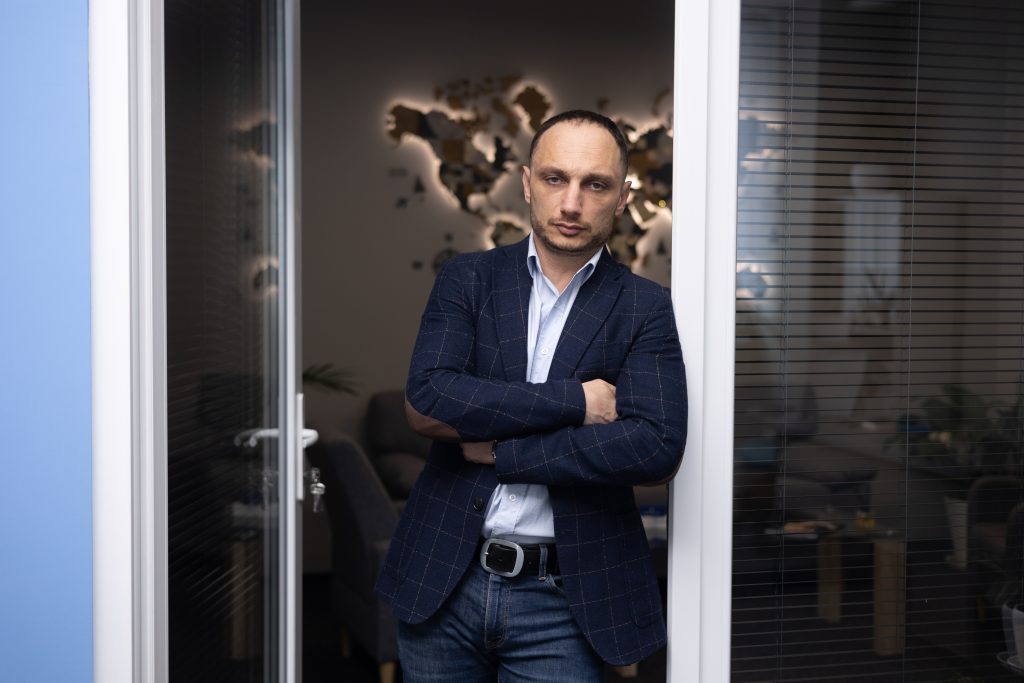
What experience has been the most valuable for Lukro in recent years, what mistakes should be avoided, and is the logistics business optimistic about the future?
Speaking of operational work and planning, what mistake today can cost a business the most tomorrow?
I believe that the most critical mistake is focusing on one supply route, conditionally, on one chain. In times of current instability, this is no longer enough. There should be not only a plan A, but also a plan B, and sometimes a plan C.
The task of a logistics company is to prevent such a situation: to offer the business several delivery options, to consult, to constantly be in communication. This creates room for maneuver and allows you to react quickly if something changes.
It is worth mentioning safety separately. Today, this is a key factor on which all logistics is actually built. If previously the main ones were price and terms, now the safety aspect has become decisive in planning any transportation. And underestimating this factor is another mistake that can be very expensive.
What decision over the past year was the most difficult for your company? We talk a lot about adaptation, but what exactly was the most difficult thing in practice?
The last year, as for all logistics, was difficult. If we talk about specific difficult decisions, then these are primarily stories when it was necessary to change routes very quickly and actually rebuild all logistics “from the ground up”. For example, after shelling of port infrastructure, it was necessary to reorient cargo to other ports, while simultaneously changing documents, re-issue customs declarations, and organize reloading.
There was a case when containers were already heading to Pivdennyi, but due to shelling, the route had to be urgently changed — the cargo was redirected to Constanta. Since the transport was designed only for domestic transportation, in the process it was necessary to reload containers, cancel old declarations, issue new ones, and only then continue delivery.
Another example is export via Gdansk, when the client urgently needed to deliver cargo to the USA. We actually took the container out of the port and redirected it to Bremerhaven to meet the deadline. It was a decision that was made very quickly, but in the end it worked and even became one of the approaches that we take into account in further planning.
There were also many complex transportations of oversized cargo – equipment, pipes, machine tools, machinery. Working with special containers, for example, flat rack type. In both import and export, such cases have become more numerous, and each of them required separate solutions.
I especially remember the case of the shelling of Chornomorsk in the fall of 2025, when more than a thousand containers were damaged. Some of our clients’ cargo was also damaged. In this case, for the first time in practice, we went through a full procedure for recording the consequences: interaction with the State Emergency Service, the Chamber of Commerce and Industry, and documentation of damage. After that, we had to organize the removal of containers from the port, work with both damaged and undamaged cargo, reload, and restructure logistics.
It was a very resource-intensive process — both in terms of time and effort. But at the same time, it provided very strong practical experience, which in the current conditions is becoming critically important.
To summarize our conversation: is the Ukrainian logistics business optimistic about the future today?
And if not optimistic, then what are we doing here? We simply will not be able to work, so, of course, only with optimism.
At the same time, this is not about any illusions. There is no feeling that after the war everything will immediately become simple and clear, so we work in the conditions that exist now, and proceed from reality, not from expectations.
Despite all this, confidence in the future remains – that the situation will change. And in many ways this confidence is based on what the Armed Forces are doing. Therefore, everyone who works in logistics continues to do their job – not only for clients, but also in a broader sense for the country. This is probably the basis of this cautious, but still optimism.

#partnersmaterial