Detained and arrested Russian ships replenish Ukraine’s state budget, — media
12.06.2026 - 17:43
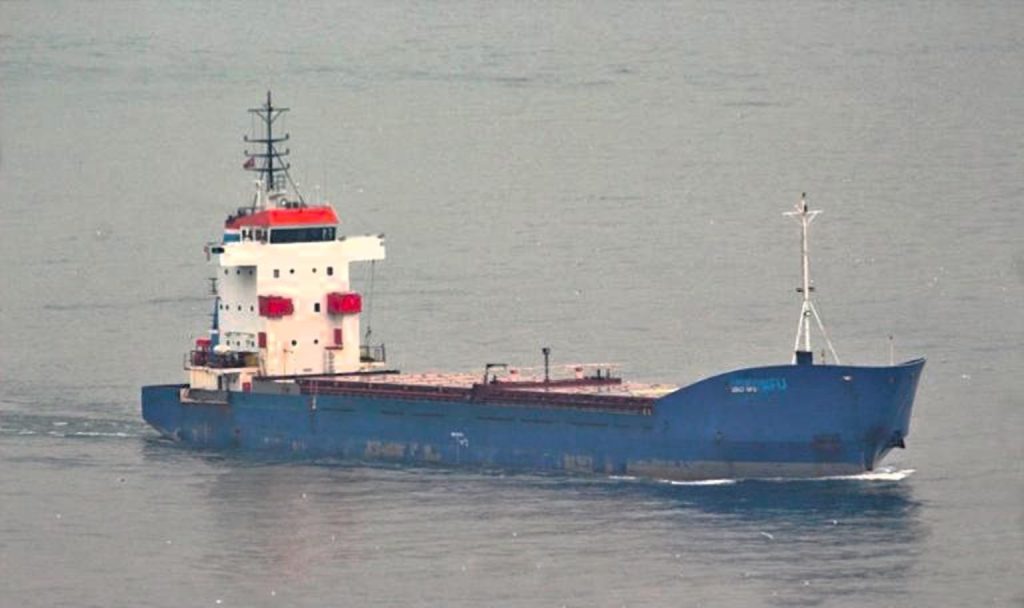
Ukraine continues to strike at Russian ships involved in grain theft from the TOT. The arrested ships, in particular, replenish the state budget after being sold at auctions.
This was reported by the Anti-Corruption Dimension, writes Intent.
The so-called “shadow fleet” of Russia remains one of the key tools for circumventing international restrictions introduced due to the war of the Russian Federation against Ukraine. It includes not only tankers, but also hundreds of dry cargo ships used to export Ukrainian products, including grain, from the occupied territories.
European states periodically detain such ships. In early June, it became known about the first case of the arrest of a Russian dry cargo ship in Sweden at the request of the Ukrainian side. At the same time, Ukraine already has its own experience in combating such ships: some of them were arrested, transferred to state management and sold through open auctions.
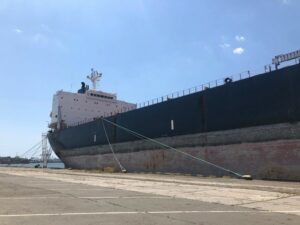
At the end of 2025, the National Agency for Tracing and Asset Management (ARMA) put up for sale the dry cargo ship Usko MFU under the flag of Cameroon, whose owner in the documents was the Turkish company MED VOYAGER SHIPPING INC.
The ship was built back in 1982 and was in a dilapidated condition. According to the GUR MO War&Sanctions portal, it visited occupied Sevastopol and was used to transport stolen Ukrainian grain.
Initially, ARMA estimated the asset at almost 5 million hryvnias, but no buyers were found. In December 2025, the dry cargo ship was purchased by the Odesa company Universal LTD for almost 2.5 million hryvnias. Together with customs payments, the state budget revenues amounted to about 6.9 million hryvnias.
The ship was detained in the summer of 2024 in Reni. The investigation established that in 2023 it called at the Crimean port and transported products exported from the occupied areas of the Kherson and Zaporizhia regions.
The cargo was transported on behalf of the Russian companies “TD Fregat” and “Agro-Fregat”, which demonstrated a significant increase in profits against the background of trade in products from the occupied territories. After the arrest, the Kyiv court transferred the dry cargo ship to the management of ARMA, which later sold it through an auction.
Another example is the dry cargo ship Anka. It was put up for sale at the end of 2025 with an initial cost of over 16 million hryvnias. The ship, built in 2005, sailed under the flag of Tanzania and formally belonged to the company FAB PETROL DOO from Montenegro. After several unsuccessful auctions, the starting price was reduced by almost half, but no buyers have yet been found.
Anka was detained in Reni in April 2025. In November 2024, the dry cargo ship entered the Sevastopol Sea Trade Port, where it loaded more than 4.6 thousand tons of wheat, after which it was delivered to Egypt.
The buyer of the grain was the Dubai-based company ALTHEL ALFEDEE TRADING CO. L.L.C., and the seller was the Russian company Makoveya, registered in Krasnodar. The Sevastopol company Sea Maker was also involved in the logistics of the shipment. The court ruled to transfer the Anka to the management of ARMA in June 2025, despite attempts by the owner’s representatives to cancel the arrest.
At the end of 2025, another dry cargo ship was detained in Odessa, which is associated with the Russian shadow fleet. This is the Gladius (formerly Peresvet). Before the detention, the ship changed its name, flag, and owner. Formally, it came under the control of a Panamanian company and received the flag of Guinea-Bissau. However, the investigation established that the dry cargo ship previously operated on the Russian route and repeatedly called at Crimean ports.
In particular, in 2021, Peresvet delivered almost 7 thousand tons of wheat from the Sevastopol Sea Trade Port, closed by Ukraine, to Egypt. The sender was the Russian company Slavyansky Export.
According to law enforcement officials, the ship was associated with the company Sevastopol Transport Systems, which was controlled by individuals from the entourage of Russian businessmen Alexander and Lydia Annenkov. Both are under Ukrainian sanctions.
In December 2025, the court decided to transfer Gladius to the management of ARMA. Currently, the owner’s representatives are trying to appeal the arrest. It is expected that after completing the necessary procedures, the ship may also be put up for public auction.
In April, the Russian bulk carrier, after a three-week wait, received permission and entered the Israeli port of Haifa with a cargo of grain. On board are more than 43 thousand tons of wheat, exported from temporarily occupied Ukrainian territories, in particular from Crimea.