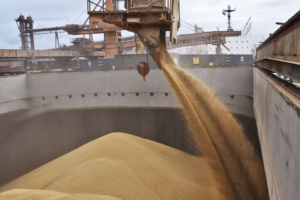
Grain exports fell to 41.1 million tons
6.07.2026 - 16:44
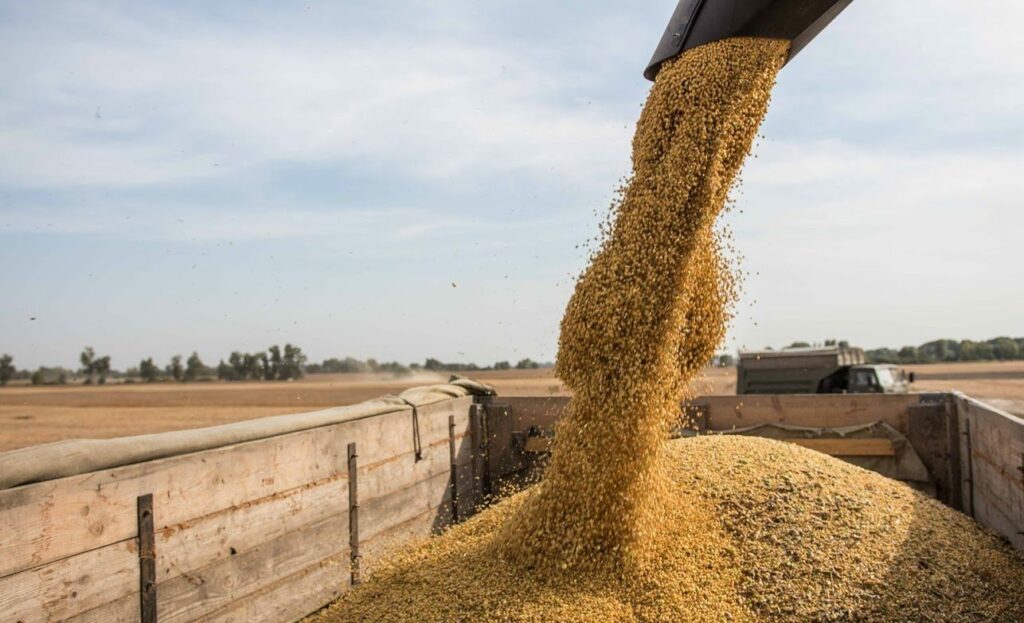
Despite the drop in physical volume from 46.7 to 41.1 million tons, in monetary terms, exports, including processed products, have hardly changed.
In the 2025/26 marketing season, which ended on June 30, Ukraine exported 41.1 million tons of grain and oilseeds. This was reported by the Ukrainian Grain Association (UGA), Elevatorist writes.
The current figures are lower than in the previous season (46.7 million tons) and the 2023/24 season (57.5 million tons). The reduction is explained by a decrease in production, the introduction of EU quotas on Ukrainian wheat imports, as well as logistical difficulties due to constant Russian shelling of energy and transport infrastructure, in particular ports and sea grain terminals.
An additional factor was the unfavorable price situation on the world market. Due to obstacles to exports, carryover stocks at the beginning of the new season increased to almost 13 million tons — against 7.4 million tons a year earlier.
At the same time, exports have hardly changed in monetary terms. According to customs data, grains and oilseeds brought in $10 billion (against $11.2 billion a season earlier), and together with processed products — oils, cake and meal — $18 billion against $18.1 billion.
By crop, exports were distributed as follows: wheat — almost 14 million tons for $3 billion (last year 15.5 million tons), corn — 21 million tons for almost $4.6 billion (21.5 million tons), barley — 1.52 million tons for $325 million (2.25 million tons). Soybeans were shipped 2.7 million tons for $1.04 billion, rapeseed – 1.82 million tons for almost $1 billion.
The UZA emphasized that the significant reduction in oilseed exports is due not only to a lower harvest, but primarily to Ukraine’s introduction of an export duty on rapeseed and soybean seeds. A telling example is sunflower: with a harvest of 11 million tons, only 35 thousand tons were exported, while domestic processing, taking into account stocks, amounted to 10.5 million tons.
Also, the day before, USM informed that almost 50% of agricultural companies may lose the status of critically important enterprises.