Record Shallowing of the Danube Complicates Ukrainian Grain Exports Through Constanta — Bloomberg
11.08.2026 - 13:07
Low water levels are forcing barges to take on fewer cargoes, and shipping on the Danube is becoming more expensive at a time when Ukraine is increasingly dependent on alternative export routes.
Bloomberg reports.
Grain exports from the Black Sea region are facing a new logistical constraint: record-low water levels in the Danube are reducing the capacity of one of the key routes to the Romanian port of Constanta.
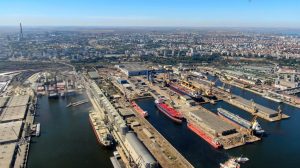
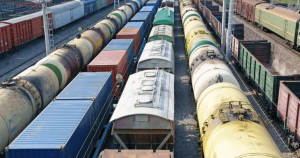
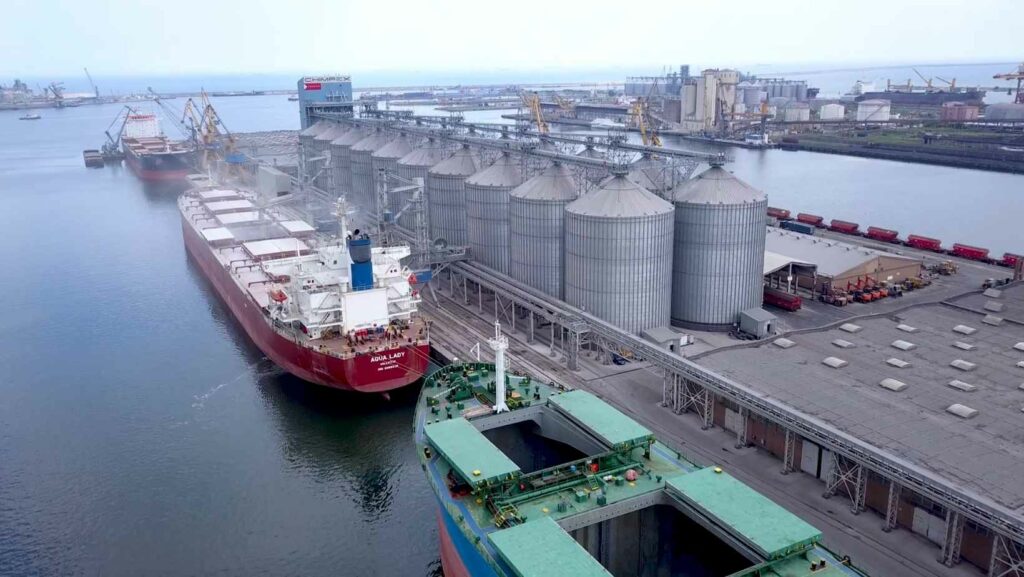
Since the start of Russia’s full-scale invasion in 2022, Constanta has become one of the main alternative routes for Ukrainian grain to global markets. Cargo from Ukraine is delivered to the Romanian port by rail, road and barges along the Danube.
However, due to the heat and lack of precipitation, the water level in the river has dropped sharply. This has forced ships to reduce their loads, which increases the cost of river transportation and creates additional pressure on road and rail logistics.
“Romanian farmers no longer have access to trucks, and transportation costs have skyrocketed,” said Stan Tiberiu-Dan, vice president of the Romanian Professional Farmers and Processors Forum.
According to him, producers transporting wheat, sunflower and rapeseed along the Danube to Constanta are facing a reduction in the number of barges, longer waits and higher freight rates. The cost of transportation is already higher than seasonal figures.
The problem also directly affects the capacity of the Constanta port itself.
“My grain terminal could handle 20% more cargo under the Solidarity Routes project with Ukraine,” said Viorel Panait, president of the Constanta Port Business Association and CEO of Comvex.
At the same time, he said, grain arrives at the terminal via the Danube, and “the fact that there is not enough water affects the amount of grain that arrives.”
The European Commission launched Solidarity Routes in 2022 after Russia blocked traditional Ukrainian export routes. The initiative aims to provide alternative routes for Ukrainian agricultural products to reach global markets.
Ukraine is also currently negotiating with neighboring countries to expand rail routes for grain exports. At the same time, Minister of Agrarian Policy Taras Vysotskyi noted that the railway, combined with the Danube route, can only provide about a third of the capacity of Ukrainian Black Sea ports.
Thus, the problems on the Danube come at an extremely unfavorable time. Russian attacks on port infrastructure and Black Sea shipping are already forcing Ukrainian exporters to reorient some of their cargo to alternative routes.
“Since 2022, Constanta’s role has been to act as a safety valve — when Odessa is attacked, cargo goes west and exits through Romania. But this assumes that the corridor that feeds Constanta has free capacity. There is none,” said Adrian Dobrita, head of the trading division of RWA Raiffeisen Agro Romania.
The situation may become more complicated in the coming months. Romania expects a record harvest of wheat, barley and rapeseed, and due to weather conditions, the corn harvest in the main production regions may shift, which will create an overlap of export flows of different crops.
At the same time, Ukraine needs to reorient additional grain volumes after losing about a third of its Black Sea export capacity. As a result, larger volumes of cargo will compete for the same cars, railway capacity and barges.
Against this background, additional logistical pressure may also affect world grain prices. According to Burak Cetinok, global head of research at brokerage Arrow, without a quick improvement in the situation — both due to the easing of hostilities in the Black Sea and the restoration of water levels in the Danube — prices may remain relatively high.
Also, the day before, USM wrote that the record shallowing of the Rhine threatens to stop cargo shipping in Germany.