Ukrainian Transport Forum 2026: sustainability, digitalization, development
15.06.2026 - 12:00
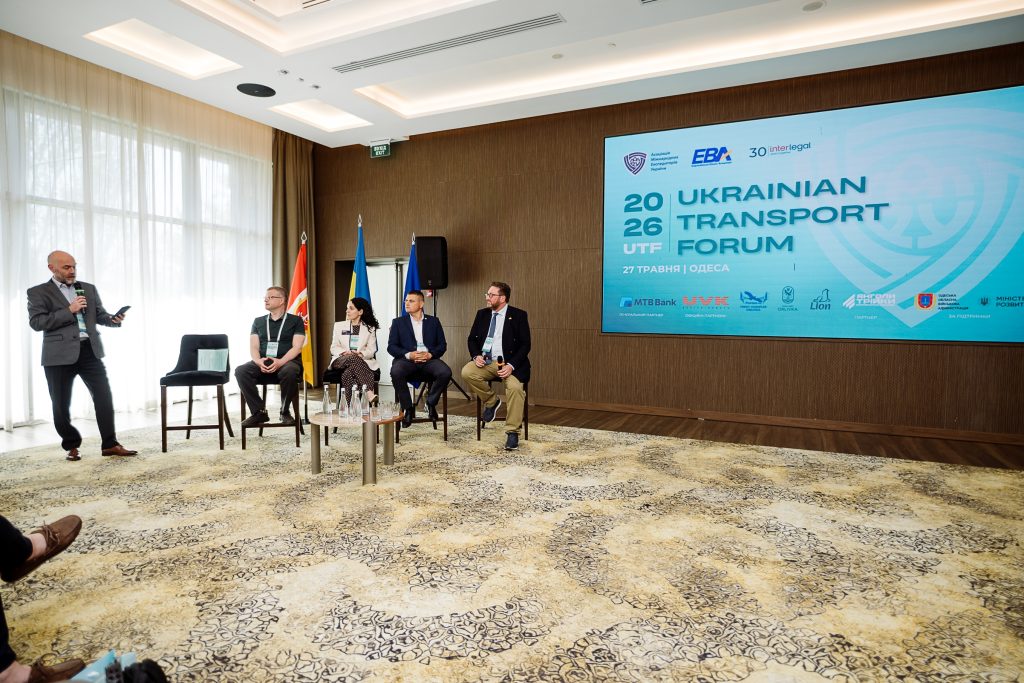
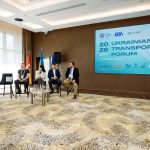
In May, Odesa once again became the center of a large-scale industry discussion: the Ukrainian Transport Forum 2026 was held here – one of the most important annual events in the transport and logistics sector of Ukraine.
The event under the slogan “Sustainability. Digitalization. Development” brought together more than 340 leading market players: forwarding and logistics companies, port operators and terminals, container lines, carriers, importers, exporters, as well as heads of relevant state institutions.
The forum was organized by the South Ukrainian Office of the European Business Association (EBA) in strategic partnership with the Association of International Forwarders of Ukraine (AMEU) and the international legal service Interlegal within the Maritime Days in Odesa platform. MTB Bank acted as the general partner, and such powerful industrial companies as UVK, LION, River Complex and the ferry complex “Orlivka” joined the pool of official partners. The event was held with the official support of the Ministry of Development of Communities and Territories of Ukraine and the Odesa Regional Military Administration.
Thanks to the deep and frank professional discussion that lasted throughout the event, the Ukrainian Transport Forum 2026 once again confirmed its status as an authoritative platform for an open dialogue between business and government. It is such meetings that allow not only to exchange experience and assessments, but also to develop a common vision of the development of the industry in the face of constant challenges. With each passing year, the importance of such professional platforms only grows, because transport and logistics sustainability today is not just a matter of economic efficiency, but one of the key factors of stability, competitiveness and economic security of the state.
The forum program covered the most pressing issues of today, divided into three thematic blocks: security and infrastructure, digitalization of logistics and global trends and realities of the shipping market. Participants discussed the restoration and development of transport infrastructure, the operation of maritime corridors, the prospects and challenges of European integration, the implementation of digital solutions in logistics processes, as well as the changes that are today determining the future of international trade and shipping.
Ukraine’s transport system: safety, infrastructure, coordination
The first discussion session was opened with a government and regional dialogue. Oleksiy Kuleba (Deputy Prime Minister for the Reconstruction of Ukraine – Minister for Development of Communities and Territories of Ukraine) and Oleksiy Khimchenko (Deputy Head of the Odesa Regional Administration) welcomed the participants, emphasizing the critical importance of logistics for the country’s economic survival and resilience.
The panel was thematically dedicated to the functioning of the country’s transport system under martial law. Moderated by the President of the Association of Ukrainian Maritime Transport Associations, Viktor Berestenko, the speakers discussed the priorities of state policy in the transport sector, port capacity, simplification of customs procedures, as well as the security of the Ukrainian maritime corridor and measures necessary for the uninterrupted operation of Ukraine’s strategic gateways – the ports of the Odesa region.
The keynote speech on the state’s priorities at the event was delivered by Serhiy Derkach, Deputy Minister of Community and Territorial Development of Ukraine. He immediately noted that despite the lion’s share of the state budget being directed to military purposes, the government maintains a clear focus on restoring logistical routes. Currently, about 200 brigades are working on Ukrainian roads, which have already repaired 10 million square meters of road surface. At the same time, the ministry is implementing a model of co-financing repairs “50 to 50” with local communities, which it also calls on private business to join.
A huge challenge for the country remains the railway, which has suffered more than 1,200 hostile attacks on tracks and rolling stock over the past year. Currently, government officials, together with railway workers, are working on equipping both trains and other railway facilities with special security equipment. In parallel, strategic European integration is underway: following the Eurotrack to Uzhgorod, a Eurotrack from Lviv to the border with Poland is being built. The ministry is also developing project documentation for the reconstruction of the M-15 Odesa-Reni highway, which is critically important for the southern region.
Serhiy Derkach cited catastrophic figures from a World Bank report that estimated the total damage to Ukrainian infrastructure at almost $600 billion. Since it is impossible to cover such an amount on its own or even with the help of international donors, the state is betting on a public-private partnership, planning to attract up to 50% of the necessary funds from private investors. The main tool here is a concession. An active procedure is already underway for the container terminal of the port of Chornomorsk, and this summer the ministry plans to announce a tender for the concession of a ferry terminal, in which Ukrainian business is actively invited to participate.
For the Odessa region, the government official announced several large-scale infrastructure and digital projects that will contribute, in particular, to the development of port Danube logistics. Among other things, the government plans to build a bridge on Orlivka, which will allow opening a full-fledged new automobile route and expanding the capacity of this border. The deputy minister also shared ambitious plans to launch a pilot project “E-queue” for passenger cars through “Diya”, which will start in the Odessa region.
The main philosophy of the ministry in 2026 is complete predictability of the rules of the game and total digitalization. One of the most anticipated solutions on the market will be the complete abolition of paper freight and transport invoices and the transition to mandatory E-TTN from January next year. Revolutionary changes are also waiting for the “Shlyakh” system: it will be completely abolished as a separate platform. Instead, the verification of commercial vehicle drivers will be carried out automatically during registration in the “E-queue”, which will eliminate double bureaucracy.
Mykola Kravchuk, Head of the State Enterprise “Ukrainian Sea Ports Administration”, presented the audience with a cross-section of the port industry’s work filled with hard facts and figures. Evaluating its work in the fourth year of a full-scale war, the head of the USPA called every Ukrainian port worker a hero of his time – and he was not exaggerating at all.
Despite constant threats, six accessible Ukrainian ports in the first quarter of 2026 showed a 7% increase in cargo turnover compared to the same period last year. In total, Ukraine exported a whopping 200 million tons of cargo through the Ukrainian grain corridor, of which almost 120 million tons were grain. Today, the “sea gates” provide more than 90% of Ukraine’s entire international cargo turnover. However, behind these indicators lies an extremely high and tragic price. Port infrastructure remains one of the key targets of the enemy, who has significantly changed the nature of his strikes. The number of airstrikes in ports has increased by 143%, and the intensity of drone attacks has increased almost 11 times. Since February 2022, the aggressor has damaged 930 port infrastructure facilities and 190 civilian vessels (47 of them have been damaged since the beginning of this year alone). Unfortunately, during this time, 253 people – port workers, personnel and sailors – were injured or killed. Constant attacks put pressure on the speed of cargo processing, shipping safety, insurance costs and the overall economy of the maritime business.
That is why the absolute priority of the AMEU and the USPA for 2026 is total security. The head of the department noted that only since the beginning of the year, seaport facilities have been attacked by about 1,200 enemy UAVs. In response to this challenge, the USPA has allocated more than 120 million hryvnias in the current year’s budget exclusively for security and defense measures. With these funds, an effective network of mobile fire groups has been formed and deployed in the ports, and the most modern electronic warfare equipment, specialized video surveillance systems, thermal imagers and other defense technologies are being actively purchased.
Mykola Kravchuk expressed deep gratitude to the Security and Defense Forces, the Odessa OVA and the port business, emphasizing that without the financial, organizational and technical assistance of the private sector, it would be impossible to protect logistics hubs. The main result of this unique synergy between the state and business was that, despite the multiple increase in the number of attacks, the scale of real destruction and damage in the ports was significantly reduced. The ports of Ukraine continue to receive ships and operate at full capacity.
Vladyslav Suvorov, Deputy Head of the State Customs Service of Ukraine, presented to the audience a strategic plan for transforming the Ukrainian customs into a full-fledged part of the EU Customs Union. The official emphasized that in terms of the level of preparedness and progress in the implementation of European legislation, Ukraine has taken one of the first places among all candidate countries over the past three years. The customs service successfully passed an official screening by the European Commission, the results of which determined three main benchmarks for recognizing readiness for European integration: full harmonization of legislation, digitalization of IT systems, and building the administrative capacity of the institution. A key step on this path is the adoption of a completely new Customs Code of Ukraine, the draft of which received an official positive opinion from the European Commission in January 2026. Structurally, the new document completely copies the European analogue, leaving at the national level only specific areas, as well as blocks necessary to ensure the country’s defense and security during the transition period. According to optimistic forecasts, the Verkhovna Rada will adopt the code this year, and it will come into force on January 1, 2027.
The second fundamental challenge is the total digitalization of the IT infrastructure. A list of 34 key IT systems has been determined for Ukraine, which must be operational by the time of accession to the EU. The Speaker noted that they will have to be implemented urgently. As of today, only the computerized NCTS transit system has been fully tested and is successfully operating in the country, technical documentation has been fully prepared for 5 more systems, and discussions are ongoing regarding the development model for the rest.
The third benchmark is the radical transformation of customs as an institution. In April of this year, the first important stage took place – the appointment of a new head of the State Customs Service according to new transparent procedures. The next step will be the re-certification of all personnel, the launch of a new KPI system, an increase in employee salaries, and the expansion of the capabilities of operational and investigative activities of internal security units to identify corruption connections.
Vladislav Suvorov paid special attention to the qualitative reconstruction of infrastructure and interaction with business. The department is working on the concept of a “smart checkpoint” – a single integration platform that will combine weighing systems, scanners, video surveillance systems, and automatic license plate recognition. In the field of international cooperation, the priority is to establish instant electronic data exchange on cargo with neighboring EU countries through the SEED system. Currently, such exchange is fully operational only with Hungary.
To simplify legal business, the customs rely on the tools of the authorized economic operator (AEO) and the local release procedure (LCP). After the adoption of the new code, the national pre-declaration system will be completely abolished, and clearance will be carried out exclusively through the NCTS system.
The Odesa region is already the leader in the number of companies that have received AEO status. For such authorized enterprises, this year, for the first time, automatic customs clearance of declarations was introduced without the participation of an inspector at all (the computer releases the cargo itself, provided that it meets strict risk criteria). Vladislav Suvorov emphasized the success of the procedure: today, 20% of all export declarations in Ukraine are processed by businesses directly at their own facilities without calling a customs officer, and the service calls on companies to become even more actively involved in this system of simplifications.
Serhiy Bratchuk, commander of the volunteer formation of the Odesa urban territorial community No. 1, commander of the Odesa Region unit of the Ukrainian Volunteer Army and spokesman for the UDA, devoted his speech to a critically important topic for the industry – the security of the maritime corridor of Ukraine. As a military practitioner, he immediately set the tone for the discussion, noting that modern war is primarily a war of logistics, and that Ukrainian port workers and freight forwarders hold the true forefront of economic defense.
Assessing the current situation in the skies over the Odessa region, the speaker emphasized that no weapon is currently a panacea, so the defense forces are constantly modernizing. In addition to the usual mobile fire groups, a completely new technological direction is actively developing and scaling up in the south of Ukraine – the use of interceptor drones. Thanks to this innovation, the percentage of enemy air targets shot down in the Odesa region is constantly growing.
At the same time, the speaker frankly outlined the new threats facing shipping. Currently, the enemy is increasing the number of strike drones, and also creates new challenges directly in the maritime component. We are talking about unmanned boats that are capable of diving underwater, creating serious risks for ships and port terminals. Countermeasures to these underwater threats are currently being calculated in detail at the level of the Supreme Commander-in-Chief and the Naval Forces Command of the Armed Forces of Ukraine. In this context, Serhiy Bratchuk noted the invaluable role of private and public business, emphasizing that combined formats of interaction, such as the successful experience of the unit’s cooperation with the Odessa branch of the USPA and the AMEU team, give real results in protecting port infrastructure.
The commander drew special attention to the acute legislative problems that business and the defense forces have to overcome together. In particular, the specialized legislation on the activities of the Volunteer Formations of Territorial Communities (DFTG) has actually remained at the level of 2022, although in 2026 the challenges have become much more complex and technological. Due to the imperfection of the regulatory framework, urban communities are legally deprived of the opportunity to purchase some military goods for volunteers (for example, specialized sights for machine guns that destroy “shaheeds”). That is why direct, flexible and rapid assistance from the logistics business often turns out to be more effective than bureaucratic state procedures.
Concluding his speech, Serhiy Bratchuk urged participants not to panic over the news about the construction of new perimeter defense lines around Odesa, emphasizing that this does not indicate a deterioration in the situation, but rather a planned and systematic improvement of the city’s defense.
AI and digital solutions in logistics
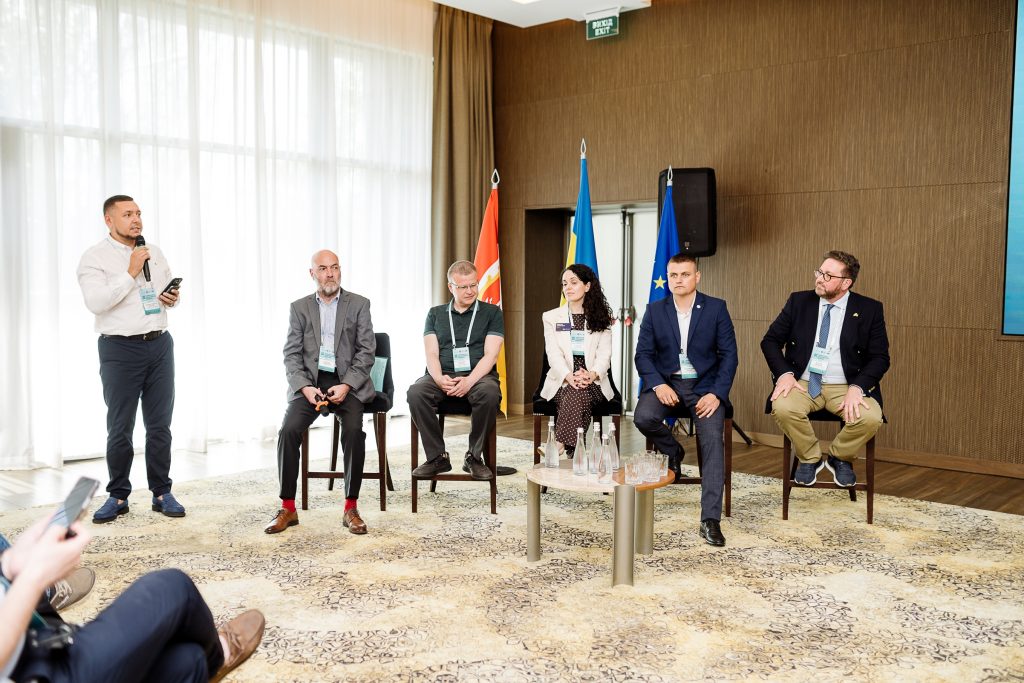
The second session of the forum, moderated by the co-owner of the Orlivka port, Dmytro Dimchoglo, was entirely devoted to the practical implementation of innovations, electronic document management and digital transformation of logistics chains. Among other things, the speakers presented practical cases of implementing AI agents, the electronic TTN system and NCTS.
Petro Babiy, head of the customs clearance and regulation department of the Aurora Multimarket chain of stores, spoke about the practical experience of a large-scale retailer in implementing joint transit procedures and digital interaction with customs. As a large importer with volumes of over 3,000 cargo shipments per year, coming from 14 countries around the world, the company urgently needed smart optimization of processes. The key decision was the launch of the joint transit procedure (NCTS) at the end of 2024. Today, about 50% of all Aurora imports are processed using NCTS.
The transition to joint transit has had a noticeable economic effect. Thanks to the authorization for exemption from financial guarantee, the company no longer needs to “freeze” its own funds for the duration of the goods’ movement (from 3 to 9 days). This allowed it to release more than 1 billion hryvnia from circulation. In addition, Aurora refused expensive guarantees from European companies and attracted a domestic guarantor, which brought another half a million hryvnia in net savings on agent services in the EU.
Among other practical advantages of NCTS, the speaker highlighted work according to unified international rules, the availability of a high-quality and customer-oriented helpdesk of the State Customs Service, the absence of the need to submit unnecessary declarations such as EE or ZDP, as well as unique flexibility for wartime. In particular, joint transit allows changing the final place of delivery of cargo already on the way, which is strictly prohibited within the framework of national procedures. Given that in 2027, T1 transit declarations will become mandatory for the market, Petro Babiy urged businesses to gain this experience now.
In the second part of the report, the head of the customs department of Aurora presented a breakthrough case study of working with customs data. The company completely moved away from manual processing of each individual customs declaration, turning an array of XML files into a single analytical database. Now data from over 40 tables and 400 technical tags of declarations is updated in the corporate system automatically every hour. This gave the company a “single point” for analytics, allowed real-time monitoring of the status of financial guarantees by customs or carriers, and significantly accelerated the work of accountants and financiers. Despite the obvious digital successes, the speaker also frankly voiced the barriers that big business still faces at customs. Even the status of Authorized Economic Operator (AEO) does not save the company from delays, subjective assignment of additional forms of control, inconsistency of specifications, and pressure in matters of determining customs value, when different customs authorities interpret price levels in their own way. In addition, the business is demotivated by the limited working hours of state bodies. Separately, Petro Babiy answered the question of why Aurora Multimarket currently imports Asian goods through the ports of the Baltic and Poland, and not through Great Odesa. According to him, the only and determining deterrent factor remains security. The company is very interested in supporting Ukrainian port logistics and will return to Odesa as soon as the security situation allows. Currently, the retailer is investing in the construction of a new large logistics facility, where it plans to implement the location release procedure (LCP), which, according to preliminary calculations, will bring an additional 10 million hryvnias in savings per year on terminal services alone and will speed up the arrival of goods on store shelves by at least one day.
Vasyl Rosada, the head of the Vchasno.TTN project, in his report analyzed the upcoming regulatory changes and presented ready-made technological solutions for paperless freight management. The speaker emphasized that the transition to electronic freight and transport invoices is an inevitable process. Currently, the relevant draft law is in the final stages of approval by the authorities. The key deadline for the market is January 1, 2027. It is from this date that paper TTNs will completely become a thing of the past, and the use of E-TTN will become mandatory for all Ukrainian businesses. The Vchasno team became the first state-accredited provider in this project. The main difference between E-TTN and ordinary commercial electronic document management is that it is a rigidly structured document that is created according to the first state specification and is synchronized with the state Central Database (CDB) every second. Instead of printing 3-5 paper copies, the business creates one digital original. Any adjustments, changes or acts are automatically made to this single file and instantly become available to all participants in the chain. Documents cannot be forged or rewritten “retroactively”, they are never lost, and a tax audit for the company turns into a quick upload of the archive to a flash drive in a few minutes.
Traditionally, the biggest fear of businesses during the launch of the reform was the human factor, namely the need for drivers to sign an electronic signature directly in the field or on the highway. Vasyl Rosada shared a unique case of overcoming this barrier. Understanding that the classic procedure for generating and downloading an EDS for a driver is too complicated, “Vchazno” developed a revolutionary mobile application for iOS and Android. The driver only needs to verify once through “Diya” or banking services (Monobank, Privat24) – and the system automatically issues an internal key for him in the background. The process of signing the cargo at the warehouse or on the ramp is reduced to two clicks on the phone using Face ID, Touch ID or a four-digit password.
For the successful deployment of the project in the company, the speaker advised to act according to a clear algorithm. First, it is necessary to describe in detail all logistics scenarios (working with own or hired transport, specification of shipments to own warehouses or to external contractors). Second, it is worth starting the implementation with the simplest closed route, where the company fully controls all links, and only then scale the system to large partners and train warehouse personnel. For companies with a small document flow, Vchasno offers a convenient web office with the ability to upload your own directories and manually create invoices. If the company generates thousands of TTN per month, the only right solution is full integration via API or ready-made modules with the corporate ERP system. With such a model, logisticians do not need to learn new software – they continue to work in the familiar interface, and data exchange with the CDB, driver and recipient occurs automatically. This dramatically speeds up the receipt of funds by carriers, because the invoice for services can be issued at the very second when the buyer signs for the acceptance of the cargo at the other end of the country.
Concluding his speech, the head of Vchasno.TTN announced several breakthrough technological updates for the near future. Given the specifics of the work of farmers in the field and regular disconnections or blockages of communication, the company will launch a full-fledged offline mode in a month and a half – drivers will be able to sign E-TTN and record delivery stages without having mobile Internet at all, and the system will synchronize data with the cloud as soon as the network appears. In addition, since the Ukrainian system is built on the basis of the European e-CMR standard, Vchasno is actively preparing for the opening of cross-border transportation. The provider is already developing functionality for reading European electronic signatures, which will allow Ukrainian exporters and logistics companies to exchange digital TTNs with partners within the European Union in real time.
A revolutionary view of automation of work processes using AI assistants was offered to the forum participants by Stach Wozniak, CEO and co-founder of Cargofy. The speaker called on the audience to reject the empty media hype around artificial intelligence and look at it as a defining technology of the era, standing on a par with the invention of the Internet. According to his forecasts, the next five years will radically change the usual formats of work, because modern AI is able to perform any digital action that a person does, but with incredible speed – for example, make thousands of phone calls in one minute. Currently, only up to 6% of companies in the world use fully autonomous AI agents, but logistics, which still relies not so much on software as on manual labor and disparate microprocesses (calls, instant messengers, notebooks, TMS systems), is an ideal platform for deploying this technology.
The main concept of Cargofy is not to replace live employees, but to create for them effective “digital twins” or completely new virtual employees with unique names and positions. Each such AI agent has its own virtual laptop and smartphone, which allows it to autonomously open a browser, log in to transport exchanges, negotiate rates and check carriers. This completely solves the chronic problem of the logistics market – the lack of API in many small services, which is why managers have to transfer data manually.
AI agents take over the routine that employees dislike the most (the so-called “monkey job”), leaving the function of final control and verification of key decisions to humans.
The uniqueness of the platform lies in the fact that it does not impose rigid, hard-coded algorithms on the business. On the contrary, Cargofy completely copies the existing organizational structure and the customer’s usual business processes: if employees are comfortable communicating in Viber, the AI agent will correspond there.
The process of building the system begins with an in-depth interview with the company’s management with the participation of an internal AI agent – a system architect. This procedure takes up to 5 hours and allows you to completely digitize regulations that are often stored only in the heads of managers. Thanks to presets and the availability of more than 100 ready-made integrations with popular tools (including 1C/BAS, Lardi, Vchasno systems), a basic custom architecture for the client is built in literally an hour. It takes about two weeks to fully connect mail, telephony, messengers and launch pilot tests, and it takes about six months to scale the system to 100% autonomous coverage at a large enterprise with a volume of 10 thousand shipments per month. The business receives a completely individual product at the price of a subscription.
Technologically, Cargofy works as a flexible orchestrator, not a rigidly tied language model. The system combines 12 of the best artificial intelligences on the market and allows the client to change contractors “on the fly”. A dedicated MCP React server is deployed for each client, so all commercial data remains safe, and management can instantly generate an analytical presentation based on the internal context of the company.
Currently, the company’s geography already covers the markets of Ukraine, the European Union, Kazakhstan, Georgia, Azerbaijan, Turkey and the USA. The speaker separately noted the successful experience of automating internal logistics between warehouses and stores for the Aurora Multimarket chain, emphasizing that many carriers close tenders there every day via e-mail, not even realizing that artificial intelligence is communicating with them on the other side. The company is also actively building similar functionality for sea logistics, air transportation and railways, and offered forum participants to test and deploy a demo version for free to meet the individual needs of their business.
Dmytro Pavlenko, partner at Deloitte Ukraine, leader of the infrastructure direction, concluded the second panel of the forum with a report on the Ukrainian and international experience of digital transformation of logistics. The speaker suggested looking at the industry through the prism of global partnerships and technological shifts, sharing exclusive insights from his author’s blog “Infrastructure Conversation”. In particular, based on an interview with Philip Swins (HHLA International), he highlighted total robotization as the main global trend in port terminals, and in a conversation with Roman Koloyanov (Maersk Ukraine), experts concluded that AI is vital, primarily for analyzing Big Data in multi-transaction business.
Окремо експерт приділив увагу новим перспективним векторам Deloitte, які детально аналізує in his publications – attracting Japanese investments through JETRO and JICA, as well as the creation of Ukrainian multimodal grain hubs in Africa with the support of the World Food Programme.
Turning to the realities of Ukraine, the speaker emphasized the regulatory inevitability of the implementation of e-TTN. He recalled that from January 1, 2027, the use of e-TTN will become uncompromisingly mandatory, and the paper form will be allowed only in exceptional cases, subject to the subsequent mandatory creation of an identical document in the electronic system. The Cabinet of Ministers is already preparing a detailed procedure for the functioning of this system, which will forever change the rules of the game in accounting for freight transportation.
The most acute topic of the speech was the problem of the industry’s use of Russian software 1C and its clones. Dmitry Pavlenko called this situation an “elephant in the room” that business continues to ignore in the fifth year of the war.
At least 70% of the domestic accounting market is still occupied by the aggressor country, which carries enormous risks of leakage of sensitive corporate and state data. The speaker emphasized that through accounting, the enemy sees absolutely everything – what cargo is going where, what exactly is being transported across the border, where the arrival took place, and what facilities need repair. No cybersecurity specialist can guarantee that 1C does not leak data to the aggressor, emphasized the Deloitte partner.
Currently, the state has already moved to a strict regulatory regulation of this issue: in January, the State Service for Special Communications published the first list of 40 prohibited programs and network equipment, the use of which is strictly prohibited for state bodies, the military, and critical infrastructure facilities (to which logistics belongs by default).
For private business, there is currently no complete legislative ban on the use of 1C, but Dmytro Pavlenko called on the logistics market to soberly assess the risks. Firstly, any transactions for licenses or software updates are a direct violation of the sanctions regime. Secondly, large investors, banks and auditors already classify this software as “high-risk software”, which automatically complicates Due Diligence and attracting foreign capital. A business may face refusal to insure ships and cargo, blocking bank financing and losing the status of a critical enterprise. The strategic goal of the entire financial market today is clear – zero tolerance for Russian and Belarusian software.
Responding to the skepticism of accountants and logisticians who claim that there are no alternatives to this software, and that transferring ERP will stop the company, the expert drew a historical parallel with the introduction of CEP and e-invoices. Once the market also assured that Ukraine was not ready for them, but in 3–5 years this became the norm.
The speaker summarized that abandoning 1C is a matter of the near future, dictated by market pressure, economics, and regulatory inevitability. Moreover, alternative solutions are already available on the market: Deloitte analyzed all adequate and secure IT providers and presented a detailed comparison of the cost and duration of implementing new ERP systems. This data gives businesses a clear understanding of how to “jump off” the Russian “digital needle.

Shipping 2026: a new reality instead of survival mode
The third, most anticipated panel of the forum for the maritime community was opened with a short introductory speech by its moderator, partner of the international legal service Interlegal Artur Nitsevich. His speech this year coincided with a significant milestone – the 30th anniversary of Interlegal’s work in the shipping and international trade market. Drawing on thirty years of experience in the continuous struggle for the interests of Ukrainian shipping, Artur Nitsevich suggested that the audience fundamentally rethink the current situation and state of the industry. The expert briefly outlined a range of internal challenges that have been accumulating in the industry for years. These include a chronic shortage of personnel, the alarming state of inland waterways, the sad legacy of the Black Sea Shipping Company, and the lack of adequate state policy. The Interlegal partner regretfully stated that the domestic maritime industry has been talking about some kind of “inexhaustible potential” for two decades in a row, but still does not actually have the opportunity to realize it due to chronic unprofessionalism in the management of the industry. The military present has added to the list of problems also complex security issues that business is forced to solve “on the fly”.
While Ukrainian ports and companies are fighting every day for the very existence of the shipping industry in Ukraine, the global maritime business focuses on completely different challenges. The world agenda is occupied by issues of decarbonization, the search for alternative fuels, the ultimatum of ESG standards, cybersecurity and the introduction of artificial intelligence. But even in difficult times, Odesa, as Artur Nitsevich noted, does not lag behind global trends: many of these issues were actively discussed at the forum.
Formulating the main message of the third panel of the forum, Artur Nitsevich called on the Ukrainian maritime business to finally get out of the exhausting survival mode. Since the Ukrainian community has already adapted to working in extreme conditions under shelling and anxiety, it is time to accept the new reality and new rules of the game, boldly look to the future and further integrate deeper into global world processes.
Edgar Martin, an international shipping analyst at Infospectrum (which recently became part of the global information giant Lloyd’s List Intelligence), presented one of the most emotional reports of the forum, dedicated to wartime compliance, namely its contradictions and misunderstandings in shipping.
The speaker began his speech with a curious manifestation of corporate “overcompliance” – his British employer had literally banned him from officially representing the company in Odesa the day before for security reasons. However, the analyst humorously noted that unofficial status has its advantages, as it allows him to speak absolutely frankly, without corporate censorship and approvals.
This situation became a vivid illustration of the main thesis of his report: the deep gap between the panicked, often distorted perception of Ukraine from abroad and the real situation on the ground. According to the analyst, there are still persistent myths in the world about the “complete blockade” of Ukrainian ports, while the reality demonstrates record volumes of cargo turnover and unprecedented resilience of infrastructure under shelling. The expert cited a number of absurd examples of foreign compliance errors and double standards. He mentioned Asian operators who avoided Ukraine back in 2015, believing that the entire country was “engulfed in the flames of war,” and Greek shipowners who justified measures against Russian ports in 2022. Another eloquent example concerned the sanctions lists of the UK government. In February 2024, the Turkish company Active Denizcilik (which owns 17 vessels, 13 of which are tankers that regularly call at Russian ports) was sanctioned, but due to an error in the translation of the name, the real company was not affected, and in March 2025 it was quietly removed from the lists without any explanation. In addition, Edgar Martin sharply criticized the policy of international insurers and P&I clubs, which declare their support for Ukraine, but at the same time continue to serve Russian business, and military risk rates are set in isolation from the real security situation. The speaker also pointed out the total misunderstanding by foreigners of the difference between sanctions-related Russian risks and Ukrainian counterparty analysis, which is why companies simply avoid both markets. Modern artificial intelligence algorithms sometimes only exacerbate the problem: for example, the AI tool Claude blocked a deal with a Ukrainian top manager in Bulgaria simply because his last name seemed “too Russian” to the algorithm. In addition, foreign compliance software regularly marks as “dangerous” those vessels that, for safety reasons, turn off the AIS system on the approaches to Ukrainian ports.
At the same time, the expert noted that despite all these misunderstandings, respect for the leading Ukrainian freight operators on the world market is growing – such as Aquavita, BPG Shipping and Transatlantic Commodities, which have long proven their impeccable operational reputation.
Edgar Martin devoted a separate part of his report to Danube logistics, which he has specialized in for most of his career. He noted the outstanding decision of the Danube Commission, which managed to completely exclude Russia from its membership (where it had dominated since 1948). The expert also analyzed the recent sensational deal – the transfer of the port of Giurgiuleşti under Romanian control. He noted that despite the political instability in the region, this step is positive, as it blocks the possibility of a hostile takeover of the port, although Giurgiuleşti does not have real capacity to significantly increase the transshipment of Ukrainian grain, and the strengthening of Romanian control over the Sulina Canal may create competitive pressure on Ukrainian ports on the Danube.
Ending his speech on a deeply emotional note, Edgar Martin admitted that for him the Ukrainian transport sector has long ceased to be just a career or a hobby. Having survived the evacuation from Kyiv in the first days of the full-scale invasion, he felt from his own experience that Ukrainian logistics is a lifeline that saves families and keeps the country alive. Therefore, the analyst’s main advice to Ukrainian business in the conditions of the information vacuum in the West is to continue to “shout” about yourself, actively share materials from high-quality English-language media and constantly keep the real picture of events in the focus of the international community. Boris Kormych, Head of the Department of Maritime and Customs Law of the National University of Ukraine “Olya” and an arbitrator of the ICAC at the Ukrainian Chamber of Commerce and Industry, devoted his report to a detailed analysis of the integration of Ukraine’s maritime sector into the EU legal field, calling this process in Ukrainian realities “a separate art form.” According to his calculations, the national adaptation program requires our state to implement a colossal array of norms: 40 regulations, 37 directives and 23 other European acts in the maritime sector. The reforms have a clear timeline: the digitalization of domestic ports must be completed by December 2026, by the end of 2027 Ukraine is obliged to implement at least 80% of all regulations, in 2028 – to adapt and start transmitting water transport statistics to Eurostat, and by 2030 to fully harmonize the work of ports and integrate into the environmental requirements of the European Green Deal.
At the same time, the scientist warned about the hidden threats of “European integration without a deadline” (when a country is forced to comply with strict EU rules without a vote or financial compensation), the risks of distortion of European norms by our officials who insert their own whims into them, as well as the challenges of tough competition between Ukrainian ports and the ports of Gdansk or Rotterdam after the potential abolition of customs control at the western land border (through which 54 million tons of cargo passed in 2025, compared to 80 million tons through ports). Borys Kormych placed particular emphasis on the European Emissions Trading System (EU ETS) and decarbonization, which Ukraine is to launch at the national level in 2028. He cast doubt on the European Commission’s declaration to reduce marine emissions by 45 million tons by 2030, calling it “a certain cunning.” The expert announced the magic figure of 100 euros per ton of emissions (currently the price of the quota fluctuates within 65–82 euros), the achievement of which will trigger a massive change in ship routes bypassing EU ports to North Africa, the Middle East and Turkey (up to 20% of voyages are predicted to be redirected in the Mediterranean Sea). The same cost of 100 euros makes it economically profitable to switch to alternative fuels, and at a price of 150 euros, the use of biofuels will be justified for 75% of ships. At the same time, the financial burden falls on shipowners, whose profits in the container segment may fall by 50–55%. An additional challenge for Ukrainian maritime and logistics companies will be the launch of a strict European ESG reporting system (the CSRD, CSDDD and EU Taxonomy directives) from the end of 2026. It will require detailed declaration of Scope 3 emissions, i.e. throughout the supply chain, including tugboat operations and energy costs of port infrastructure, which will create a colossal technological and competitive barrier for domestic business.
Zakhar Medvedev, Director of the Bessarabian branch of Nibulon, began his speech with a frank answer to the main question of the discussion: is the company’s Danube investment project a strategic look into the future, or is it just a forced military alternative? The speaker recalled that over the 34 years of its history, Nibulon has become a global trader that exports products to 75 countries around the world, relying on a network of elevators with a capacity of 2 million tons, its own fleet of 83 vessels built in Ukraine, as well as a significant railway and automobile fleet. However, the full-scale war dealt a devastating blow to the usual river logistics of the Dnieper and Southern Bug. Five grain elevators are currently under occupation, six operate with restrictions, the Kozatska branch in the Kherson region was flooded after the Kakhovka hydroelectric power station was blown up, and Zelenodolska in the Dnipropetrovsk region completely stopped operating due to hostilities and blocked infrastructure.
The response to these catastrophic challenges was the construction of a transshipment terminal in Izmail in the spring of 2022. Nibulon invested more than $20 million in this critical facility, which saved the company from shutdown and helped unload kilometer-long truck queues in the Danube region during the harvest. Today, this hub is a full-fledged long-term business asset.
The company has managed to flexibly reformat its logistics chains. Currently, the blocked terminal in Mykolaiv is successfully operating in the “dry port” mode – it receives, dries, accumulates grain, brings it to basic conditions and sends it by rail to the ports of Greater Odessa. In parallel, “Nibulon” has modernized its facilities on the Danube, introducing technological solutions for loading vessels with a carrying capacity of up to 7.5 thousand tons. The terminal in Izmail has already successfully processed more than 50 such vessels, which is currently the most effective logistics direction, since conventional transportation by barge-tow caravans to Constanta has a much more complicated economy.
Revolutionary changes have also occurred in the quality control system. Nibulon has united all of its laboratories into a single centralized digital ecosystem: the readings of measuring devices are synchronized with each other, which completely eliminates the human factor or the possibility of point-by-point manipulation of analysis results at any of the facilities.
The company is particularly proud of the total automation of relations with suppliers based on the IT-Enterprise system. Nibulon has completely switched to paperless document management – more than 99% of all contracts with suppliers are now concluded electronically, which eliminated the need for paper archives and courier costs. In addition, the company has developed a mobile application and chatbots for drivers who register in electronic queues and pre-load TTN data. In the partner account, more than 3,900 users can track prices online, book storage volumes, order laboratory services and accumulate loyalty points that allow them to receive analysis services for a symbolic one hryvnia.
Along with grain logistics, the company is actively developing cabotage transportation on the Danube. During 2025, the Nibulon fleet, consisting of 12 tugboats and 17 barges with a total capacity of 62 thousand tons, transported more than 110 thousand tons of various cargo.
Concluding his speech, Zakhar Medvedev emphasized that despite the restoration of Greater Odessa, the Danube region remains a critically important “reserve shield” of the state, however, it needs the support of Ukrzaliznytsia in terms of tariff policy, which currently makes rail transportation to the Danube uncompetitive compared to deep water.
Karina Horova, partner of the international legal service Interlegal, lawyer and arbitrator of the ICAC at the Ukrainian Chamber of Commerce, presented in her speech a deep and practical case-based analysis of the company, clearly demonstrating the main legal challenges, pain points and real requests that Ukrainian and foreign businesses are currently facing during transportation in the Black Sea-Danube region.
The speaker emphasized that over 30 years of work, Interlegal has formed a clear and uncompromising focus on maritime, transport law and international trade, uniting more than 60 experts in its own offices throughout the Black Sea region (in Romania, Turkey, Georgia, Bulgaria, Moldova) and Cyprus. The main point of pride of the company is that the team manages to settle more than 70% of all disputes out of court, preserving partnership relations between the parties and saving clients’ resources.
Within the shipping practice, the speaker shared unique stories of saving businesses from crisis situations. These include complex cases of arrest and release of vessels (in particular, the settlement of an incident in Turkey, where a vessel damaged a bridge support in the port), and pre-trial settlement of disputes due to the supply of low-quality fuel, and the successful resolution of a double collision of vessels in Romania without involving the court.
A striking example of professional legal work was the case of a vessel being delayed at the terminal for almost a month due to the cargo not being ready. Interlegal lawyers managed to completely refute the arguments of the charterer, who tried to avoid paying the detennine, relying on the closure of the passage due to stormy weather, and to protect the interests of the shipowner. In the practice of land transport, the case of the urgent release of a truck arrested in Germany, which was carrying a critically important drilling rig for water extraction to dehydrated Mykolaiv, was of particular social importance. Another high-profile process was the court coercion to issue Chinese containers, which turned out to be empty after opening – currently the company’s lawyers are conducting a case against an unscrupulous supplier directly in a Chinese court.
In the field of international trade, Interlegal specialists traditionally demonstrate strong results in GAFTA and FOSFA arbitrations, where the main emphasis is not only on obtaining a decision, but also on the actual collection of funds. Thus, in one case in Spain, lawyers managed to instantly collect a debt by simply freezing the Spanish debtor’s bank accounts based on an arbitration award.
In addition to trademarks, the company actively leads local traders to export transactions under CIF terms. Corporate and tax practices are focused on protecting investments abroad, developing shareholder agreements (SHA) and redomiciling companies (for example, re-registering a business from Panama to Cyprus with full preservation of history, accounts and assets).
In the yachting sector, the team supports extremely complex and expensive purchase and sale transactions (in particular, a case worth over 10 million euros), as well as resolving emergency crisis situations – such as successfully closing a deal just 72 hours before the deadline, when the buyer and seller could not find a common language.
Concluding her speech, Karina Horova summarized that while in Ukraine legal requests are most often related to crisis management (collisions, arrests, losses), abroad Ukrainian business is increasingly focused on development, structuring and expansion, boldly entering new markets.
The intensive day of the forum was concluded with the traditional evening buffet Odesa Shipping Evening 2026, where participants were finally able to “take off their ties” and talk without timing and protocol. In the informal atmosphere of professional networking, the conversations started during the panel discussions continued and deepened: new projects, prospects for cooperation, personal challenges that each market participant faces, and opportunities that open up even in difficult times were discussed. It is here, behind the scenes, that the most interesting ideas and future projects are born, the foundation for new connections and partnerships is laid, joint initiatives are launched, and decisions are made that subsequently affect the development of the entire transport and logistics industry.
European integration and digitalization – a new stage of development for the Ukrainian transport industry
Analysis of key discussions of the Ukrainian Transport Forum 2026 allows us to identify individual vectors that will determine the rules of the game in Ukrainian logistics and shipping in the coming years. And these are not just theoretical forecasts, but a concrete roadmap for Ukrainian business.
First of all, it is worth noting that European integration has finally ceased to be an abstract political vector, and the transition to EU standards is a distant prospect. The state has set strict timelines, and in January the market will receive a full-fledged launch of E-TTN and a new Customs Code. Ukrainian business can be safely advised not to wait for the deadline, but to set up API integration of corporate ERP systems with customs services and E-TTN providers right now, work out AEO status and test digital transit chains.
As the experience of the forum speakers proves, the transition to European customs procedures (NCTS, AEO, LCP) can save companies hundreds of millions of hryvnias and speed up cargo delivery. At the same time, European integration carries hidden challenges: after the abolition of customs control at the western land border, Ukrainian ports will directly compete with the ports of Gdansk, Rotterdam and Constanta. At the same time, the implementation of the European ESG reporting system and the launch of the emissions trading system (EU ETS) will create additional pressure on Ukrainian business, and companies are faced with the task of learning how to calculate their carbon footprint and prepare for ESG audits.
New opportunities for the transport business, as for many other industries, are opening up the rapid development of artificial intelligence. The involvement of “digital assistants” in the work, the digitalization and automation of business and process management systems is a story not only about simplifying routine tasks and optimizing processes, but also about increasing the speed of decision-making, reducing operating costs, improving the quality of service and strengthening the competitive positions of companies in the market. In an industry where time, accuracy and predictability are of critical importance, artificial intelligence technologies are becoming not just an advantage, but an urgent necessity. Experts recommend “digitizing” internal regulations and procedures, which often exist only in the heads of individual specialists, as soon as possible. The next step may be the implementation of AI solutions to perform simple linear tasks – from automatic tracking of cargo movements to collecting and analyzing rates. Gradually, such tools can be scaled to the entire supply chain, providing companies with higher efficiency, predictability and controllability of processes.
Ukrainian Transport Forum 2026 made it clear that the main challenge for the Ukrainian transport sector today is not just survival in war conditions, but preparation for the future: the transition from crisis reactions and tactical survival to strategic planning. Digitalization, integration with European markets, process automation, cybersecurity and environmental standards are shaping the new reality in which the logistics business will operate in the coming decade. The mood that prevailed at the forum demonstrated that the Ukrainian transport sector is already not only preparing for these challenges, but also seeks to take an active part in shaping the future architecture of global logistics.