Actual pause in the work of the ports of Great Odesa: chronology
30.07.2026 - 14:00
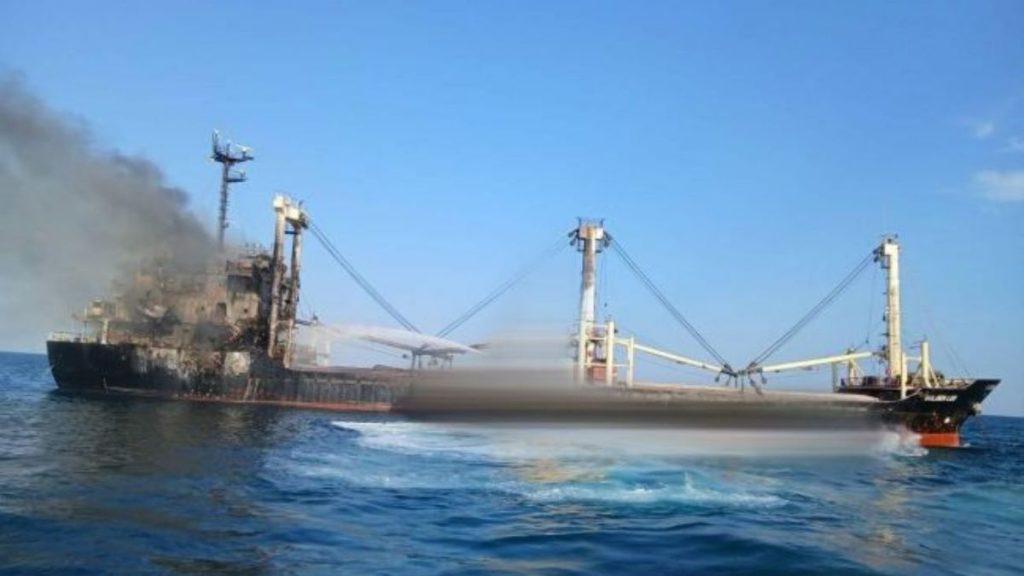
In July, Russia carried out a series of attacks on Ukrainian port infrastructure. In particular, Russian strikes injured and killed sailors. The escalation of the situation led to the suspension of some ship calls at the ports of Great Odesa.
USM collects data on the situation with the Ukrainian maritime corridor in chronological order. The material is updated daily.
July 21
Maersk announced that it has temporarily suspended its service through the port of Chornomorsk. Import cargo that was supposed to be unloaded in Chornomorsk will be redirected to the port of Constanta in Romania. For export shipments, Maersk offered two options: free cancellation of the booking or changing the port of loading from Chornomorsk to Constanta, while maintaining the current sea freight rate for containers already delivered to the port.
The company also announced that cargo delivery between Romania and Ukraine will be organized by road transport, and the resumption of service through the Chornomorsk fishing port will be announced separately.
Read also: Suspension of the ports of Great Odesa. What market participants expect and how they are adapting
July 22
At the height of the harvest on July 22, not a single ship passed through the Ukrainian sea corridor – the movement of ships through the Ukrainian sea corridor practically stopped. Ukraine initiated an urgent meeting of the UN Security Council on July 27, said Acting Foreign Minister Andriy Sybiha.
Meanwhile, Maersk Ukraine CEO Roman Koloyanov told USM what the timing of the resumption of work in Ukraine depends on.
July 23
Ukraine and Moldova have agreed to strengthen alternative logistics routes for the export of Ukrainian grain. During the conversation, the heads of the foreign ministries of the two countries paid special attention to the security situation in the Black Sea and the stability of alternative supply routes.
Against the background of the reorientation of cargo, the cost of barge transportation from Reni and Izmail to Constanta has almost doubled since the beginning of July – to approximately $28 per ton. The market was simultaneously affected by increased demand for alternative logistics and low water levels in the Danube, due to which barges lost from 30% to 60% of their carrying capacity.
In the evening, the Allseeds group of companies announced that it was suspending operations in Ukraine due to increased Russian attacks on the port infrastructure of the Odesa region. The decision was explained by extremely high risks for employees and production facilities. The company planned to preserve assets and operational potential in order to resume work after the situation stabilizes.
July 24
Minister of Foreign Affairs Andriy Sybiha appealed to the European Union for urgent support for the uninterrupted operation of the Solidarity Routes and increasing the throughput capacity of the Danube Corridor. According to him, Russia has attacked 31 merchant ships since the beginning of July alone.
It became known that not only Maersk, but also CMA CGM reported changes in the operation of container services to Ukrainian ports. The Association of International Freight Forwarders of Ukraine stated that the consequences of the suspension of these services could be broader, since the feeder carrier used by Maersk also served cargoes of other container lines.
Ukrzaliznytsia began preparing a “plan B” for transporting cargo due to a pause in ship calls to the ports of Great Odesa. The main alternatives were the Danube ports and western border crossings. At the same time, UZ was waiting for information from shippers about priority directions in order to increase their throughput capacity.
July 25
President Volodymyr Zelenskyy said that Ukraine is updating its grain export protection plan. The government was to work on diversifying exports and imports, additional routes, producer support programs, and coordination with neighboring countries and Brussels.
July 26
The reorientation of cargo to the Danube caused a further increase in freight rates. In a few days, rates on some routes rose by more than 50%, and in some places almost doubled. In particular, small consignments of cargo from the Danube to Egypt were chartered for $28-29 per ton before the attacks, and within three days the rates had risen to $43-44. At the same time, even higher freight rates did not guarantee the willingness of shipowners to call at Ukrainian ports.
July 27
Ukraine has called on the World Trade Organization to help restore the safety of civilian shipping in the Black Sea. The Ukrainian side has stated that it will continue exports through open ports and the Solidarity Routes, but the support of the international community is needed to counter the threats.
An emergency meeting of the UN Security Council has also been scheduled for that day due to Russian attacks on civilian ships and Ukrainian maritime export routes. Kyiv’s request was supported by France, Great Britain, Denmark, Greece and Latvia.
Meanwhile, the suspension of ship calls has almost paralyzed agricultural logistics. Due to the lack of security guarantees, most shipowners are not ready to send their fleet to Ukrainian ports, and exporters have almost stopped delivering new cargo there by road and rail. Companies do not want to accumulate grain, wagons and vehicles near terminals without understanding the arrival times of ships.
July 28
During a meeting of the UN Security Council, the UK and France condemned Russian attacks on civilian ships. The French representative stressed that strikes on ports and grain ships threaten the food security of millions of people, primarily in Africa and the Middle East.
Minister for Reconstruction, Infrastructure and Transport Mykola Kalashnyk stated that the uninterrupted operation of the ports of the Odesa region is a matter of national security. During a trip to the region, government officials discussed the operation of seaports, the Danube direction, the continuity of logistics and the implementation of the Comprehensive Resilience Plan.
The All-Ukrainian Agrarian Council appealed to the Prime Minister to introduce anti-crisis measures. According to the association, a prolonged shutdown of seaports could lead to the accumulation of 27.4-32.4 million tons of agricultural products. Among the proposals were preferential loans, restructuring of agricultural loans, state guarantees and an audit of damage to port infrastructure.
Mining company Ferrexpo has suspended sea shipments after a ship carrying 55,000 tonnes of iron ore pellets was damaged. The company said that attacks on port infrastructure and merchant ships have caused shipowners to cancel voyages, and Ferrexpo does not expect sea exports to resume anytime soon.
On the same day, Russian forces attacked a Liberian-flagged civilian vessel for the third time on the approaches to the port of Odesa. There was no cargo or crew on board at the time of the attack.
July 29
First Deputy Minister for Development of Communities and Territories Serhiy Derkach clarified that the ports of Great Odesa have not been formally stopped: ships continue to enter and exit, but the number of ship calls has decreased. Against this background, Ukraine and Romania have begun working to increase the capacity of Danube ports in order to activate alternative cargo transportation.
Ukrzaliznytsia has extended and expanded restrictions on the transportation of grain cargo to certain port stations in the Odesa region. In particular, the restrictions apply to the transportation of barley and wheat to the Odesa-Port and Odesa-Port-Export stations for one of the recipients.
The Indian Seamen’s Union has called for the urgent evacuation of the crew of the dry cargo ship MV AMIR1, which was in the port of Chornomorsk. There are 15 sailors on board the ship, including 13 Indian citizens. The country’s embassy reported that it is keeping the situation under special control due to the constant risks of missile and drone attacks.
It also became known that in June and July, Russia launched 16 strikes on food and port infrastructure in Odesa. About 80% of these attacks were carried out with Banderol cruise missiles. Among the damaged facilities were the infrastructure of the Odessa port, the Pivdenny port, and private terminals.
July 30
TEUS Director Dmytro Kazanin shared the opinion that the Danube and Romanian ports can accept part of the cargo flow from Great Odesa, but no alternative route can fully replace the capacity of deep-sea ports. According to him, many shipowners refuse to call at Ukrainian Black Sea ports, revise already confirmed voyages or demand significant surcharges for risk. This affects the export of grain, vegetable oils, meal, metals, fertilizers and raw materials, as well as container and general cargo.
It also became known that the Southern Mining and Processing Plant is partially suspending operations due to Russian attacks on civilian vessels. The company explained that the suspension of production at the Southern Mining and Processing Plant is a forced step that has been postponed as much as possible. Since the beginning of the full-scale invasion, the plant has been constantly operating under a number of critical factors: hostile shelling, power supply disruptions, rapidly increasing logistics costs, the introduction of the European Carbon Adjustment Mechanism (CBAM) and the strengthening of EU quotas for Ukrainian MMC products. In July 2026, these challenges were joined by a significant deterioration in the security situation for maritime logistics passing through Ukrainian Black Sea ports.
Also on this day, the Odesa region determined a mechanism for responding to a possible leak from a sunken ship. As noted in the Odesa Regional Military Administration, specialized services and scientific institutions continue to monitor the Black Sea water area after the sinking of the GOLDEN LEO vessel near Odesa.
The material is being updated …